


Your media spend is driving more retail sales than you think (here’s how to see it)
You’re spending millions on digital marketing. Your ecommerce dashboard looks solid. Meta is performing. TikTok is scaling. YouTube is building awareness. But what about all those sales happening at CVS?
Linnea Zielinski · 6 min read

You’re spending millions on digital marketing. Your ecommerce dashboard looks solid. Meta is performing. TikTok is scaling. YouTube is building awareness.
But what about all those sales happening at CVS? At Target? At Ulta? At whatever retail partners carry your products?
Here’s the question that should (and likely does) keep omnichannel CMOs up at night: “How much of our retail revenue is actually driven by our digital marketing?”
For most brands, the honest answer is: “We have no idea.”
You can see Shopify revenue from Meta ads. You can track Amazon sales from TikTok campaigns. But retail? Complete blind spot. That’s millions in revenue with zero visibility into what’s actually driving it.
Until now.
The omnichannel measurement gap nobody talks about
You’re an omnichannel brand. You sell DTC through your website, on Amazon, and through retail partners. Your measurement tools show you the digital side of things pretty well. Shopify conversions, Amazon sales, all that flows into your dashboards.
But retail revenue? That’s a big unknown when it comes to marketing attribution.
You know your TikTok campaigns and YouTube ads are building brand awareness. You can see the traffic and conversions on your owned channels. But when someone discovers you on social media, thinks “oh that looks cool,” then walks into Target next weekend and buys it off the shelf? You have absolutely no idea that happened.
And it’s happening constantly.
Think about how people actually shop. Someone sees your product on TikTok during their morning commute. They’re intrigued, maybe check your Instagram at lunch to learn more. That weekend they’re in CVS picking up prescriptions. They see your product on the shelf. They remember the ad. They buy it right there in the store.
Your digital marketing drove that sale. But you’d never know it from looking at your dashboards.
Why this gap exists (and why it’s so expensive)
The reasons are pretty straightforward. Retail sales happen offline, outside the tracking pixels. Traditional attribution can’t connect digital touchpoints to in-store purchases. Most MMMs focus exclusively on ecommerce revenue because that’s where the data is clean and accessible.
Even sophisticated brands are stuck stitching together data from completely different systems. Finance sees retail revenue in one report. Marketing sees digital performance in another. Nobody sees the connection between them.
This creates real strategic problems.
Budget misallocation. You might be underfunding your best retail revenue drivers because you can’t see that they’re driving retail revenue.
Incomplete ROAS. You’re judging channels on partial revenue, not total impact. A channel showing 2x ROAS on ecommerce might actually be delivering 4x when retail is factored in.
Missed optimization opportunities. You can’t optimize what you can’t measure. If you don’t know which campaigns drive retail sales, you can’t lean into what’s working.
Executive alignment problems. This one’s painful. Your CMO and CFO are literally looking at different pictures of performance. Marketing talks about digital metrics. Finance talks about retail revenue. The conversation goes nowhere because they’re not looking at the same data.
Prescient now connects your digital spend to your retail revenue
We built retail revenue modeling into the Prescient platform so that you can finally see how your digital marketing drives sales at your retail partners, not just on your owned channels.
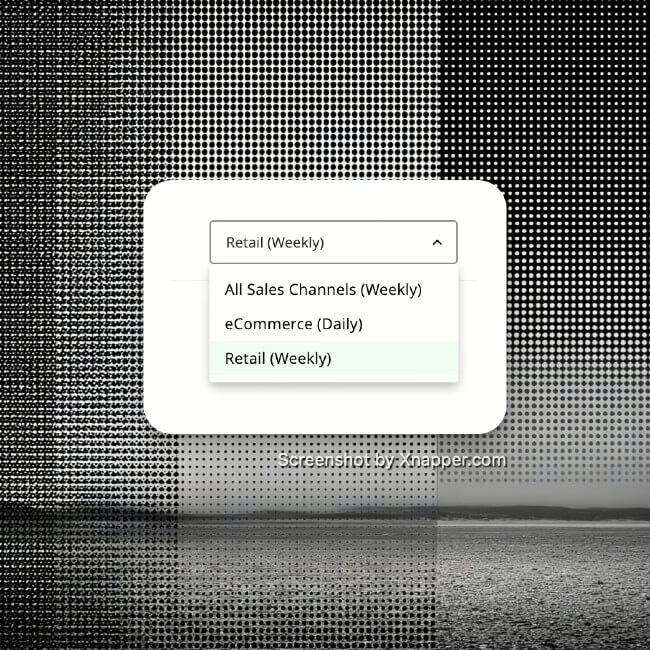
This means a complete picture. Shopify plus Amazon plus retail, all in one unified view. You can understand which campaigns and channels are your retail revenue drivers. Make omnichannel budget decisions based on total impact, not partial data. Finally connect your marketing spend to your full business performance.
Here’s how it works: Our MMM tracks the statistical relationships between your marketing activity and retail sales. When you launch campaigns or adjust spend, we measure the impact across all revenue streams. This integrates seamlessly with your existing ecommerce models. Daily updates capture these dynamics in near real-time. And you get the same campaign-level granularity you’re used to, now extended to show retail performance.
What you’ll actually see in the platform
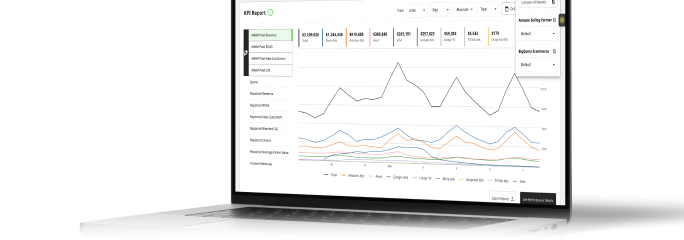
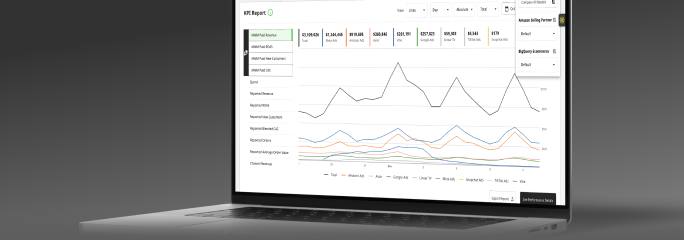
The platform now includes an “All Sales Channel” view that aggregates ecommerce and retail together. This is your true omnichannel perspective. You can see total modeled paid revenue across all channels. Understand which platforms drive the most total revenue, not just digital conversions. Track ROAS that includes retail impact. Monitor how all revenue streams trend over time.
On the home dashboard, your reported revenue now includes retail partners alongside Shopify and Amazon. So if you sell through CVS, you’ll see CVS revenue right there next to your other channels. Base versus halo effects are broken out for all storefronts including retail. You can see exactly how much of your YouTube or Meta or TikTok revenue flows to retail partners.
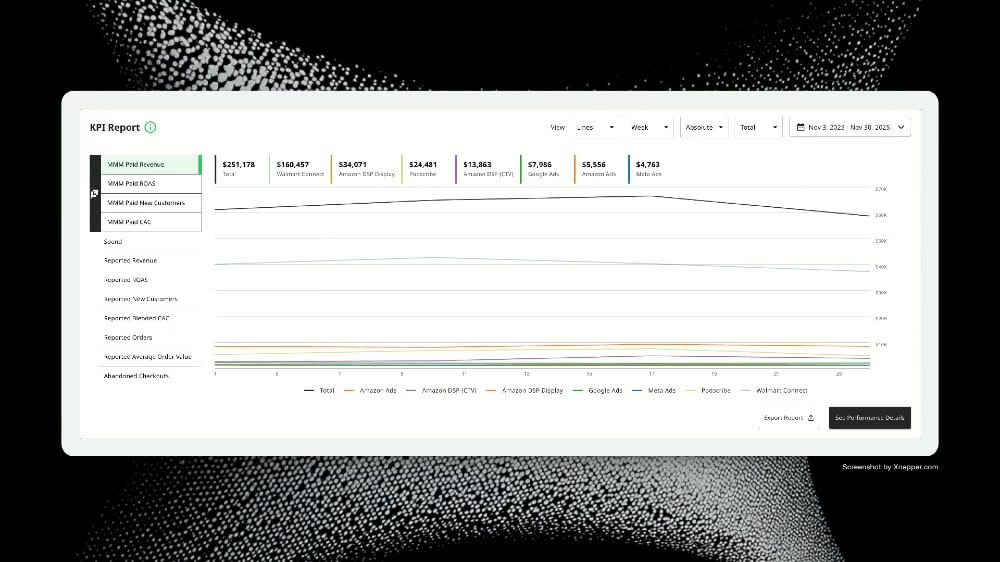
The performance dashboard lets you go deeper. You get separate views for Shopify, Amazon, and retail revenue. There, you can:
Sort by largest drivers of retail-specific revenue
Compare ROAS across all storefronts side by side
Identify which channels are efficiency leaders when total revenue is factored in.
See channel trends showing retail halo effects over time
Track period-over-period growth in retail revenue attribution
The halo effects visualization now also includes retail. You can see spillover from digital campaigns to retail partners specifically. Understand which channels build awareness that converts in stores versus online. Track how retail halo effects grow as you scale certain campaigns. Compare how different channels drive different storefront performance.
Why this matters for your role
For marketing managers, this finally lets you prove the value of upper-funnel campaigns that drive retail consideration. You can make confident budget decisions based on the complete revenue picture. Optimize campaigns for total ROAS, not just digital conversions. Show which channels are true omnichannel powerhouses. And stop getting questioned about “soft metrics” when you’re actually driving hard revenue at retail.
For CMOs, you can connect marketing spend directly to total business performance. Present a unified story to the board about marketing impact. Justify digital budget with full revenue attribution including retail. Do strategic planning based on the complete market picture. Build the business case for omnichannel marketing investment with actual data.
For finance leaders, this is maybe the biggest deal. You can finally understand the true ROI of marketing spend across all revenue streams. See how digital marketing drives the retail channels you care about most. Make informed decisions about marketing budget allocation. Connect dots between marketing investment and total company revenue. No more separate, disconnected views of ecommerce versus retail performance.
The complete picture finally exists. Before, your marketing dashboard showed ecommerce. Your finance dashboard showed retail. Never the two shall meet. Now you have one unified view showing how your marketing drives all revenue.
How Prescient connects the dots
We use statistical modeling to identify relationships between marketing activity and retail sales. The models account for seasonality, promotional calendars, and category behavior that are unique to retail. We isolate true incremental lift from marketing versus baseline retail performance so you’re seeing actual attribution, not just correlation.
This works within our existing MMM framework. Same daily updates. Same campaign-level granularity. Same methodology you’re already using for ecommerce. Retail just becomes another revenue stream in your unified model.
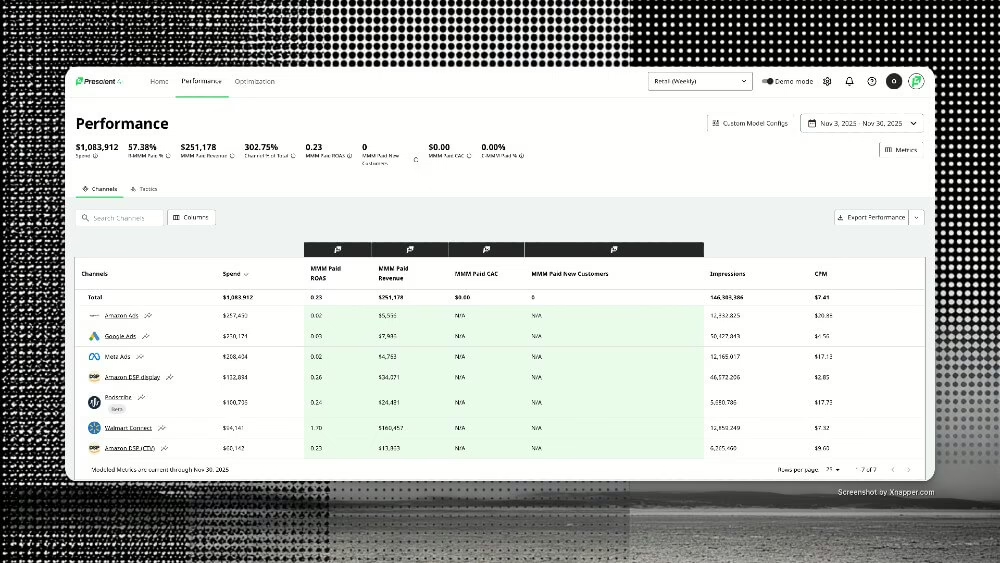
What makes this different from other approaches? Most MMMs can’t incorporate retail revenue effectively. Those that try typically provide only high-level, monthly views. Prescient gives you the same campaign-level, daily-updated precision you get for ecommerce. All revenue streams live in one unified model, not separate disconnected views. And halo effects are specifically broken out for retail versus other channels so you can see exactly where the spillover is happening.
Getting started
For current Prescient clients, retail modeling is available now. Work with your Customer Success Manager to integrate your retail data sources. Once live, retail metrics automatically appear in your dashboard views. All your historical data can be modeled retroactively so you get insights right away, not just going forward.
We’re also working on Retail v2, which will enable brands to have more than one retail model. So if you sell through CVS and Target and Ulta, you’ll be able to see performance by individual retail partner rather than all retail aggregated together. Even more granular optimization opportunities are coming soon.
If you’re not using Prescient yet but you’re an omnichannel brand making budget decisions with ecommerce-only data, we should talk. Book a demo to see how Prescient can show you how much retail revenue your digital marketing is really driving.
The Halo
Exclusive insights, every week.
Subscribe to The Halo for sharper marketing thinking.
You're subscribed to The Halo!
Quick question (optional): How familiar are you with MMM?
Thanks for sharing! Enjoy The Halo.
Keep reading
View all
See where every channel earns its budget with our new attribution
Read article
The hidden revenue TikTok Shop is driving (that TikTok can’t show you)
Read article
What retail media attribution measures and what it misses
Read article
Commerce media is promising, but its measurement lags behind
Read article
A practical guide to omnichannel measurement for multi-channel brands
Read article
Your digital campaigns are driving retail sales. Here's how you measure them.
Read article