


How we're different
MMM was invented in the 60s.
We reinvented it.
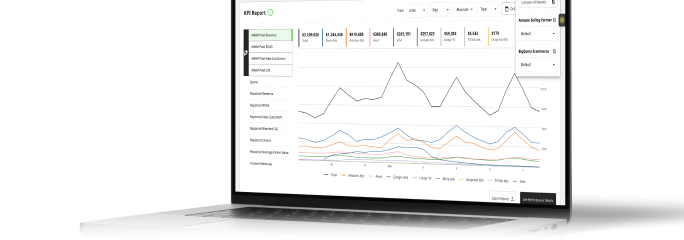
Most measurement companies took a 60-year-old model and added a dashboard. We built ours from the ground up: proprietary math, daily updates, and the only Marketing Mix Model that shows you where every dollar will perform best, not just where it already went.
Math matters
Not all models are
created equal
Here's the uncomfortable truth about most MMM tools on the market: they're built on the same open-source frameworks, Google's Meridian or Meta's Robyn. Modified, repackaged, and sold as proprietary. But the math underneath hasn't fundamentally changed since the 1960s.
Some make it worse. Feeding MTA data into an MMM violates the statistical principles the model depends on. It's like putting diesel in a gasoline engine and wondering why the results don't hold up.
We took a different path. Prescient's Marketing Mix Model is built from the ground up on proprietary neural networks and machine learning. Our models identify unique saturation curves for every campaign instead of forcing them into the same arbitrary function. The result is a level of accuracy and specificity that open-source derivatives simply can't match.
93%+
Model accuracy via backtesting
48 hrs
From data connection to insights
2x
Avg. ROAS improvement in 90 days
Side by side
How Prescient compares
We're not the only MMM option. But we are the only one built from scratch with proprietary math, daily updates, and forecasting at the campaign level.
| Prescient AI | Newer MMM providers | Legacy MMM | Open-source (Meridian/Robyn) | |
|---|---|---|---|---|
| Model foundation | Proprietary neural networks | Open-source (Meridian/Robyn) | Proprietary but outdated | Open-source frameworks |
| Model update frequency | Daily (online) / Weekly (offline) | Weekly or monthly | Quarterly | Manual re-runs |
| Speed to first insights | 48 hours | Days to weeks | 5–7 weeks | Depends on your team |
| Onboarding time | 10–20 minutes | 4–6 weeks | 6–12 weeks | Months of engineering |
| Reporting granularity | Channel → Tactic → Campaign | Channel & tactic | Channel only | Channel only |
| Halo effects | Full cross-channel visibility | Limited or none | Limited or none | Not supported |
| Pixel / cookie dependency | None | Often required | None | None |
| Model validation | Glass box: calibrate with your own data | Limited transparency | Black box consulting | Requires data science team |
| Scenario planning & forecasting | Built-in | Limited or none | Static reports only | Build it yourself |
Model foundation
Prescient AI
Proprietary neural networks
Model update frequency
Prescient AI
Daily (online) / Weekly (offline)
Speed to first insights
Prescient AI
48 hours
Onboarding time
Prescient AI
10–20 minutes
Reporting granularity
Prescient AI
Channel → Tactic → Campaign
Halo effects
Prescient AI
Full cross-channel visibility
Pixel / cookie dependency
Prescient AI
None
Model validation
Prescient AI
Glass box: calibrate with your own data
Scenario planning & forecasting
Prescient AI
Built-in
Daily insights aren't supposed to be possible.
We disagree.
With older models, the more you zoom in, the more the math has to generalize, leading to outputs that are unhelpful at best and inaccurate at worst. That's why competitors tell you daily modeling isn't feasible.
We evolved the models and layered them with advanced machine learning techniques to achieve a level of specificity that wasn't possible before. Online models update daily. Offline models update weekly to match the cadence at which retailers share data.
There's also a cost-of-compute factor. Producing daily, campaign-level granularity requires a significant infrastructure investment. We're willing to make it because we believe marketers deserve current data, not stale reports.
40% of your channel value
is invisible to other tools
Your TikTok campaign drives branded search. Streaming TV lifts Amazon sales. Podcasts create demand that converts on Meta three weeks later. This is the halo effect. It accounts for up to 40% of a channel's total revenue contribution.
Attribution tools can't see it because they're click-based and siloed. Legacy MMMs can't measure it because they lack the mathematical sophistication. Prescient's model maps these cross-channel relationships so you can finally see the full picture and stop cutting channels that are secretly driving growth.
"There is no other tool out there that can help me validate TV."
Glass box,
not black box
"Black box" doesn't mean mysterious. It means the people using the model can't see how it works or validate the outputs. That's a problem when you're betting millions in ad spend on what a model tells you.
Prescient gives you a glass box. You can validate the model using your own data sets. Modify your priors. Calibrate with incrementality tests, geo-lift experiments, and survey data. When we test our models against holdout samples of your brand's historical data, they're 93%+ accurate. We wouldn't settle for less.
Forward-looking by design,
not just by name
Prescient isn't just a name. It's our mission. We saw cookie deprecation coming two years before Google announced it. We built for a world where marketers need measurement that doesn't depend on pixels, cookies, or platform self-reporting.
Our scenario planning tools let you answer the question every marketer asks: "What happens if I move $50K from YouTube to TikTok?" You get the answer before you spend a dollar. Saturation curves show where each channel hits diminishing returns. Budget recommendations are predictive and forward-looking, not a rearview mirror.
On accuracy
Let's address
the elephant in the room
There is no single source of truth in marketing measurement. Not us. Not our competitors. Not platform-reported metrics. Anyone promising to deliver "The Truth" about your ad spend is overselling.
Attribution is difficult, not just because the math and data make it hard, but because it's nearly impossible for any human to answer why they bought something. The customer journey is messy.
What Prescient delivers is the most accurate directional and predictive intelligence available. Our models help you triangulate what happened and forecast what will happen if you change your spend. The insights are directional and predictive, not prescriptive. And that's a good thing. A prescriptive tool would eliminate the need for a marketer. We give you the data to pair with your instincts.
How do we feel confident about the numbers? Backtesting against your brand's own historical data. 93%+ accurate. Combined with calibration against geo-lift tests, incrementality experiments, and holdout tests. You don't have to take our word for it. You can validate it yourself.
What customers say
Trusted by leading brands
"We are using Prescient as THE source of truth for BF/CM."
Cameron Bush
Head of Advertising, HexClad
"Our founder was blown away when I walked him through the platform. It's amazing. So so useful."
Hans P. Harris
Director of Growth, BrüMate
"We trust Prescient implicitly with our media strategy."
Taylor Hastings
Director of Omnichannel Marketing, WSS
Common questions
FAQ
Does quick onboarding mean you only use some of our data?
No. We ingest all of your historical data, typically 2+ years of spend and revenue across every channel. Our onboarding is fast because we've built automated connectors to 112 platforms. You connect, we pull everything, and the model trains on your full dataset. Speed comes from engineering, not shortcuts.
How much data do you use, and why do you need that much?
We use a minimum of 12 months of historical data, and ideally 2+ years. More data means the model can better identify seasonality patterns, saturation curves, and lagged effects (adstock) that shorter windows miss. This is especially important for channels with longer consideration cycles or seasonal peaks.
How do you know your model is accurate?
Backtesting. We test how our models perform against holdout samples of your brand's own historical data, achieving 93%+ accuracy. We also support calibration with geo-lift tests, incrementality experiments, and survey data, so you can validate the model against real experimental results, not just our word.
How is Prescient AI different from Northbeam, Rockerbox, or Haus?
Those platforms started as MTA (multi-touch attribution) or incrementality tools and later added MMM. Their models are typically built on open-source frameworks (Google's Meridian or Meta's Robyn) with known mathematical limitations. Prescient built our Marketing Mix Model from the ground up using proprietary neural networks. It's all we do, and the math is better.
What about Google Meridian or Meta Robyn?
Meridian and Robyn are open-source MMM frameworks built by ad platforms. They're a starting point, but they have structural limitations: they force arbitrary saturation curve functions, can't identify unique curves per campaign using neural nets, and require ongoing engineering to maintain. Most newer MMM providers are built on these frameworks, inheriting those limitations.
Take your budget further.
See how Prescient's Marketing Mix Model compares to what you're using today. 30-minute demo, no commitment.
Book your demo