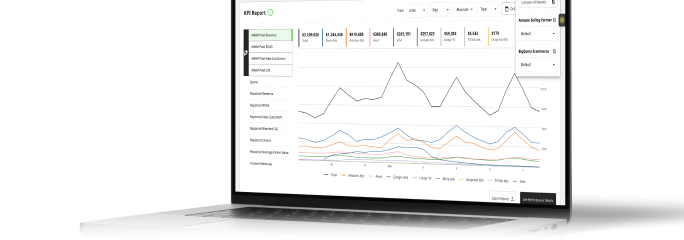
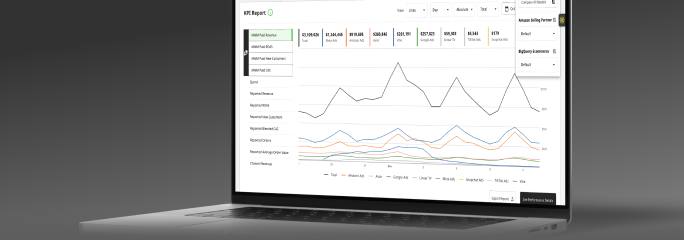
Your MMM makes confident recommendations. But confident isn't the same as correct. Prescient's Validation Layer lets you pressure-test model configurations against various data inputs, so you can choose the one that actually predicts your business.
CHOOSE YOUR VALIDATION METHODS
Incrementality tests
Geo-lift & holdout data
Post-purchase surveys
Customer-reported attribution
MTA & platform data
Multi-touch attribution signals
The status quo
Your model says to shift $200K from YouTube to Facebook. You've got incrementality tests saying something different. Post-purchase surveys tell a third story. Your MTA platform disagrees with all of them. Too many numbers, no clear answer. So decisions grind to a halt and budget stays exactly where it is.
The result?
Paralysis
Conflicting data sources create standoffs where nobody wants to make the call
Blind faith
You trust the model's output because there's no way to see under the hood
Real dollars
Wrong measurement means wrong budget decisions, with channels overfunded or misallocated
The paradigm shift
Prescient's Validation Layer lets you configure model assumptions, calibrate with your own data, and compare accuracy across different model configurations, side by side. You choose the model you believe best predicts your reality. Not because your vendor told you to trust them.
Your existing Prescient model is already validated through backtesting, cross-validation, and scenario testing before you ever see it. But you may have additional data that could make it even more accurate for your specific business.
Bring the data you've been collecting: incrementality tests, post-purchase surveys, MTA platform results, custom business assumptions. Configure alternative models that incorporate these sources. See what changes when you weight your model toward different assumptions.
This is where it gets interesting. Run parallel models against your historical performance and see which configuration actually predicts your reality best. Not guessing which data source to trust, but seeing which one measurably improves your performance.
Select the model that best predicts your business. Then use it to track performance, forecast outcomes, and allocate budget, knowing the measurement foundation under your decisions was pressure-tested against reality, not assumed to be right.
The calibration paradox
Most marketing teams assume that incorporating incrementality tests, surveys, or other data sources will automatically improve their model. Prescient's research tells a different story: sometimes that data degrades model accuracy instead of improving it.
Test conditions don't always reflect real marketing environments. Survey responses carry self-report bias. Platform attribution has its own incentives. Without testing whether each source actually improves prediction accuracy, you're calibrating on hope.
WITHOUT VALIDATION LAYER
You invest in an incrementality test, calibrate your model with the data, and assume accuracy improved. You shift budget based on new recommendations. Three months later, performance is worse and you don't know why.
WITH VALIDATION LAYER
You invest in an incrementality test, calibrate a parallel model with the data, and compare accuracy scores against your baseline. You see that this particular test actually reduced prediction accuracy by 4%. You keep the baseline model and save your budget from a bad recommendation.
2x
Avg. ROAS improvement
Daily
Model updates
$6.6B+
Ad spend measured
93%+
Average backtest accuracy
“We trust Prescient implicitly with our media strategy. Their insights into measurement and optimization are invaluable, and their dedication to learning our business ensures that every recommendation helps us scale effectively at the top of the funnel.”

“With Prescient's guidance, we implemented MMM to explore and expand into new TOF channels, including podcasts. The daily insights at the campaign level gave us confidence to scale effectively and achieve measurable growth.”

“The support we get from Prescient goes above and beyond. They're not only a resource but a strategic partner who genuinely cares about our success, helping us integrate MMM insights into our workflow smoothly.”

“Our founder was blown away when I walked him through the platform… It's amazing. So so useful.”

“There is no other tool out there that can help me validate TV.”

| Typical MMM vendor | In-house / open-source | ||
|---|---|---|---|
| Side-by-side model comparison | Manual effort | ||
| Calibration with external data | Sometimes | ||
| Accuracy scores you can see | Requires DS team | ||
| Guardrails on model health | |||
| Daily model updates | Monthly / quarterly | Depends on team | |
| Requires data science team | No | No | Yes |
Model validation tests whether your MMM's predictions actually match real business outcomes. It includes backtesting against historical data, cross-validation across time periods, holdout testing on unseen data, and scenario testing to confirm recommendations make business sense. The goal is to prove the model works before you trust it with real decisions.
Calibration adjusts your model's parameters using external data like incrementality tests or surveys to improve alignment with known performance. Validation tests whether those adjustments actually improved accuracy by comparing predictions to real outcomes. Think of calibration as tuning the instrument and validation as checking if it plays the right notes. You need both: calibration without validation is tuning based on hope.
Validation Layer supports calibration with incrementality test results (geo-lift, holdout experiments), post-purchase survey data (KnoCommerce, Fairing, etc.), MTA platform outputs, and custom business assumptions about seasonality, promotions, and channel dynamics. You can incorporate any trusted data source and compare the calibrated model's accuracy against your baseline.
Yes, and this is exactly why Validation Layer exists. Prescient's research shows that incorporating external data can sometimes degrade model accuracy, especially if test data was compromised by external factors or doesn't reflect your actual marketing environment. Validation Layer lets you test whether calibration helped or hurt before you act on the results, preventing you from making budget decisions based on a worse model.
Every model makes assumptions about your business: how channels interact, how fast effects decay, how seasonality works. Those assumptions may not capture your unique dynamics. Without testing them against your real outcomes, you're trusting a model that might not understand your business well enough to guide million-dollar decisions. Validation Layer lets you test and customize those assumptions based on evidence.
No. Validation Layer is built for marketing leaders, not data scientists. You configure calibration sources, run comparisons, and see accuracy scores, all through the Prescient platform. Guardrails prevent configurations that would break model health, so you get the freedom to customize without the risk. Your Customer Success Manager can also help you think through what to test first.
Still have questions?
Book a 30-minute call. We'll walk through how Validation Layer works with your specific data sources and measurement setup.
Book a demo
Why validation is critical for brands using an MMM
Read article
Model validation in marketing mix modeling: What marketing leaders need to know
Read article
Calibration vs. validation: Understanding the difference
Read articleEach capability in Prescient connects to the next. Here are the most relevant places to go from here.
See the MMM outputs that validation calibrates, with daily-updating channel-level incrementality for every dollar spent.
Compare validated MMM results against platform-reported metrics in a single unified dashboard.
Give your CFO externally validated marketing ROI numbers they can trust for planning and forecasting.
2x
Avg. ROAS improvement
Daily
Model updates
$6.6B+
Ad spend measured
1–2 wks
Time to value
In your demo, we'll show you how Validation Layer works with your data sources and how to pressure-test your measurement before making your next big budget decision.
Book your demo30-minute call · Custom validation walkthrough · No commitment required