


Is Alexa used for marketing purposes? What brands should know before spending
Is Alexa used for marketing purposes? Yes. See how brands use Alexa ads, audio, and skills, which businesses it fits, and how to measure the impact.
Linnea Zielinski · 12 min read

Your neighbor spends five minutes raving about her lawn mower over the fence. Three weeks later, you buy the same one at a big-box store. The store records a sale, the manufacturer records a sale, and nobody anywhere records the neighbor who talked you into it.
Alexa has a lot in common with that neighbor. It sits in the kitchen, it's part of people's routines, and it can nudge someone toward a product long before they buy it somewhere else. Amazon has spent the past year turning that helpful voice into a serious ad channel, and new formats keep landing. Before you move budget into it, you need a way to see what Alexa does for revenue, because a channel you can't measure is a channel you end up funding on faith.
Key takeaways
- Amazon Alexa is used for marketing through paid ads, interactive audio, Alexa skills, and product discovery in shopping conversations.
- "Alexa" now covers several different products, and each one has its own ad formats and reporting.
- If you already run Amazon sponsored ads, your brand may already be showing up in Alexa conversations.
- Alexa tends to suit repeat purchases, simple orders, entertainment, and brands with strong Amazon sales.
- Audio is the most accessible option for brands that don't sell on Amazon, though Amazon lists a typical minimum budget of $50,000.
- Voice responses and cart adds are early signals, so they shouldn't be treated as proof of revenue.
- Alexa's real value can show up on your website, at retail, or in other channels that Amazon's reports can't see.
How is Alexa used for marketing today?
Alexa is very much a marketing channel, and it's far more of one than it was even two years ago. Businesses use Amazon Alexa to run ads, reach people through audio, answer questions in a shopping conversation, and offer branded voice experiences. If you manage a paid media budget and sell on Amazon, at retail, or both, it's worth knowing which of those options apply to you.
The potential audience explains the interest. Amazon reported more than 600 million Alexa-enabled devices purchased worldwide as of January 2026, though purchased devices aren't the same as active users. In the 12 months leading up to October 2026, more than 400 million customers used Alexa for Shopping.
Smart speakers are still the image most people have of Alexa, but they're only one piece of it. Customers also reach the assistant through phones, smart home devices, and an Amazon Echo device with a screen, so millions of people can meet the same brand in very different settings.
What "Alexa" means in 2026
Marketers often talk about Alexa as one channel, but the name now covers three separate experiences:
| Experience | What it is | Where people use it |
|---|---|---|
| Alexa for Shopping | Amazon's AI shopping assistant, which replaced Rufus in May 2026 | Amazon's website and app, plus Echo Show |
| Alexa+ | The conversational upgrade to Alexa, built with artificial intelligence and natural language processing | Amazon Echo devices, phones, and the browser at Alexa.com |
| Alexa-enabled devices | Hardware devices that respond to Alexa voice commands | Smart speakers, Echo Dot, Echo Show, and other smart devices |
The distinction matters because a sponsored result in the Amazon app and an ad on a kitchen speaker behave nothing alike. They're bought differently, and they're reported differently, too. Alexa isn't limited to Amazon devices, either. It reaches other devices through Alexa Voice Service, allowing customers to talk to the assistant on products made by other companies. You'll see those products labeled Alexa Built-in.
How Alexa differs from AI chatbots
AI chatbots are starting to sell ads too, so it's fair to ask what sets Alexa apart. Two things stand out:
- It's ambient. People use Alexa hands-free while they cook or get ready for work, which opens up moments a screen-based ad can't reach.
- It's attached to a store. Amazon can connect what someone asks or listens to with what they buy on Amazon, and most voice assistants can't do that.
How brands use Amazon Alexa for marketing
The options range from ads you may already be running to projects that take real software development. This chart shows the main formats at a glance:
| Format | Where it appears | Best for | How you get in |
|---|---|---|---|
| Sponsored ads and prompts | Alexa for Shopping | Amazon sellers | Existing campaigns are eligible |
| Alexa+ conversational ads | Alexa-enabled devices | Amazon sellers | Sponsored advertisers are enrolled automatically |
| Alexa+ Agentic Ads | Echo Show | Food orders, tickets, simple purchases | Limited partners so far |
| Interactive audio ads | Audio on Alexa-enabled devices | Awareness and reminders | Amazon Ads account executive or Amazon DSP |
| Prime Video Sponsored Tiles | Eligible Echo Show devices | Film and TV | Amazon Ads |
| Alexa skills | Skills on Alexa | Utility and reordering | Build and promote your own |
| Organic discovery | Alexa conversations | Brands with strong Amazon content | No media buy |
Sponsored ads and prompts
Here's the part many brands miss: existing sponsored ads campaigns can serve in Alexa for Shopping with no additional setup. You may already be advertising through Alexa without having made a decision to do it.
Sponsored Products and Sponsored Brands prompts go a step further by opening a product conversation from search results or a product page. Amazon says nearly 20% of shoppers who interact with a prompt keep talking about that brand and that adding prompts to a Sponsored Brands ad drives a 6% increase in conversions. Those are Amazon's own figures, so treat them as a reason to test.
Alexa+ conversational ads
These ads introduce a brand into a natural back-and-forth when it's relevant to what someone's asking. For example, a shopper might request mirrorless cameras, see a sponsored option in the results, ask follow-up questions, and tell Alexa to add one to their cart. They're available in audio and static formats, and advertisers with sponsored ads campaigns are enrolled automatically.
Alexa+ Agentic Ads
Agentic Ads let customers see an ad, ask questions, and finish the purchase without leaving the conversation. They launched in June 2026 on Echo Show with partners including Papa Johns for food orders and artists including Beck and Jill Scott for concert tickets. Amazon plans to bring in more brands and services in the future, but this format isn't something most advertisers can buy today.
Interactive audio ads
Audio ads play across Amazon Music, Alexa news, and third-party audio services. The interactive version—which lets listeners respond out loud without stopping their music—gives people three things to say:
- "Alexa, add to cart" puts the advertised product in their Amazon cart.
- "Alexa, send more info" sends an email and push notification to their phones with a link from the advertiser.
- "Alexa, remind me" sets a reminder for an event or release.
You can buy audio ads whether or not you sell in the Amazon store, which makes them the clearest route for brands without an Amazon business. A listener doing the dishes doesn't need to remember your URL or grab a phone. They only need to say the wake word and the phrase in your ad.
Prime Video Sponsored Tiles
This one's mostly for entertainment marketers. When someone asks Alexa+ for movie or TV recommendations on an eligible Amazon Echo device, sponsored titles can appear in the response. Viewers can then subscribe to a channel or buy or rent a title by voice or touch.
Alexa skills
Alexa skills are voice apps that add abilities to Alexa, a bit like software applications on a phone. Brands such as Tide have used custom skills to answer questions and offer help around their products. Developers create them with the Alexa Skills Kit, and there were more than 160,000 available as of 2024.
Before you greenlight one, weigh two limits that most guides skip:
- Skills aren't an ad slot. Amazon's policy rejects skills that surface advertising or promotional messaging, with exceptions that include streaming audio, flash briefings, and deals a customer specifically asks for.
- Discovery is on you. Few people browse for a new skill, so a skill usually needs its own promotion to find an audience.
Custom skills make the most sense when they do something useful on a repeat basis, like reordering a product or walking someone through a task. If the main goal is reaching new customers, paid formats will get you there faster.
Organic voice discovery
Brands can also show up in Alexa's answers without paying for the placement. Alexa+ conversations mix organic and sponsored suggestions, and people speak to voice assistants differently than they type into Google. "Best air purifier" becomes a full request about a bedroom, a pet, and a budget. Amazon hasn't published a formula for earning those recommendations, so anyone promising one is guessing.
Which businesses are the best fit for Alexa marketing?
Amazon Alexa may work well for some business types and be a poor use of budget for others. These are general guidelines rather than benchmarks, and your own results should outweigh them:
| Business type | Likely fit | Where to start |
|---|---|---|
| CPG and repeat-purchase goods | Stronger | Sponsored campaigns, then interactive audio |
| Entertainment and live events | Stronger | "Remind me" audio and Sponsored Tiles |
| Quick-order food and delivery | Stronger, once access opens up | Watch for wider Agentic Ads availability |
| Omnichannel brands with Amazon sales | Worth testing | One defined audio or sponsored test |
| Brands that don't sell on Amazon | Awareness only | Audio with "send more info" |
| High-consideration purchases | Weaker | Use Alexa for education, if at all |
| B2B services | Usually weak | Put the budget elsewhere |
Two simple questions will sort out most of this. Can someone comfortably buy your product without looking at much? And does enough of your revenue flow through Amazon, or respond to audio, to justify a test? A mattress buyer probably wants to research a lot more than a person reordering laundry pods.
What to fix before you spend
The format gets most of the attention, but a few basics decide whether your investment has a fair shot. Each one's cheaper to fix before a campaign starts than after.
Your Amazon product content
Amazon Alexa can only talk about your products using the information it has. Sponsored Prompts reportedly draw on your product pages, Brand Store, and campaign data, so outdated content can shape what the assistant tells shoppers. Check these first:
- Titles and categories that are accurate
- Descriptions that name real use cases
- Attributes like size, ingredients, and compatibility
- Customer questions that have clear answers
- Pricing and availability that are current
Your audio creative
A video ad with the picture removed rarely makes good audio. People are often listening while doing something else, so simplicity wins:
- Open with the listener's problem.
- Say your brand name more than once.
- Stick to one message and one voice command.
- Use Amazon's approved phrasing exactly as written, since the interaction depends on it.
The customer experience
Nobody asked to hear an ad while asking about the weather. Voice technology feels personal because it's in the home, so an ad at the wrong moment can hurt the customer experience more than a banner someone can scroll past. Test whether your offer helps in the moment, and keep hands-free steps short.
Privacy concerns
Customers are understandably wary of a device that's listening for a wake word, and years of headlines about voice data haven't helped. Your brand inherits some of that wariness. Amazon has confirmed that Alexa interactions can inform targeted ads, while saying it doesn't share voice recordings with skill developers. Advertisers shouldn't assume they can see what people say at home, and your team should avoid creative that implies Alexa overheard something.
Why Alexa marketing is so hard to measure
Amazon promotes closed-loop measurement from impressions to conversions, and that reporting is useful for what happens on Amazon. It just can't answer the question your CFO cares about: what did this spending do for the whole business?
Alexa results can blend into your other reporting
For Sponsored Products on Alexa+, Amazon rolls performance into existing dashboards. That's convenient until you want to know how much of a campaign's result came from Alexa, because a single campaign may have served on several surfaces at once.
The usual shopping signals can disappear
Standard Amazon reporting grew up around a familiar path: click, product page, cart, purchase. In an agentic purchase, there's no product page visit or cart step to examine. You'll know an ad served and an order happened, with much less detail about what happened between them.
Engagement isn't revenue
Voice metrics are easy to celebrate, and they're easy to overrate. Here's what each one can and can't tell you:
| Metric | What it tells you | What it can't tell you |
|---|---|---|
| Impressions and reach | How many times the ad ran | Whether anyone paid attention |
| Audio completion | Whether the ad played through | Whether it changed anyone's mind |
| Voice response rate | Whether the call to action worked | Whether those people will buy |
| Add-to-cart rate | Whether interest turned into action | Whether the cart ever checked out |
| Amazon-attributed sales | What Amazon credits to the ad | What happened on other channels |
Amazon can't see your whole business
Say someone hears your coffee ad on Monday, searches your brand on Google on Wednesday, and picks up a bag at Target on Saturday. Google may get credit for the search, Target records a sale, and Amazon reports nothing at all. The audio campaign did real work, and it looks like it did none.
That's a halo effect: revenue a campaign drives indirectly through another channel. The reverse can happen too, since last-click reporting can hand credit to whichever ad happened to be nearby when someone was already ready to buy.
Shopper stats can flatter the channel
Amazon says US Alexa for Shopping users spend 50% more per order, and people who've tried Alexa+ have become Prime members at a nearly 25% higher rate. Those numbers compare different groups of people. Your most engaged Amazon shoppers may be the ones most likely to try a new shopping assistant, so the data doesn't show how much of the gap Alexa created.
Questions to answer before you invest
A little research upfront will save you from buying a format you can't evaluate. Get clear answers to these before you commit:
- What exactly are we buying? Name the format, because "Alexa ads" could mean any of several products.
- Which devices will it run on? Some placements are limited to Echo Show.
- What can a customer do next? Find out whether they can buy, add to cart, request info, or set a reminder.
- What will Amazon report? Ask whether you can separate Alexa from other placements.
- Can we isolate the test? Decide whether it can run as its own campaign.
- How will we judge the effect outside Amazon? Have a plan for your website, retail partners, and other channels before launch.
- What result would change our budget? Set the threshold now, so a good-looking dashboard doesn't make the decision for you.
Where Prescient comes in
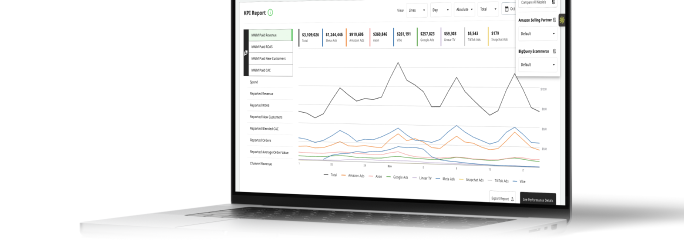
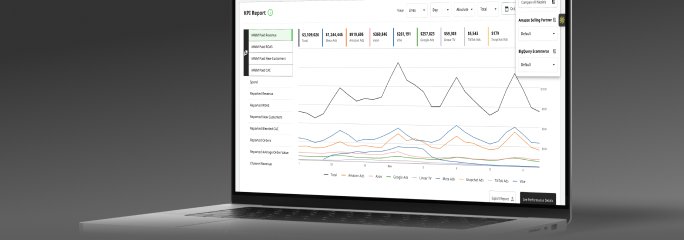
Alexa could be a smart addition to your mix, but you'll only know if you can see what it's driving alongside everything else you run. Prescient's marketing mix model starts with the sales you can observe and works backward to estimate what drove them, across Amazon Ads, Amazon DSP, Meta, Google, CTV, and more. Omnichannel brands can connect Amazon Seller Central and retail revenue data, then compare Modeled ROAS with platform-reported ROAS at the campaign level. When an Alexa test runs as its own campaign, you can see how that campaign performs. When Amazon blends Alexa into a broader sponsored campaign, you'll see the combined performance of that campaign.
That full view is what keeps a promising channel from being judged on Amazon's numbers alone. Prescient measures halo effects and retail halo effects, so you can see when a campaign's value shows up in branded search, on your site, or at a store. Our Media Forecasting feature then helps you plan what could happen if you scale a channel or shift budget toward it from somewhere else. Book a demo to see what your media is really doing for revenue.
FAQs
Can you advertise on Alexa?
Yes. You can reach Alexa users through sponsored ads in Alexa for Shopping, conversational ads on Alexa+, audio ads on Alexa-enabled devices, and a limited set of Agentic Ads. Which options are open to you depends on whether you sell on Amazon and how much you plan to spend.
How much do Alexa ads cost?
It depends on the format. Amazon's audio ads are sold on a CPM basis with a typical minimum budget of $50,000 in the US when you work with an account executive, while sponsored campaigns generally let you set much smaller budgets. Amazon hasn't published standard pricing for Agentic Ads.
What's the difference between Alexa and Alexa+?
Original Alexa mostly responds to specific commands, like asking it to play music or check the news, and it usually needs the wake word before each request unless someone's turned on Follow-Up Mode. Alexa+ is the newer, more conversational version, so people can ask follow-up questions and complete multi-step tasks in a more natural way. For marketers, Alexa+ matters because it's where conversational and agentic ad formats appear.
Does Alexa use what you say to target ads?
Amazon has said that voice data from Alexa interactions can help inform targeted ads, and customers can opt out of interest-based advertising. Amazon has also drawn a line between using interaction data and sharing voice recordings, and researchers and lawsuits have challenged how clearly it's disclosed these practices. Either way, advertisers should plan around Amazon's audience tools and shouldn't expect access to what people say at home.
Can small businesses market on Alexa?
Yes, mostly through sponsored ads if they sell on Amazon. Sponsored Products on Alexa+ have been available to US sellers and vendors on Echo Show, so a small seller with active campaigns may be eligible already. Audio is a harder fit for a small budget because of its typical minimum.
How do you measure voice advertising?
Start with platform metrics for delivery and response, then look at what happened to revenue across every place you sell. A marketing mix model can help because it doesn't depend on someone clicking an ad, which matters for a channel where many people never touch a screen.
The Halo
Exclusive insights, every week.
Subscribe to The Halo for sharper marketing thinking.
You're subscribed to The Halo!
Quick question (optional): How familiar are you with MMM?
Thanks for sharing! Enjoy The Halo.
Keep reading
View all
How do you measure Amazon advertising's incremental impact on Amazon sales?
Read article
TACoS marketing: What it actually tells you (and what it doesn't)
Read article
How to measure conversions without user-level identifiers
Read article
How to compare privacy-preserving measurement platforms
Read article
Can MMM distinguish organic demand from paid advertising's impact?
Read article
What should you look for in an MMM platform if you need weekly budget recommendations?
Read article