


You're not losing to retailers. You're just not measuring the win.
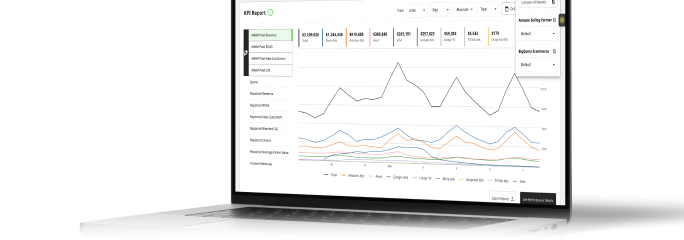
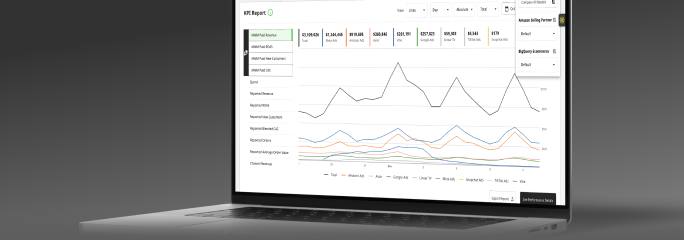
Your D2C dashboard can't see what your campaigns are doing at retail, but they’re driving sales. Here's how to measure that spillover revenue of your marketing.
Linnea Zielinski · 4 min read

Walk into a store with mirrored walls and it looks twice as big as it actually is. The space hasn't changed, just what you can see of it. Most D2C dashboards do something similar, except in reverse. They make your paid media look smaller than it really is, because a big chunk of what that marketing spend built is showing up on someone else's shelf, and your dashboard can’t see it.
We know that when leadership looks at a D2C revenue report and compares it to what marketing spent that quarter, they're deciding whether to protect your budget, cut it, or hand it to a retail media line item instead. The marketing measurement platform you choose to use has a direct impact on how that consideration goes. If the report you’re using only shows half the picture, you're making your case to leadership with half the evidence.
Key takeaways
- Retail partners often outcompete a brand's own site on price, delivery, reviews, and search visibility, and that's a reality of industry systems, not a sign your marketing failed.
- Campaigns built to drive D2C traffic frequently spill over into branded search, direct traffic, and retail sales that never show up in a D2C-only report.
- Prescient calls this spillover halo effects, and it's measurable at the campaign level, not just estimated as a vague brand awareness benefit.
- Marketing channel reporting and D2C dashboards weren't designed to capture omnichannel revenue, which means marketers are often being judged on an incomplete number.
- Quantifying retail spillover gives marketing a way to prove impact instead of getting blamed for a channel disadvantage that was never really theirs to fix.
- Brands with a retail presence need measurement that reflects how customers actually shop, not just where they happened to click last.
Retailers have real advantages, and no campaign fixes that alone
Retail partners have spent years optimizing things a brand site usually can't match on its own. Faster shipping, easier returns, deeper review histories, and enough domain authority to outrank a brand for its own product terms are all real disadvantages a D2C-only strategy runs into.
None of that means your campaigns aren't working. It means the D2C site was never going to be the only place, or even the primary place, your marketing shows up as revenue. A customer who sees your ad and buys from Target instead of your own site didn't reject your marketing. They responded to it, just not on the property you're measuring.
The part of the story your D2C report can't see
This is where halo effects come in. It's the term we use for the revenue your campaigns drive outside of direct, immediate conversions, including purchases through branded search, direct traffic, organic search, and sales through retail and marketplace partners.
A prospecting campaign on Meta or CTV might not convert someone on the spot, but it can be the reason that person searches your brand name a week later, walks into a store, or adds your product to a Walmart or Target cart the next time they're already shopping there. If your reporting stops at your own site, that entire chain of revenue gets written off as if it magically happened on its own.
What gets missed when retail isn't part of the measurement
Prescient's approach treats retail as part of the customer journey instead of a separate universe that marketing can't touch. That's especially important for omnichannel brands, since a growing share of retail happens through connected retail partners rather than a brand's own checkout.
Some of the retail connections this can include are Target, Walmart, Ulta, Sephora, Amazon, Macy's, and Dick's Sporting Goods. When those channels are part of the model instead of sitting outside it, a campaign that looked flat on a D2C-only report can turn out to be one of the strongest performers in the account once retail-driven revenue is counted.
Treat retail as a channel, not competition
The instinct to compete head-on with retail partners on price and speed usually doesn't end well, and it's not really marketing's fight to win. A more useful shift is treating retail as a channel your campaigns already influence, and measuring it that way.
That changes the conversation with leadership. Instead of explaining away a soft D2C number, marketing can show the full revenue a campaign generated across every place a customer actually bought. It also changes the conversation with retail partners, since brands with clear visibility into how their marketing drives retail sales are in a much stronger position when negotiating co-op spend, placement, or retail media terms.
Where Prescient comes in
Prescient's marketing mix model is built for brands that sell everywhere their customers shop, not just through their own site. By measuring halo effects at the campaign level and connecting directly to retail partners, Prescient shows marketing teams the full revenue picture their campaigns are creating, including the sales that happen far from the original click.
If your D2C dashboard has been telling you your campaigns are underperforming, it might just be missing where the win actually landed. See how the Prescient platform can reveal what your marketing is really driving across every channel your customers use when you book a demo.
The Halo
Exclusive insights, every week.
Subscribe to The Halo for sharper marketing thinking.
You're subscribed to The Halo!
Quick question (optional): How familiar are you with MMM?
Thanks for sharing! Enjoy The Halo.
Keep reading
View all
How AI is changing top of funnel demand generation
Read article
Why traditional MMMs fall apart during peak sales
Read article
Why halo effects matter even more for subscription businesses
Read article
7 signs in your campaign data that consumers are getting more selective
Read article
Why your marketing team structure might be your biggest measurement problem
Read article
A down economy is the worst time to fly blind on measurement
Read article