




Welcome back to The Halo. In this issue we cover:
- Industry Watch: Meta cut its view-through windows on January 12. Most marketers never trusted attribution that far anyway.
- The Take: TileCloud watched Google Ads report a 30% revenue drop that never happened.
- From the Blog: Does server-side tracking fix the pixel problem? A closer look at Conversions APIs.
- Prescient Voices: Drew Mansur, Co-Founder at TileCloud, on staying calm while the dashboard lied.
- Three Things: Reads on cookieless MTA, the attribution problem, and what Halo Effects actually show.
On January 12, 2026, Meta removed 7-day and 28-day view-through attribution from its Ads Insights API. Ads Manager stopped showing those windows years ago. The API was the last route third-party dashboards had to pull attribution beyond a click. For DTC categories with long consideration cycles — home goods, furniture, mattresses, jewelry — the shopper who compares samples for three weeks and then buys at full price is the one who now falls outside every window the platform still reports.
TileCloud found this out early, just not from Meta. In 2023, the Australian tile and renovation retailer's pixels broke. Google Ads' dashboard started reporting revenue down 30% over several weeks. Nothing else had changed: not traffic, not conversion rate, not the actual sales coming through the door. Co-founder Drew Mansur had Prescient's model running underneath the noise, pixel-free, and it matched what the bank account already knew. He kept the campaigns running.
Pixels break two ways: accidentally, like TileCloud's did in 2023, or on purpose, like Meta's window cut in January. Either way, a brand that measures itself through the platform's own tracking is measuring itself through someone else's decision.
Welcome to The Halo. Each week: one piece of measurement analysis, the best of the blog, one real customer result, and three reads worth your time.
Let's dive in.
INDUSTRY WATCH
Meta cut its view-through windows on January 12. Only 21.5% of marketers trusted last-click to start with.
Meta confirmed the change on its developer blog back in October 2025: 7-day and 28-day view-through attribution windows removed from the Ads Insights API as of January 12, 2026. Ads Manager had already stopped showing those windows. The API was the last surface where third-party dashboards could still pull the long view-through data. The mechanism is specific. A shopper sees an ad, doesn't click, browses the product elsewhere for two to four weeks, then converts. Under the old windows, that credit still flowed into third-party measurement tools. Under the new policy, it won't. Retail categories with long consideration cycles — home goods, furniture, mattresses, jewelry — lose the most reportable revenue, because their customers were never fast clickers to begin with.
This didn't break something that was working well. Only 21.5% of marketers said they trusted last-click attribution before this change (eMarketer). Meta removed one of the few remaining workarounds inside a system most people already knew was undercounting.
One correction worth making here: this has nothing to do with cookies. Chrome's third-party cookies didn't die, despite three years of industry obituaries. Google reversed the deprecation plan in July 2024 and killed the Privacy Sandbox replacement entirely in October 2025. None of that is relevant to Meta's window cut. This is a first-party reporting decision inside Meta's own stack, and it hits every advertiser in the category regardless of what's happening in the browser.
61% of US retail decision-makers already use some form of marketing mix modeling, per a Feedvisor survey run through eMarketer in March 2026. One survey, self-reported, worth treating as directional rather than definitive. But the direction is the point: retail is moving measurement upstream, off the platform's pixel and onto the customer's actual behavior. That's what MMM paired with Halo Effects is built for. It reads the channel from the outcome itself. Tracking windows a platform can shorten at will stay outside the model.
Sources: Meta for Developers, eMarketer, Feedvisor via eMarketer.
01 · THE TAKE
TileCloud's dashboard said revenue was down 30%. The bank account said otherwise.
TileCloud sells tile and renovation materials online, the kind of purchase that starts with a sample order and ends, weeks later, with a full room. In 2023, the pixels tracking that path broke. Google Ads started reporting a 30% drop in revenue. Nothing else had moved: not traffic, not conversion rate, not the actual sales coming through.
Co-founder Drew Mansur had the choice every performance marketer eventually faces: trust the dashboard and start cutting spend, or trust something else. Most brands don't have a something else. They cut.
TileCloud had one. Prescient's model runs without a pixel, built on Halo Effects and the brand's actual revenue rather than on what the ad platform chooses to report back. The model showed what the dashboard couldn't: real revenue holding steady underneath the broken tracking. Mansur kept the campaigns running instead of pulling spend out of channels that were still working.
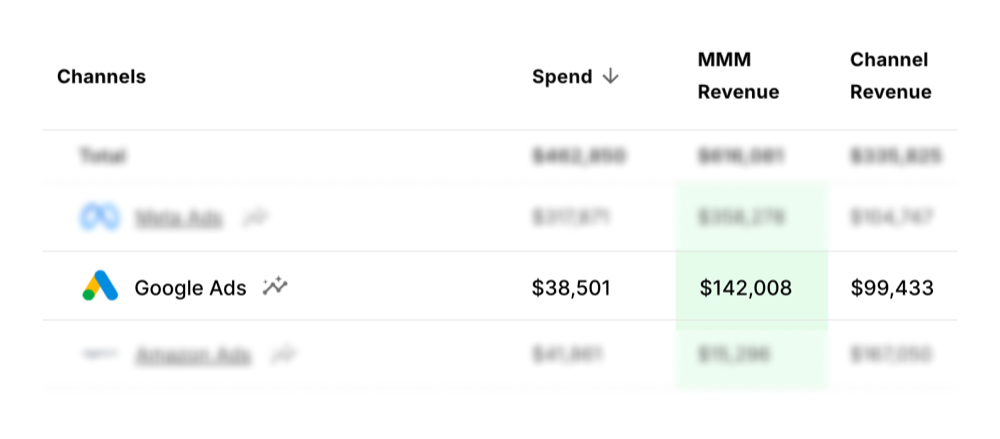
Example from an anonymized account, not TileCloud's numbers. The channel reports $99,433; Prescient's model measures $142,008. That gap is revenue the platform's tracking never credits.
The mechanism doesn't change the outcome. A broken pixel and a shortened attribution window produce the same bad decision if you let the platform's own reporting make that decision for you. Measurement that doesn't depend on the pixel is the same fix either way.
A brand that measures itself through the platform's own tracking is measuring itself through someone else's decision.
02 · FROM THE BLOG
Does server-side tracking fix the pixel problem?

Every attribution system eventually disagrees with itself. Pixels break, cookies expire, platforms redefine their own windows. The question that actually matters isn't why the disagreement happened. It's what a brand does in the gap between what the platform reports and what actually happened in revenue.
Server-side tracking and Conversions APIs are meaningful improvements over client-side pixels. The post walks through what they actually fix, and what they still can't see. The short version: they close some of the tracking gaps, but they don't solve the deeper problem that the ad platform is still the one deciding which conversions count.
Marketing mix modeling and Halo Effects start from the other end: actual revenue, actual spend, actual timing, no pixel required. It's a different question entirely, one that doesn't need the platform to keep reporting a window it might close next quarter.
03 · PRESCIENT VOICES
There's only so long you can watch reported revenue drop before you take action. Prescient tracked seamlessly and gave us the confidence to keep the pedal to the metal.

04 · THREE THINGS WORTH READING
1. Multi touch attribution without cookies: what actually works and what doesn't
The direct companion to this week's Industry Watch. Cookieless MTA is possible, but the gaps are real. The post covers what each tracking method still captures, what it misses, and where marketing mix modeling fits in the stack. Read →
2. What your attribution isn't telling you about your best customers
CAC tells you the cost of acquiring a customer. Whether that customer was worth acquiring is a different measurement entirely. The post walks through why attribution flattens the value of the customers who actually build a brand's revenue base, and what to measure once retention economics enter the picture. Read →
3. What Halo Effects are showing you (and why your other tools miss them)
The complement to TileCloud's story. Halo Effects surface the revenue that platform attribution tools cannot see. The post explains what shows up in the report, why other tools miss it, and how to read the data accurately without over-crediting or under-crediting a channel. Read →
The Halo
Exclusive insights, every week.
Subscribe to The Halo for sharper marketing thinking.