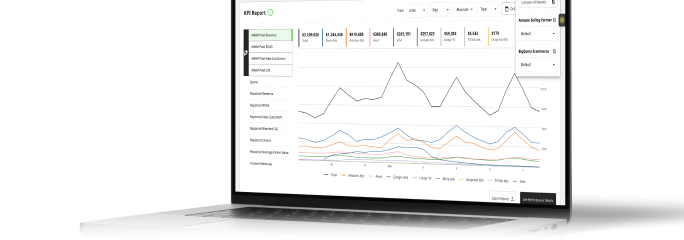




Can MMM measure influencer marketing?
Can MMM measure influencer marketing? Yes, without promo codes or clicks. Here's why traditional MMMs undervalue creators and how Prescient measures them.
Linnea Zielinski · 8 min read
A friend raves about her new running shoes, and two weeks later you buy a pair. Maybe you searched the brand name, or maybe you grabbed them at a store near your office. Either way, the company's records show a branded search click or a retail sale, and nothing anywhere says your friend was involved. Her recommendation did the work, and something else got the credit.
Influencer marketing runs on that same kind of recommendation, and it gets under-credited in the same way. So, can a marketing mix model (MMM) measure it? Yes, an MMM can measure influencer marketing, and it's well suited to the job because it doesn't depend on anyone clicking a link or entering a code. The catch is that many traditional MMMs measure it poorly, because creator spend is irregular and most of its effect shows up indirectly and later.
That gap gets more expensive as creator budgets grow. When the only numbers available are code redemptions and reach, teams either underfund partnerships that are driving sales or keep paying for reach that isn't.
Key takeaways
- Yes, an MMM can measure influencer marketing. It works from spend, timing, and revenue patterns, so it doesn't need clicks, links, or promo codes.
- Promo codes, affiliate links, and last-click tracking capture only the buyers who act right away, which misses people who later search the brand, visit directly, or buy on Amazon or at retail.
- Traditional MMMs struggle with influencer marketing because they treat channels as independent, apply one fixed decay rate, and handle stop-and-start spend badly.
- Prescient's MMM treats creator activity as something that builds demand over time and credits it for the sales that show up in other channels, known as halo effects.
- How clear the read is depends on how much you spend, how consistent the activity is, and whether your data reflects when content went live.
- Better measurement lets teams defend creator budgets with revenue impact instead of reach and engagement.
Direct tracking captures only part of what creators drive
Promo codes, affiliate links, and last-click tracking capture only the people who act on creator content right away. Many of the people a creator influences never click the link or use the code. They search for the brand on Google days later, go straight to the website, or buy through Amazon or a retailer.
Marketers also tend to hear that influencer marketing is too irregular, too untracked, or too small to measure in an MMM. Put those two things together and you get an attribution gap that cuts both ways. Some growth teams under-invest in strong creator partnerships because the direct numbers look weak, and others keep funding reach that never turns into sales.
Why traditional MMMs struggle with influencer marketing
Traditional MMMs were built around steady TV and digital ad spend, and creator marketing breaks four of their core assumptions. Each one pushes the model toward undervaluing creators or misreading them.
They treat every channel as an independent slice of revenue
Traditional models assume sales are a baseline plus a set of channel contributions, each standing on its own. Creator content rarely converts in a straight line like that. It builds awareness and interest that another channel converts weeks later, and a model made of independent slices has nowhere to put that kind of effect.
Downstream channels end up with the credit
When a creator campaign lands, branded search, direct traffic, and retargeting all pick up. A model that doesn't represent which channels create demand and which ones capture it will hand those sales to the lower-funnel channels, or write them off as organic demand. Creator spend ends up looking unprofitable when it was the reason those channels had a good month.
One fixed decay rate doesn't fit creator content
Traditional models assume an ad's effect fades at one steady rate. Creator content doesn't behave that way. A YouTube review or a TikTok video can spike right after it's posted, go quiet, and then pick up again weeks later as platform recommendation algorithms resurface it.
Stop-and-start spend is hard to read
Influencer budgets move around campaign drops, product gifting, and post dates, with plenty of zero-spend days in between. With data that sparse, a traditional model has very little to separate the channel's effect from background trend or seasonality. Its estimate can swing widely from one run to the next, or it can treat noise as if it were performance.
How Prescient measures influencer marketing
Prescient measures influencer marketing by modeling it as an input that builds demand over time within one connected system, instead of expecting an immediate, direct spike in sales. Our MMM works backward from what can be observed—what you spent, when activations ran, and what revenue came in—to estimate what drove sales. It doesn't follow individual shoppers, so it doesn't need a click or a code.
The data comes from the tools creator teams already use. Prescient connects to creator platforms such as CreatorIQ and Grin to bring in the cost and timing of influencer activations, and that activity is modeled alongside paid media, affiliate, and retail channels.
Creator spend gets credit for downstream sales
Creator content mostly works as demand creation, and our model represents the difference between campaigns that create demand and campaigns that capture it. That lets Prescient credit creator campaigns for their halo effects, which is the revenue they drive indirectly through other channels such as branded search, direct traffic, Amazon, and retail. Any campaign can produce halo effects, though demand-building activity like creator content tends to produce more of them.
Carryover is learned for each tactic
Prescient’s model learns how long each tactic keeps working instead of applying one fixed decay rate to everything. A long-form YouTube integration can keep influencing purchases far longer than a 24-hour Instagram Story, and the model can reflect that difference. Because Prescient's models update daily, you can also follow how a creator campaign's impact shifts as the content keeps circulating.
Creator campaigns aren't forced to saturate
Our model doesn't push creator spend through a pre-set saturation curve that always flattens. If a creator campaign keeps returning steadily as you scale it, the model lets the response stay close to a straight line, and it shows saturation only when your data supports it.
What affects how clearly an MMM can read influencer impact
An MMM reads influencer impact most clearly when spend is meaningful, activity is consistent, and the data reflects when content went live. Five factors—level of detail, volume, timing, paid amplification, and test data—make the biggest difference.
| Factor | Why it matters | What to do with it |
| Level of detail | A model needs enough activity in each group it's asked to measure. | Start with the channel and campaign level. Finer cuts, such as creator tier or individual creators, spread the same spend thinner. |
| Spend and content volume | Larger, steadier investment leaves a clearer footprint in the data. | Expect a faster, firmer read on an always-on program than on a handful of one-off posts. |
| Timing data | Demand moves when a post goes live, which is rarely the day the invoice is paid. | Record spend against activation dates so the model lines up with audience activity. |
| Paid amplification | Boosting creator content with ad spend, often called whitelisting, adds paid distribution on top of the creator's own reach. | Track boosted spend separately from creator fees so the two can be read separately. |
| Test results | A geo holdout reads one place at one moment, which may not hold in another season or at a larger budget. | Treat tests as one input. They don't settle the question on their own. |
On that last row, Prescient can incorporate a test result into the model as a prior. It shows you how the model performs with and without the test included, and you make the final call.
There's also a limit worth stating plainly. A single post from a small creator won't leave a signal any model can read on its own, so the most useful questions are about programs and campaigns.
What better influencer measurement changes for the business
Better influencer measurement changes the conversation about creator budgets from reach and engagement to revenue. That shows up in three ways.
- Numbers finance can work with. Revenue impact gives a CFO something sturdier to evaluate than promo-code redemptions and impression counts.
- A view of cross-channel effects. Seeing how creator activity lifts branded search, direct traffic, and retail sales changes how you judge the efficiency of those channels, too.
- Protection for creator budgets. Teams are less likely to cut creator spend because last-click reporting made it look weak.
Where Prescient comes in
Prescient's MMM gives omnichannel brands a read on influencer marketing that sits alongside paid media, affiliate, and retail in one model. It attributes revenue to specific influencer campaigns, measures halo effects, including retail halo effects, and updates daily.
From there, Media Forecaster shows what's likely to happen when you scale influencer spend or shift budget into it from other channels, so a bigger creator program starts with a forecast instead of a guess. If you'd like to see how the platform reveals what your creator spend is driving, book a demo.
FAQs
Can a marketing mix model measure influencer marketing?
Yes. A marketing mix model can measure influencer marketing because it works from aggregate data, such as spend, timing, and revenue, and doesn't rely on clicks or promo codes. How well it works depends on the model. Traditional MMMs often undervalue creators because most of a creator's impact shows up later and through other channels.
Why don't promo codes and affiliate links show the full impact of influencers?
Promo codes and affiliate links only capture buyers who use them. Many people who see creator content buy later by searching the brand, visiting the site directly, or shopping on Amazon or at a retailer, and none of those purchases carry the code. Direct tracking is useful, but it shows a floor on creator impact.
What data does an MMM need to measure influencer marketing?
At minimum, an MMM needs what you spent on creators and when the activity happened, alongside your revenue and the rest of your marketing data. Timing matters most. Spend recorded on the date content went live is far more useful than spend recorded on the date an invoice was paid.
Can an MMM measure individual creators?
It depends on how much activity each creator represents. An MMM needs a meaningful amount of spend and content to pick up an effect, so a single post from one small creator is usually too little to read on its own. Grouping creators into campaigns gives a much clearer picture.
How long does influencer content keep driving sales?
It varies by format and platform, and there isn't one number that fits every program. Short-lived content tends to fade quickly, while long-form or searchable content can keep working for weeks and sometimes resurfaces later. That's why a measurement model should learn the pattern from your data.
The Halo
Exclusive insights, every week.
Subscribe to The Halo for sharper marketing thinking.
You're subscribed to The Halo!
Quick question (optional): How familiar are you with MMM?
Thanks for sharing! Enjoy The Halo.
Keep reading
View all
What matchback analysis measures, what it misses, and how to fill the gaps
Read article
Can MMMs measure campaigns, or only channels?
Read article
How do MMMs work? What happens between your data and your budget recommendation
Read article
Prescient vs. last-click: What your attribution model can't see
Read article
How to measure effectiveness of awareness campaign performance
Read article
How retargeting pixels work and what they can't tell you
Read article