


Best programmatic platforms for omnichannel audio campaigns
Compare the best programmatic platforms for omnichannel audio campaigns, from The Trade Desk to Amazon DSP, and learn how to measure audio's full impact.
Linnea Zielinski · 14 min read

When a friend tells you about a great new skillet over coffee, you don't click anything. You just remember it. Then a week later you're wandering through Target, you see it on an endcap, and it lands in your cart. Your friend drove that sale, but no receipt, dashboard, or analytics tool will ever say so.
Audio ads work a lot like that friend. Someone hears your spot during a morning podcast or between songs on a run, and they buy later through a branded Google search, your website, Amazon, or a store shelf. The best programmatic advertising platform for audio makes it easy to reach audiences like that at scale, but your budget decisions depend on seeing what those ads actually drove. If you can't see the sales that show up somewhere else, you'll keep underfunding one of the few channels that reaches people when they're away from a screen.
Key takeaways
- The best programmatic advertising platforms for omnichannel audio include The Trade Desk, Amazon DSP, Google Display & Video 360, StackAdapt, Viant, Basis, Infillion MediaMath, and the audio-native AdsWizz AudioMatic.
- The right programmatic advertising setup depends on your channel mix, how much control you want, and whether you need broadcast radio alongside streaming audio and podcasts.
- Audio inventory reaches buyers through audio-specific supply-side platforms like Triton and AdsWizz, so a DSP being connected to an exchange doesn't mean you can buy everything on it.
- Before you sign, check deal types, host-read vs. dynamically inserted podcast ads, cross-channel frequency controls, and total fees beyond the media cost.
- Audio rarely produces a click, so platform reports miss much of the revenue it drives through branded search, direct traffic, Amazon, and retail stores.
- A marketing mix model that measures halo effects can sit alongside your platform analytics to show audio's full impact on revenue.
What makes a programmatic advertising platform omnichannel for audio
Audio is a bigger buy than it used to be. U.S. digital audio advertising reached $8.4 billion in 2025, and podcast ad revenue grew 17.6% to $2.9 billion, according to the IAB and PwC. More of that ad spend is moving into automated buying, too, with programmatic accounting for 30% of digital audio ad spend, up from 22% in 2022.
An omnichannel audio advertising platform lets you buy several kinds of listening in one platform:
- Streaming music on streaming services like Spotify, Pandora, and SoundCloud
- Podcast advertising, mostly dynamically inserted spots plus some host-read inventory
- Digital radio and internet radio, like iHeartRadio streams and TuneIn
- Broadcast AM/FM radio, which a handful of audio platforms can now buy programmatically
The "omnichannel" part means those audio ads run in the same platform as your display, video, connected TV, and other digital advertising. In theory, that lets you manage reach and frequency for the same audience across screens and speakers. In practice, every programmatic advertising platform handles inventory access, targeting, and reporting a little differently, which is why the details below matter.
How programmatic audio advertising works
Programmatic audio advertising automates the buying and placement of ads inside streams and podcast episodes, using real-time auctions or pre-negotiated deals instead of manual insertion orders. It's the same programmatic media buying model you already use for display—real-time bids, private deals, and audience targeting—but the supply chain behind it looks different. Knowing who does what in that chain makes every platform comparison easier to read.
| Platform type | What it does | Audio examples |
|---|---|---|
| Demand-side platform (DSP) | Lets advertisers buy and optimize digital ad inventory across many publishers | The Trade Desk, Amazon DSP, DV360, StackAdapt, Viant, Basis |
| Audio-native DSP | A buying platform built only for audio | AdsWizz AudioMatic |
| Supply-side platform (SSP) | Helps publishers sell their inventory programmatically | Triton Digital (iHeartMedia), AdsWizz (SiriusXM), DAX, Magnite |
| Publisher exchange | Sells one publisher's inventory through many DSPs | Spotify Ad Exchange |
One detail trips up a lot of buyers: the SSPs that matter most for display and video usually aren't the ones that matter most for audio. As one programmatic buyer pointed out on Reddit, the largest audio SSPs are AdsWizz, Triton, and DAX, and deals with SiriusXM or iHeart run through the SSP that publisher owns.
Spotify is a good example of how this plays out. Its exchange is available through just under 50 DSPs, including DV360, Yahoo DSP, Adform, and Magnite, so you can likely reach Spotify listeners from whatever DSP you already use. That doesn't guarantee your DSP can buy every format, deal type, or show a publisher sells, though, so always ask what you can actually buy.
Best programmatic advertising platforms for omnichannel audio
There isn't one best programmatic advertising platform for every brand. The right fit depends on what else is in your channel mix, how hands-on your team wants to be, and which audio formats matter most to your customers. And when you size up any programmatic platform, remember that platform breadth only helps if the audio inventory you need is part of that broad channel coverage. Here's a quick comparison of the leading programmatic advertising platforms for audio before we dig into each one.
| Platform | Best for | Audio inventory highlights | What to confirm |
|---|---|---|---|
| The Trade Desk | Large cross-channel programs on the open internet | Spotify, Pandora, SoundCloud, iHeartMedia; podcast contextual targeting | Minimums and access requirements |
| Amazon DSP | Ecommerce and retail brands | Amazon Music, Alexa, Wondery, plus Spotify, AdsWizz, and Triton supply | How Amazon-observed sales compare to total sales |
| Google Display & Video 360 | Teams already working in Google's stack | DAX, AdsWizz, Triton, and Spotify via exchanges | Audio-specific reporting depth |
| StackAdapt | Mid-market teams that want a self-serve platform | Streaming, podcasts, digital radio, and iHeart broadcast radio | Publisher coverage for your audience |
| Viant | Household-level targeting across CTV and audio | Most streaming audio and podcast programmatic inventory, plus iHeart broadcast | How Household ID matches your customer data |
| Basis | Agencies managing many channels and clients | Streaming, podcasts, satellite, and broadcast radio | Which formats are bought programmatically vs. direct |
| Infillion MediaMath | Advertisers who want a modular, API-first DSP | Audio alongside CTV, video, display, and DOOH | Current audio publisher partnerships |
| AdsWizz AudioMatic | Audio-first campaigns | Podcasts and streaming radio from major audio publishers | Whether you'll need a second DSP for display, video, and CTV |
The Trade Desk
The Trade Desk is one of the biggest independent demand-side platforms in programmatic advertising, and it's leaned hard into audio over the last two years. It has partnerships with Spotify, Pandora, SoundCloud, and iHeartMedia, which gives buyers premium inventory across music, radio, and podcasts, and its Kokai platform now includes an in-platform audio creative workflow powered by Bunny Studio for teams that need audio ads quickly.
Podcast buyers got more control in 2026, too. Triton's Sounder.AI contextual targeting and brand safety segments went live inside The Trade Desk in May, so you can target episodes by topic and exclude content that doesn't fit your brand.
- Best for: Brands running audio as one piece of a bigger plan across display, video, CTV, audio, and retail media
- Watch for: A steeper learning curve and minimum spend commitments, which can make it a better fit for agencies and larger in-house media buying teams
Amazon DSP
Amazon DSP had the biggest audio year of any platform on this list. In July 2026, Amazon gave self-service advertisers access to programmatic podcast and streaming audio across Spotify Ad Exchange, SiriusXM Media/AdsWizz, and iHeartMedia/Triton, with private marketplace and programmatic guaranteed deals for both formats, so you can plan and measure audio in the same platform as your display and streaming TV. That makes it the clearest example yet of commerce media and audio coming together. Those open-internet deals sit on top of Amazon's own premium inventory, which includes Amazon Music's ad-supported tier and interactive audio ads on Alexa that let listeners say things like "Alexa, add to cart".
- Best for: Ecommerce and retail brands that sell on Amazon and want to use Amazon's shopping signals for targeting
- Watch for: Amazon reports the sales it can see. For an omnichannel brand selling at Target, Ulta, or its own site, that's only part of the story.
Google Display & Video 360
Google's enterprise DSP, Display & Video 360, buys audio through a mix of exchanges. Its help center lists DAX, AdsWizz, Triton, Equativ, and Soundcast among its supported audio sources, with open auction audio available through Google Ad Manager, and Spotify's exchange counts DV360 as a launch partner for its premium inventory.
Google's own documentation flags a couple of quirks worth knowing. Audio rates run significantly higher than standard display, and since most audio inventory lives in mobile apps, there are limits on how DV360 can buy it.
- Best for: Teams that already run Google Ads and DV360 and want to keep their media buying for search, display, video, and audio in Google's ecosystem
- Watch for: Audio-specific reporting that's thinner than what audio-first platforms offer
StackAdapt
StackAdapt is a self-serve DSP that's popular with mid-size brands and agencies because it's easy to launch campaigns without a big programmatic team. Its audio offering lets you choose specific podcast shows and content categories, buy through curated packages or programmatic guaranteed deals, and add clickable companion display ads.
It's also one of the few platforms buying broadcast radio programmatically. StackAdapt integrated iHeartMedia's broadcast radio inventory in November 2025, so you can plan and report on AM/FM alongside streaming audio and podcasts without a separate radio buy.
- Best for: Teams without a dedicated programmatic desk that want display, video, CTV, audio, and native ads in one self-serve platform
- Watch for: Depth of publisher coverage for your specific audience, which you should ask to see before you commit
Viant
Viant's programmatic platform is built around its Household ID, which ties devices back to a household so you can target and cap frequency across display, video, CTV, audio, and more. On the audio side, Viant says it can reach more than 90% of available streaming audio and podcast programmatic inventory through partners like Magnite and AdsWizz.
Viant also added iHeartMedia's broadcast radio inventory through a direct deal with iHeart and Triton, which lets the two companies match audience data across digital audio and radio.
- Best for: Brands pairing CTV and audio that care about household-level reach
- Watch for: How well Household ID matches against your own first-party data
Basis
Basis is a programmatic platform built for agency workflows, pulling planning, programmatic buying, reporting, and billing into one unified platform. For audio, it lets you run streaming, podcasts, satellite, and broadcast radio right alongside your other digital channels. It was also early to programmatic radio, adding programmatic guaranteed access to broadcast radio through Triton's marketplace in 2023.
- Best for: Agencies juggling many clients, channels, and invoices
- Watch for: Which audio formats you're buying programmatically vs. through direct deals inside one platform
Infillion MediaMath
MediaMath was one of the first DSPs. Infillion bought its assets out of bankruptcy for $22 million in 2023 and relaunched it in 2024. Today it's positioned as a modular, API-first programmatic advertising platform that runs campaigns across display, video, CTV, audio, and more. Infillion has since acquired Catalina's purchase data, which it's folding into targeting and measurement.
- Best for: Advertisers who want supply-path transparency in their media buying and the option to plug in only the components they need
- Watch for: Current audio publisher partnerships, since the platform has changed a lot since the relaunch
AdsWizz AudioMatic
If audio is the main event rather than one channel among many, an audio-native programmatic platform is worth a look. AdsWizz, owned by SiriusXM, offers AudioMatic so you can plan, buy, measure, and optimize audio campaigns in one platform, with programmatic buying through private marketplace, programmatic guaranteed, and open auction deals.
- Best for: Audio-first campaigns that want audio-specific targeting and reporting
- Watch for: You'll likely still need a second DSP to run display, video, and CTV, which makes cross-channel orchestration harder
Self-serve, managed, or audio-native: Matching the platform to your team
The top programmatic advertising platforms also differ in how much work they expect from you. Before you compare features across each programmatic advertising platform, decide how your team actually wants to manage campaigns day to day, since that's the fastest way to narrow down the right platform.
| Buying model | How it works | Good fit when | Examples |
|---|---|---|---|
| Self-serve DSP | Your team sets up, launches, and optimizes campaigns directly | You have in-house media buying skills and want control | StackAdapt, The Trade Desk, Amazon DSP |
| Managed service | The platform's team handles programmatic execution for you | You're new to audio or short on people | Most DSPs offer this for an added fee |
| Audio-native DSP | A specialist audio advertising platform built only for audio | Audio is your primary channel | AdsWizz AudioMatic |
Many brands land on a hybrid. A self-serve platform handles programmatic execution for display, video, and audio in one platform, while a managed partner or direct deals cover premium podcast sponsorships. That's a perfectly good setup, as long as your measurement can see everything those buys drive.
What to evaluate before you choose the right platform
A long list of publisher logos looks great on a sales deck, but it doesn't tell you what you can actually buy or how well your media buying team will be able to manage it. These are the questions that separate the platforms in practice.
- Inventory access and inventory quality: Ask which publishers, shows, and formats you can buy, and through which programmatic buying deal types (open auction, private marketplace, or programmatic guaranteed). Premium audio inventory often sits behind PMP and PG deals.
- Host-read vs. dynamically inserted podcast ads: Most programmatic podcast inventory is dynamically inserted. Host-read sponsorships often still require a direct deal, even if the same show is available programmatically.
- Targeting options: Check for contextual targeting, location-based targeting, first-party data activation, and third-party data segments. Contextual signals matter more in audio, since identity signals are thinner on smart speakers and in cars, so your first-party data may match fewer listeners than it does on display. (You can also check out our guide to the best audio ad targeting tools here.)
- Cross-channel frequency: A shared platform doesn't automatically mean a shared frequency cap. Ask whether frequency is managed at the person, household, or device level, and what happens to impressions the platform can't identify.
- Brand safety: For podcasts, look for episode-level content analysis, not just show- or genre-level blocks.
- Total cost: Compare more than CPM. Ask for a breakdown of media cost, platform fees, data fees, and any minimum media budget commitments. If you use more than one programmatic platform, check whether they're buying the same inventory through different paths, which adds fees without adding reach.
- Performance data you can take with you: Make sure you can export clean spend and impression data by campaign and day. You'll need it to measure audio outside the platform.
Why audio is so hard to measure inside the platforms you buy it from
Here's the catch with every platform above: audio almost never produces a click. Someone hears your ad while driving or cooking, and when they act on it later, it shows up in a different channel. TV ads have the same problem, but most brands accepted long ago that TV needs a different kind of measurement, while audio still gets judged on clicks. Without extra tracking, podcast traffic typically shows up as direct visits or gets credited to the last-click channel, usually search or social.
That creates a blind spot that even the best DSP reporting can't fix. A DSP can only report the conversions it can match back to an ad exposure. Revenue that audio drives through other channels is real revenue, but it lands outside that view.
| Where audio-driven revenue often shows up | Does your DSP's report usually see it? |
|---|---|
| Purchases on your site after a listener clicks a companion ad | Often |
| Branded paid search clicks and search ads | Rarely; paid search usually gets the credit |
| Direct traffic and organic search | Rarely |
| Amazon purchases | Only if you bought through Amazon DSP, and only Amazon sales |
| In-store sales at retailers like Target or Walmart | Almost never |
Promo codes and vanity URLs help, but they only catch listeners who remember the code and use it. That's why so many audio tests end with the conclusion that audio "didn't work." Most of those stories are really just looking at the wrong metric for what you're trying to measure, like a brand campaign judged on last-click conversions.
The risk is practical. If audio looks weak in your DSP's dashboard, it's usually the first line item to get cut, even when it's creating the demand that your search ads and retail partners are capturing.
How to get the full picture of audio's impact
You don't have to choose between your DSP's reporting and a broader view of revenue. Each answers a different question, and the strongest audio programs use both.
Use platform reports for delivery and tactical decisions
Your DSP is the right place to check whether a campaign is running the way you planned it and to optimize campaigns while they're live. Use its reports to manage pacing, completion rates, frequency, publisher mix, and creative rotation. That's where you'll catch a podcast package that isn't delivering or a placement with low listen-through rates.
Use a marketing mix model for total revenue impact
A marketing mix model (MMM) works from the revenue you can actually observe, across your site, Amazon, and retail partners, and estimates how much of it each campaign drove. Because it doesn't depend on clicks or pixels, it can account for the sales audio drives through other channels.
Those indirect sales are called halo effects. A podcast spot that leads someone to search for your brand on Google, click a paid search ad, and buy on your site creates a halo effect in paid search. The same spot leading to a purchase at Walmart creates retail halo effects. For an omnichannel brand, those halo effects can be a big share of what audio actually returns.
Know where incrementality tests fit
Incrementality tests, like geo holdouts, can tell you something useful about a specific campaign in a specific market over a specific window. Our view is that they're locally accurate but globally inaccurate, so they make poor stand-ins for how audio performs across your whole business and every season. If you've run one, it can be one input into a broader model instead of the final word on the channel.
Where Prescient comes in
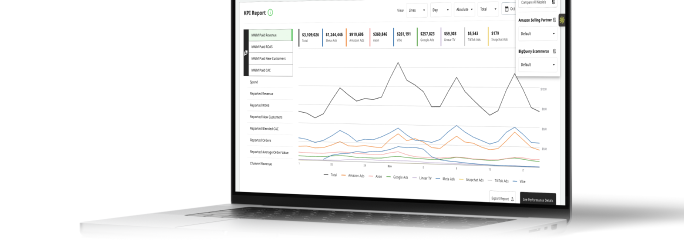
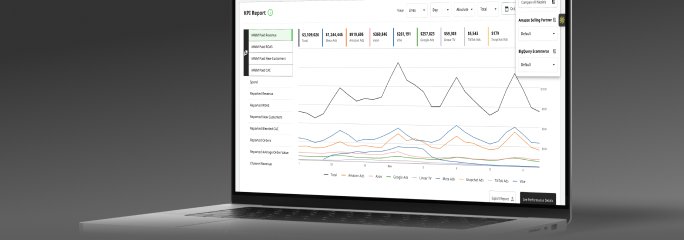
The platforms above are great at what they're built for—reaching the right listeners at the right time and managing campaigns across channels—and they belong at the center of your audio strategy. What they can't show you is the revenue audio drives outside their own reports. Prescient connects directly to programmatic advertising platforms like The Trade Desk, DV360, StackAdapt, and Viant, plus audio advertising platforms like Spotify Ads, iHeartMedia, Acast, and Podscribe, and our marketing mix model measures each campaign's impact on total revenue, including halo effects into branded search, direct traffic, Amazon, and retail.
That means you can keep using your platform analytics for day-to-day optimization while Prescient shows which audio campaigns are creating demand that search, Amazon, and retail capture. With daily, campaign-level reporting and our Media Forecasting feature, you can see what's likely to happen when you scale audio spend or shift budget into it from other channels before you commit. Book a demo to see how much your audio campaigns are really driving.
FAQs
What is programmatic audio advertising?
Programmatic audio advertising is the automated buying of ad placements inside streaming music, podcasts, and digital radio. Instead of negotiating every buy with a publisher, advertisers use a programmatic advertising platform, usually a demand-side platform, to bid on impressions in real time or through pre-negotiated deals, with targeting based on audience data, location, device, and the content being played.
Can you buy Spotify ads programmatically?
Yes. Spotify sells its audio, video, and display inventory through the Spotify Ad Exchange, which works with just under 50 DSPs, including The Trade Desk, DV360, and Amazon DSP. You can also buy directly through Spotify's self-serve Ads Manager.
What's the difference between a DSP and an SSP in audio advertising?
A demand side platform is the tool advertisers use to buy inventory, while an SSP is the tool publishers use to sell it. In audio, the biggest SSPs are often owned by the publishers themselves, like Triton (iHeartMedia) and AdsWizz (SiriusXM), so your DSP needs a connection to those SSPs to reach that inventory.
Can you buy podcast ads programmatically?
Yes, programmatic podcast advertising is widely available, though mostly for dynamically inserted spots. Most major DSPs, including The Trade Desk, Amazon DSP, StackAdapt, and Viant, can buy podcast inventory through audio SSPs and publisher exchanges. Host-read sponsorships on specific shows still often require a direct deal with the publisher or network.
How do you measure the ROI of audio ads?
Combine your platform reports, which show delivery and directly tracked conversions, with a marketing mix model that measures revenue across every sales channel. Because audio rarely produces a click, platform data alone tends to understate its return, especially for brands that sell through Amazon or retail stores.
Is broadcast radio available programmatically?
Increasingly, yes. Platforms like StackAdapt, Viant, and Basis can now buy AM/FM broadcast radio programmatically, much of it through iHeartMedia and Triton. That lets you plan and report on traditional radio alongside streaming audio and podcasts in one platform, though availability varies by market and station group.