


What is funnel mapping (and what happens after you build one)?
Funnel mapping tells you where your touchpoints are; it takes a separate measurement layer to understand which of those touchpoints is actually driving downstream revenue across your entire customer journey.
Linnea Zielinski · 13 min read
A city planner can design a beautiful road system from scratch: logical routes, clear on-ramps, well-placed exits. It looks great on paper. But without traffic sensors, they have no idea which roads are doing the real work, where congestion is quietly building, or which routes drivers are actually choosing. The map tells them what exists. It doesn't tell them what's happening.
That's the situation a lot of marketers find themselves in after they've built a funnel map. The structure is clear, the stages are labeled, the KPIs are assigned. And yet budget decisions still get made on incomplete information, because the funnel map itself can't tell you how your campaigns are really performing across every stage.
Getting your funnel mapped is a critical first step toward smarter marketing investment. Understanding what the map reveals, and where it stops being useful, is what separates teams that optimize well from teams that keep cutting the wrong campaigns.
Key takeaways
- Funnel mapping is a visual representation of the customer journey from initial awareness through final conversion, documenting every key touchpoint along the way.
- A well-built funnel map covers three core stages: top of funnel (awareness), middle of funnel (consideration), and bottom of funnel (conversion), each requiring its own KPIs and approach.
- Funnel mapping tools like Funnelytics, Miro, and Lucidchart make it easier for teams to create, share, and iterate on a visual funnel map without starting from scratch each time.
- The best funnel maps are built around a clear goal, documented touchpoints, and a process that makes it easy for your team to track performance and spot drop-offs.
- Top-of-funnel campaigns are the hardest to measure accurately because their impact tends to show up later, in other channels, rather than as direct clicks or conversions.
- Standard platform analytics often undercounts awareness campaigns by rewarding last-touch behavior and missing the downstream effects that follow an impression.
- Funnel mapping tells you where your touchpoints are; it takes a separate measurement layer to understand which of those touchpoints is actually driving downstream revenue across your entire customer journey.
What is funnel mapping?
Funnel mapping is a visual representation of the customer journey from initial awareness through final conversion, and sometimes beyond into loyalty and repeat purchase. It documents every meaningful touchpoint a prospect might encounter, helping marketing teams align on strategy, identify where customers are dropping off, and decide where to focus their energy.
The "map" part matters. Unlike a dashboard or a channel report, a funnel map shows how your marketing stages connect, in sequence, and how customers move between them. It's a planning and diagnostic tool. Most funnel maps divide the journey into three broad stages (top, middle, and bottom of funnel), though some funnel mapping approaches add stages for post-purchase loyalty and advocacy depending on the business model.
What makes funnel mapping useful for marketers is that it forces clarity on questions that often stay fuzzy: What are we trying to accomplish at each stage? What does a handoff from awareness to consideration actually look like for our customers? Where is the budget going, and is that aligned with where the real drop-offs are? It's also a communication tool. A visual funnel map is a lot easier to walk a stakeholder through than a spreadsheet of channel data.
Funnel mapping is sometimes confused with customer journey mapping, but there's a meaningful difference. A customer journey map follows a single customer's experience, often including their emotions and motivations at each step. A funnel map is more structural: it shows the flow of prospects through your marketing funnel at a system level, focused on where people enter, where they move forward, and where they fall off.
Why funnel mapping matters for your business
Most marketing teams track performance by channel. They know how their paid social is doing, what their search campaigns are returning, and whether their email open rates are trending in the right direction. What they often don't have is a coherent plan for how those channels work together to move a customer from initial awareness to a completed purchase (moving through both the marketing and sales funnels).
That's the core problem funnel mapping solves. When you build a funnel map, you're creating a shared view of how your marketing actually works as a system, not just a collection of siloed channels. That matters for a few reasons.
First, it changes how you think about drop-offs. When you can see the entire customer journey laid out, you start to notice where users are falling off and why, and whether the solution is optimizing the current stage or investing more heavily in an earlier one. A business that's struggling with low conversion rates at the bottom of the funnel, for instance, might actually have a top-of-funnel problem: not enough leads entering the system, or not enough awareness spend to build the brand recognition that makes bottom-funnel campaigns work efficiently.
Second, funnel mapping creates alignment. Marketing, sales, and leadership teams often have very different mental models of how customers move through the pipeline. A visual funnel map gives everyone the same picture to react to, which makes it a lot easier to prioritize where to invest, what to optimize, and how to measure success.
Third, it makes your analytics more meaningful. When each stage of the funnel has its own KPIs and you can track how users move through them, you're measuring the health of the entire system, not just the outputs. That's a much stronger foundation for decision-making than channel-level reporting alone.
The three stages of the funnel
Most funnel maps are organized around three main stages, each representing a different phase of the customer's relationship with your brand. Understanding what each stage is actually trying to accomplish shapes which KPIs belong there and which campaigns should be doing the work.
Top of funnel (TOFU): Awareness
The top of the funnel is where customers first encounter your brand. The goal here isn't conversion; it's recognition. Campaigns at this stage include social ads, video, display, influencer content, CTV, and anything else designed to reach users who don't yet know you exist.
TOFU is also the most commonly under-measured stage. The audiences your conversion campaigns depend on come from here, which makes top-of-funnel investment more consequential than it often appears in platform analytics. We'll get into why that measurement gap exists, and what to do about it, in a later section.
Middle of funnel (MOFU): Consideration
In the middle of the funnel, prospects know your brand and are evaluating whether it's right for them. This is where retargeting, email nurture, landing pages, and product content earn their place. The job at this stage is to reduce friction and build enough trust that moving forward feels like the natural next step.
MOFU is where most marketers have a fairly healthy read on performance. Engagement signals are clearer, and the intent data from this stage is more reliable than at the top.
Bottom of funnel (BOFU): Conversion
The bottom of the funnel is where conversion happens: a purchase, a lead form, a demo request. Most marketing budgets are weighted here because it's the easiest stage to tie to revenue. ROAS is legible, CAC is calculable, and the feedback loop from spend to outcome is tight.
That clarity is valuable. But it can also create a gravitational pull that draws too much budget toward BOFU at the expense of the earlier stages that feed it. A funnel mapping process that surfaces this imbalance is doing exactly what it's supposed to do.
How to create a funnel map
Building a funnel map isn't a one-time project. It's a living document that should evolve alongside your campaigns, your channels, and your customers' behavior. The goal is to create a shared view of how your marketing funnel actually works, one that your team can interrogate and improve over time, not necessarily a "perfect" diagram.
Here's a step-by-step approach to get there.
Step 1: Define your goal
Before you draw anything, get clear on what outcome the funnel is built to drive. A purchase? A lead? A trial signup? Your goal shapes everything downstream, including which touchpoints belong in the map and which KPIs you'll use to evaluate each stage. A funnel without a defined goal is just a list of channels.
Step 2: Document your touchpoints
Map out every meaningful interaction a prospect could have with your brand, from the first social ad to the post-purchase email. Work from initial awareness all the way through to conversion and, if relevant to your business model, through loyalty and repeat purchase. Don't edit at this stage; just get everything down. You'll notice gaps, redundancies, and missing handoffs once you can see the full picture laid out.
Step 3: Choose your funnel mapping tool
This is largely a matter of what your team will actually use. Miro and Lucidchart are solid choices for collaborative visual funnel mapping and are easy to update as your funnel strategy evolves. Funnelytics is purpose-built for funnel visualization and includes funnel simulations that let you model traffic and conversion rates before you go live. Google Analytics and similar analytics tools come into play once the map is built and you need actual data to evaluate performance. What matters most is that the map lives somewhere accessible, not in one person's head or buried in a one-off presentation.
Some teams also find value in funnel mapping software that includes pre-made templates or a blueprint library. If your team is new to the process, starting with a template can speed up the initial build and give you a structure to react to rather than building from scratch.
Step 4: Set KPIs for each stage
Assign at least one meaningful metric to each stage so you have a way to track whether your funnel strategy is working. These don't need to be complicated, but they do need to be relevant to what that stage is trying to accomplish. Reach and branded search volume belong at the top; conversion rates and CAC belong at the bottom. Mixing them up is one of the fastest ways to draw wrong conclusions about which campaigns are worth keeping.
Step 5: Review and refine
Once the map is built, use it regularly. Review it against your actual data, track how your conversion rates and drop-offs change over time, and update it when your campaigns or channels shift. Build a cadence into your marketing plan for coming back to the map, whether that's monthly or quarterly, so it stays connected to what's actually happening rather than becoming a one-time deliverable that collects dust. The most valuable moment in any funnel mapping process is when you sit down with real performance data and use the map to diagnose what to change.
Choosing KPIs for each funnel stage
KPI selection is where a lot of funnel maps start to break down. Teams either assign the same metrics to every stage or skip this step entirely, ending up evaluating awareness campaigns on conversion metrics they were never designed to move. Every stage of the marketing funnel has its own job, and the analytics need to reflect that. Getting this right is one of the clearest signs of a mature marketing team, because it shows that everyone understands what success looks like at each point in the customer journey, not just at the end.
Here's a stage-by-stage breakdown:
Awareness KPIs
At the top of the funnel, you're measuring reach and recall, not revenue. Useful metrics here include:
- impressions
- reach
- video view rate
- branded search volume
- new users
- direct traffic trends
It's also worth tracking how traffic flows from awareness campaigns into the rest of your funnel: do users who entered through a top-of-funnel ad return later and engage with consideration content? That flow of customers through the stages is a much richer signal than impression count alone.
Branded search volume and direct visits are particularly worth monitoring. A spike in branded search following an awareness campaign often signals the campaign is working, even when the platform's own attribution doesn't show it. Tracking these signals over time, alongside your paid data, is how you start to build a more complete picture of what your top-of-funnel investment is actually doing for your business.
Consideration KPIs
In the middle of the funnel, you're looking for engagement signals that indicate a prospect is moving closer to a decision. Relevant metrics include:
- engaged sessions
- time on site
- return visit rate
- email open and click rates
- content consumption depth
A high drop-off rate at this stage often points to a misalignment between what your top-of-funnel messaging promised and what your consideration-stage content delivers. Tracking where users exit, whether it's a landing page, a product page, or an email sequence, helps you isolate what to optimize first.
These signals also help you qualify your leads before they reach the bottom of the funnel. A prospect who has read three blog posts, visited your pricing page, and opened two emails is a very different kind of lead than one who clicked an ad and bounced. Building this understanding into your funnel map and your analytics process lets your sales or conversion campaigns work more efficiently.
Conversion KPIs
At the bottom of the funnel, revenue metrics take over:
- conversion rates
- ROAS
- CAC
- average order value
These are the numbers that make it into board presentations, and they deserve the scrutiny they get. Just keep in mind that they're the most downstream metrics in your funnel, which makes them the least diagnostic. Strong BOFU numbers can mask weakness earlier in the funnel until the audience depletion catches up with you.
Funnel mapping tools worth knowing
Choosing the right funnel mapping tool comes down to what your team needs to accomplish and how technical they want to get. Here are the most commonly used options, along with what each one is best suited for.
- Funnelytics is probably the most widely recognized funnel mapping software built specifically for marketers. It lets you create a visual funnel map, add traffic projections, and run funnel simulations to forecast conversion rates before launch. Its blueprint library includes pre-made templates for common funnel types, which makes it easier to get started without building from scratch. It's a strong choice for teams that want to plan funnels and track performance in the same platform.
- Miro is a flexible visual workspace that works well for funnel mapping, especially for teams that are already using it for other strategic planning. It's not purpose-built for sales funnels, but its collaborative features make it easy for multiple team members to contribute to and iterate on a funnel strategy in real time.
- Lucidchart is a reliable option for teams that want a clean, professional visual funnel map without a steep learning curve. It includes templates for common funnel and process diagrams and is often used in business settings where charts and diagrams need to be shared with stakeholders who aren't deep in the marketing tools stack.
- GERU focuses on funnel simulations, letting you model the financial performance of a plan and optimize for profitability before you commit budget. It's particularly useful for direct-to-consumer brands running complex, multi-step digital marketing funnels.
- Google Analytics isn't a funnel mapping software in the traditional sense, but it's a critical analytics tool for tracking how users actually move through your funnel once it's live. You can use it to track conversion rates at each stage, identify where drop-offs are concentrated, and measure how changes to your funnel affect overall performance step by step.
Most teams end up using funnel mapping software for the planning and visual layer, then analytics platforms like Google Analytics to track real-world performance against the plan.
The measurement gap your funnel map can't close
A funnel map is a structural document. It shows you what's in your funnel and how the stages connect. What it can't tell you is whether your campaigns are generating impact that doesn't show up in your platform analytics.
This matters most at the top of the funnel, and it matters a lot.
Why awareness campaigns look weaker than they are
Platform attribution is built around direct-response behavior: a click, a conversion, a tracked session. When someone sees a Meta awareness ad, doesn't click, and then types your brand name into Google three weeks later and converts through search, the platform reporting those awareness impressions gets no credit. The search campaign gets the conversion. Your awareness campaign looks like it barely broke even.
This isn't exactly a flaw in the platforms. Platforms can only track what happens within their own ecosystem, and they're generally optimized to show their own channel in the best light. The result is that top-of-funnel campaigns, which by design build demand that converts later and elsewhere, are chronically under-credited in standard analytics reporting. The conversion rates you see for awareness campaigns in-platform almost always understate their actual business impact.
The spillover problem
There's a broader version of this issue that funnel mapping can't solve on its own: spillover effects. When your top-of-funnel campaigns are working, their impact tends to show up across multiple channels simultaneously. Organic traffic lifts. Direct visits increase. Branded search volume goes up. For omnichannel businesses, retail sales can move too. All of these are signs that customers who encountered your brand through an awareness campaign are flowing through your funnel and converting, just not in a way that your platform's attribution software can track cleanly.
Your funnel map might show that all of these touchpoints exist. But without a measurement layer that can connect your awareness spend to those downstream effects, you're looking at a map without traffic data. You can see the roads; you don't know which ones people are actually driving.
The practical consequence is that teams cut awareness campaigns that appear to be underperforming based on platform data, not realizing those campaigns were driving customers and revenue across every other channel in the funnel. That's a costly mistake for any business that depends on sustainable marketing funnel performance, not just short-term conversion volume. The drop-offs that show up after awareness campaigns are cut often don't become visible until months later, when retargeting audiences shrink and conversion costs climb.
Where Prescient comes in
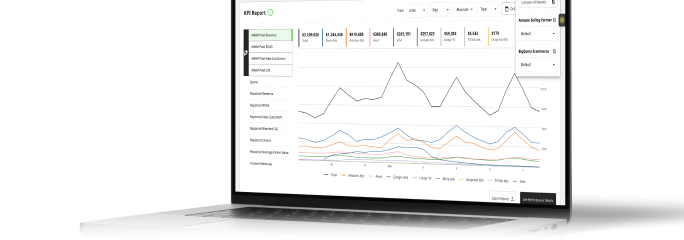
Prescient's marketing mix model is built to surface exactly the kind of spillover impact that platform dashboards miss. It measures what we call halo effects: the revenue driven by your awareness campaigns that shows up not as a direct click, but as a lift in organic traffic, branded search, direct visits, or Amazon and retail sales. That means when you're evaluating whether a top-of-funnel campaign is working, you're looking at its full contribution to revenue across your entire funnel, not just what a single platform took credit for.
Once you've mapped your funnel and started measuring the true impact of each stage, budget decisions get a lot easier to defend. You stop cutting campaigns that look weak in the analytics but are actually driving your entire conversion engine, and you start scaling the ones that are earning their place across every channel. If you'd like to see what that looks like in the platform, book a demo.
The Halo
Exclusive insights, every week.
Subscribe to The Halo for sharper marketing thinking.
You're subscribed to The Halo!
Quick question (optional): How familiar are you with MMM?
Thanks for sharing! Enjoy The Halo.
Keep reading
View all
What is EDDM? Every Door Direct Mail explained
Read article
Top of funnel marketing tactics that work and how to prove it
Read article
Cross-channel vs omnichannel marketing: The differences that matter for your budget
Read article
How effective is direct mail marketing? What the numbers show and what they miss
Read article
Top of funnel vs bottom of funnel: How they differ and how to balance your budget
Read article
You’re underestimating the value of top of funnel marketing
Read article