



How to measure Instagram performance (beyond what the app tells you)
Meta Ad Manager is a good starting point, but it misses critical information. Here's how to track the Instagram metrics that actually connect to business outcomes.
Linnea Zielinski · 14 min read

A smoke alarm does its job well: it tells you when something's wrong. But it can't tell you how the fire started, which room it's spreading to, or whether it has already reached the kitchen. Instagram's built-in reporting works the same way: they'll alert you when Instagram engagement drops or follower growth stalls, but they can't tell you how much revenue your Instagram spend is actually driving, or where that revenue is showing up across your social media channels. (If you're wondering why we're forgetting that there's revenue reporting in-platform, we didn't. It just doesn't capture the full revenue impact of your campaigns. More on that later in the article.)
For brands running paid campaigns on Instagram, it's critical to know whether your Instagram ads are working and how much they're worth. Tracking the right Instagram metrics at the revenue level is one of the most important decisions you can make about your paid media budget.
Key takeaways
- Instagram's in-platform reporting is built to measure content health, not revenue impact. Instagram metrics like engagement rate, follower growth, and reach are useful signals, but they don't tell you what your Instagram spend is worth to your business.
- You can find metrics about your ads in the Meta Ads Manager, but platform-reported attribution has a known bias problem: Meta reports its own performance using last-click logic, which overcredits direct conversions and ignores downstream effects.
- A large share of the revenue your Instagram campaigns drive shows up in other channels entirely, including branded search, organic traffic, direct visits, and Amazon or retail conversions.
- These spillover effects are called halo effects, and they can account for a substantial portion of what an Instagram campaign is actually contributing to revenue, making them some of the most important Instagram metrics to track for any brand running awareness spend.
- For omnichannel brands, Instagram's influence on retail and marketplace sales often goes completely untracked by click-based tools.
- Prescient's marketing mix modeling (MMM) gives you a channel-level and campaign-level view of Instagram's true contribution, including both its direct revenue and its halo effects.
- Undercounting what Instagram is worth leads to under-investment in a channel that may be quietly powering a large portion of your social media performance.
What Instagram's native analytics actually measure
Before digging into what's missing, it helps to get clear on what Instagram's built-in reporting is actually designed to do. Instagram Insights, the platform's native analytics dashboard, exists to help you understand how your Instagram content is performing on the platform itself. When you view Instagram insights for your account, you're looking at Instagram metrics that answer one question: "Is this content resonating with the people who see it?"
Here's a quick overview of the key Instagram metrics available natively, organized by what question they answer:
| Instagram metric | What it measures | Why it matters |
| Accounts reached | Unique users who saw your content | True visibility; distinct from repeat impressions |
| Impressions | Total views across all posts, reels, and Instagram stories | Useful for understanding total exposure |
| Engagement rate | (Likes + Comments + Saves + Shares) ÷ Total Followers × 100 | Signals how compelling your Instagram content is |
| Accounts engaged | Unique accounts that interacted | Deeper signal than impressions or reach alone |
| Follower growth rate | Net new Instagram followers over a period | Shows whether your Instagram account is building an audience |
| Total followers | Current Instagram followers count | Baseline for calculating engagement rate |
| Audience demographics | Age, gender, location of your followers | Confirms you're reaching your target audience |
| Profile visits | Users who tapped through to your Instagram account | Indicates intent beyond a single Instagram post |
| Link clicks | Clicks on your bio or story link | Measures traffic being driven off-platform |
| Active hours | When your audience is on the Instagram app | Informs post timing for your content strategy |
| Click through rate | Click rate on Instagram ads | Key metric for paid campaign performance |
| Saves | How often users saved your Instagram post | Strong signal of content quality and long-term value |
The key Instagram metrics available natively fall into a few buckets:
Reach and visibility
- Accounts reached: The number of unique accounts that saw your content at least once. This is your true visibility number, distinct from impressions, which counts every view including repeat views from the same user.
- Impressions: Total views across all content, including Instagram stories, reels, and feed posts.
- Instagram profile visits: How many people clicked through to your profile, which can signal interest beyond a single Instagram post.
Audience engagement
- Engagement rate: The percentage of your audience that actively interacted with your content. A common way to calculate engagement rate is: (Likes + Comments + Saves + Shares) ÷ Total Followers × 100. A good Instagram engagement rate generally falls between 1% and 5%, though this varies by industry and account size. Your engagement rate is one of the most closely watched IG metrics because it reflects content quality, not just reach.
- Accounts engaged: The number of unique accounts that interacted with your Instagram content through likes, comments, shares, or saves.
- Saves and shares: Particularly strong Instagram engagement signals because they suggest your content has lasting value. Saves and shares also tell the algorithm your content is worth distributing more broadly.
Audience growth
- Instagram followers / follower growth rate: How quickly your audience is growing over a given period. Most Instagram analytics tools will show follower growth as both a raw number and a percentage. Tracking follower growth rate over time tells you whether your social media strategy is building an audience or just maintaining one.
- Audience demographics: Breakdowns of your total followers by age, gender, and location. Checking audience demographics regularly in your Instagram insights helps you confirm you're reaching your target audience.
- Follower growth by content type: More advanced Instagram analytics tools will show you which content formats (reels, carousels, stories) are driving the most follower growth.
Conversion signals
- Link clicks: How often people clicked the link in your bio or story. These are important Instagram metrics for any social media account using Instagram to drive traffic, and you can track link clicks directly in Instagram insights.
- Profile visits: Visits that can indicate someone moving toward a purchase decision.
- Active hours: When your audience is most active on the Instagram app, which helps with post timing.
- Click through rate: For Instagram ads specifically, click through rate measures how often people who see your ad actually tap through to your site.
These Instagram metrics tell a clear content story. If your engagement rate is falling, your creative might need a refresh. If follower growth rate has stalled, your Instagram content strategy might be playing it too safe. If your Instagram stories are getting high impressions but low link clicks, there's a conversion problem worth solving.
But all of these Instagram insights are answering one question: how is the content doing on Instagram? They're not built to answer: what is this spend doing for my business? Real business outcomes require a different approach entirely.
What Meta Ads Manager reports for Instagram campaigns
Instagram ads run through Meta Ads Manager, and it does report revenue performance for your paid campaigns. This isn't a gap in the tooling, it's just a different layer of measurement than Instagram Insights. Meta Ads Manager is where you go to understand whether your spend is generating returns, not just whether your content is resonating.
Here's a quick overview of the paid campaign metrics available in Meta Ads Manager:
| Meta Ads Manager metric | What it measures | Why it matters |
| ROAS (return on ad spend) | Revenue generated per dollar spent, as reported by Meta | Your primary efficiency signal for paid campaigns |
| Revenue / conversion value | Total revenue Meta attributes to your ads | The dollar figure behind your ROAS |
| Cost per result | Spend divided by conversions or desired actions | Helps compare efficiency across campaigns |
| Impressions | Total ad views | Reach baseline for paid campaigns |
| Click through rate (CTR) | Percentage of viewers who clicked | Measures ad creative effectiveness |
| Cost per click (CPC) | Average cost for each link click | Efficiency of traffic being driven |
| Frequency | Average number of times each person saw your ad | Signals potential audience fatigue |
| Reach | Unique accounts who saw your ad at least once | Unduplicated audience size |
| Attribution window | The lookback period Meta uses to claim a conversion | Determines which conversions get counted |
These metrics give you a real picture of paid campaign performance on the platform. If your ROAS is strong and cost per result is trending down, your Instagram ads are working in Meta's view. That's the right starting point for evaluating whether a campaign is healthy, but it's just a starting point.
The catch is what Meta Ads Manager can't see. Its attribution is built around the clicks and conversions it can track within its own ecosystem and attribution window. Any revenue your Instagram ads drive that doesn't run through a Meta-tracked path—someone who saw your ad, searched for your brand later, and converted through Google, or walked into a Target and bought in-store—isn't in these numbers. That's not a flaw in Meta Ads Manager specifically; it's just a limit of click-based attribution. No platform-side tool can see past its own edges. For brands trying to measure real business outcomes from their Instagram spend, that blind spot matters.
Why Meta Ads Manager still can't tell you what Instagram is worth
So Meta Ads Manager reports revenue. It shows you ROAS, conversion value, and cost per result. That's a real and useful starting point, but it has limits that become significant the more Instagram functions as a discovery channel for your brand. Here's where those limits show up.
The attribution model only counts what it can track
Meta Ads Manager attributes conversions using its own click-based logic within a set attribution window. That means it counts the people who clicked your ad and bought within that window. It sounds straightforward, but it misses a large portion of how Instagram actually influences buyers.
Most people don't click an Instagram ad and immediately purchase. They scroll past it, think about it later, search for the brand, and convert through a different channel entirely. Or they see your ad on Tuesday, visit your site directly on Friday, and check out. Under Meta's attribution logic, neither of those conversions gets credited back to Instagram. Google Analytics would show search and direct traffic getting the win. The Meta Ads Manager ROAS you're looking at doesn't include either journey.
Platforms have an incentive problem
It's also worth naming something that doesn't get said enough: Meta has a financial interest in its own reporting looking favorable. Meta benefits from you believing your campaigns are efficient. Meta has faced legal action from advertisers over inflated performance metrics. Their numbers aren't necessarily wrong, but they're worth checking against an independent source like Google Analytics or an MMM.
Privacy changes have made click-based tracking less reliable
The pixel-based tracking that underpins Meta's attribution has been degrading for years. Ad blockers, iOS privacy changes, and cookie restrictions have all reduced the data these tools can see. Multi-touch attribution models that rely on pixel data are getting less accurate over time, not more. Meta Ads Manager's conversion data is subject to the same gaps.
Instagram is a discovery channel for most brands
Instagram functions at the top and middle of the social media funnel for most brands. People discover products on Instagram, but they don't always convert there. A tool built to track link clicks and conversions within its own ecosystem will always undercount what Instagram is actually driving, because a lot of what it drives doesn't end with a click on the Instagram app.
The revenue Instagram doesn't get credit for: halo effects
This is where the measurement story for Instagram gets genuinely interesting, and where most brands are leaving serious insight on the table.
Halo effects are the spillover revenue that a paid campaign drives in channels other than the one it ran on. When your Instagram awareness campaign runs, it doesn't just influence the people who click the ad. It influences people who see it, remember your brand, and convert somewhere else entirely, whether that's branded search, organic traffic, direct visits, or Amazon.
Here's a concrete example of how this plays out:
- Someone sees your Instagram reel, doesn't click, but your brand name sticks
- A few days later, they search "[your brand name] + [product]" on Google
- They convert through paid search
Instagram drove that purchase, but it gets zero credit for it in Meta Ads Manager. The paid search campaign claims the win and Meta's attribution never sees the assist.
This pattern is even more pronounced for omnichannel brands. If you're selling at Target, Walmart, Ulta, Sephora, or on Amazon, a significant share of your Instagram-influenced buyers will never convert through a tracked link. They'll walk into a store, or open Amazon because it's convenient, and buy there. No pixel on earth captures that attribution path.
The halo effects Prescient measures across campaigns include:
- Branded search (organic and paid): People searching for your brand by name after seeing your ads
- Organic search: Incremental organic traffic that correlates with paid campaign activity
- Direct traffic: Visitors who type your URL directly, often after brand exposure
- Amazon / retail spillover: Off-platform revenue that can be statistically linked back to your paid campaigns
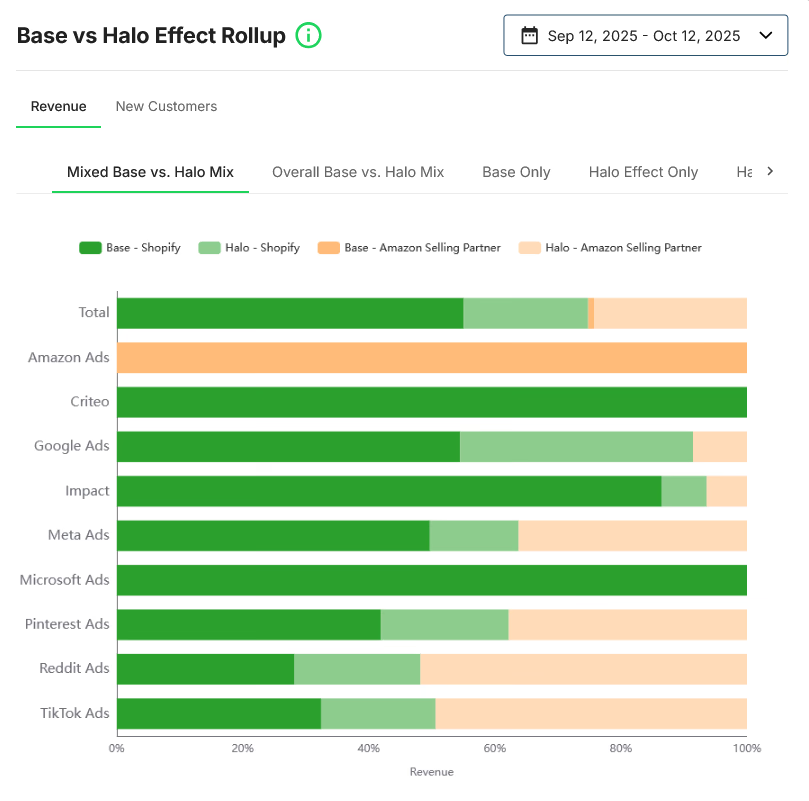
Across channels, a significant share of attributed revenue comes from halo effects.
For social channels like Instagram and TikTok, the halo share tends to be higher than for intent-based channels like Google. That's just the nature of how discovery channels work. They plant seeds that other channels harvest. Without measuring halo effects, you're crediting the harvest and ignoring the planting.
How a marketing mix model measures Instagram's true contribution
A marketing mix model takes a fundamentally different approach from platform reporting or click-based analytics tools. Instead of tracking user clicks, an MMM uses statistical modeling to understand the relationship between your marketing spend and your revenue over time. It doesn't need a pixel and it doesn't rely on cookies. It works from historical data and looks at how changes in spend across channels correspond to changes in revenue.
This matters for Instagram measurement in several specific ways:
- It's not affected by the tracking degradation that limits platform reporting. Because MMM uses aggregate spend and revenue data rather than user-level tracking, privacy changes don't erode its accuracy.
- It attributes revenue independently of what each platform claims. An MMM doesn't ask Instagram how much revenue Instagram drove. It models the statistical relationship between Instagram spend and revenue outcomes across all your channels and revenue sources, including Shopify, Amazon, and retail. That produces an unbiased number.
- It measures both base revenue and halo effects. At the campaign level, Prescient shows you the direct (base) revenue a campaign generated alongside its halo contribution broken out by source. For a single Meta awareness campaign, that might mean seeing that 47% of the total attributed revenue came from halo channels like Amazon organic search, direct traffic, and paid search on Shopify rather than from a direct click on the ad itself.
- It works at the campaign level, not just the channel level. Different Instagram campaigns saturate differently, attract different audiences, and generate different halo effects. Knowing that Instagram as a whole has a 6x MMM-paid ROAS doesn't help you decide which campaign to scale. Knowing that one awareness campaign has a 7.2x modeled ROAS while another sits at 4.9x does. That campaign-level granularity is what makes modeled attribution genuinely useful for budget decisions, rather than a high-level channel summary you can't act on.
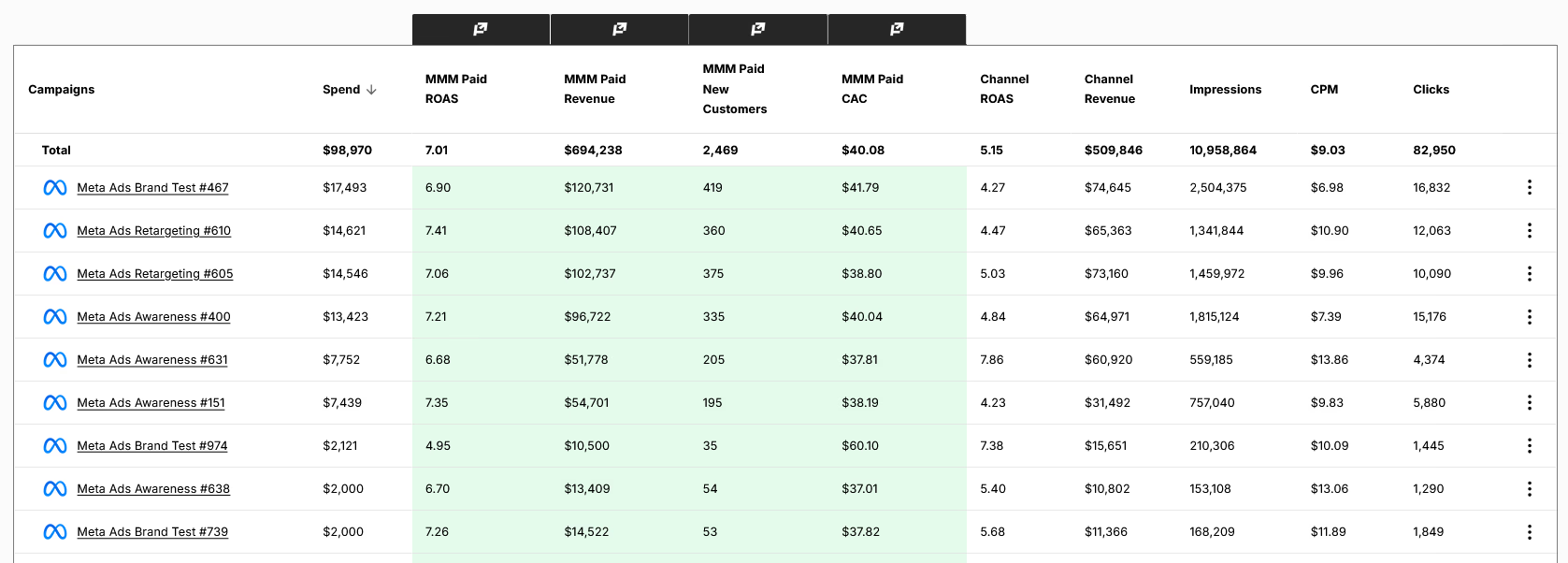
Prescient's campaign-level view shows MMM-modeled ROAS alongside platform-reported channel ROAS.
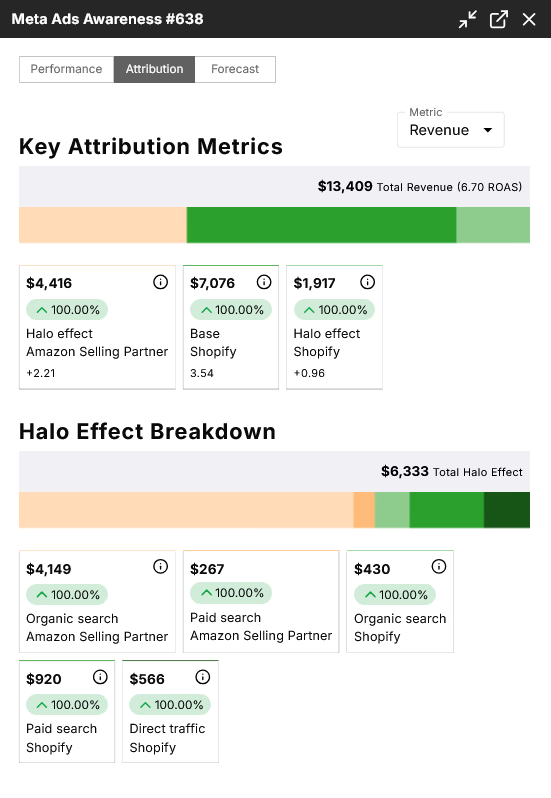
A single Meta awareness campaign with a 6.70 MMM ROAS shows $6,333 of its $13,409 in total revenue coming from halo effects. The platform reported this campaign at a 5.40 ROAS, which excluded this downstream contribution entirely.
The gap between what the platform reports and what the model finds is the revenue you're currently attributing to other channels or leaving unaccounted for. For Instagram ads with a strong awareness or upper-funnel focus, that gap can be substantial.
What good Instagram measurement looks like in practice
Pulling all of this together, here's how to think about Instagram analytics in a way that actually connects to business performance:
Use native Instagram analytics for what they're built for
Instagram Insights is the right tool for content decisions. Track your engagement metrics, monitor follower growth rate, check your audience demographics, review which Instagram stories formats drive the most profile visits and link clicks. Use awareness metrics like reach and impressions to understand how broadly your content is getting distributed. These are the most important metrics to track for content optimization, and instagram insights surface them clearly. They tell you whether your creative is landing and whether your social media strategy is building the right audience. That's valuable and worth doing consistently.
What Instagram Insights shouldn't be used for is budget justification or channel-level ROI decisions. That's not what it's designed to answer.
Use Meta Ads Manager as your paid campaign baseline
Meta Ads Manager is the right place to evaluate whether your paid campaigns are generating returns. Check your ROAS, cost per result, and CTR regularly; these key metrics tell you whether your creative is converting the people who do click, and whether your spend is efficient within the window Meta can see. If a campaign's ROAS is consistently low in Meta Ads Manager, that's a real signal worth investigating before assuming halo effects will make up the difference.
The important caveat is to know that your modeled metrics in an MMM platform can look different than those reported in Meta Ads Manager, both higher and lower. That's normal, and to be expected.
Use an MMM for true revenue attribution
For revenue questions, channel comparison, and budget allocation decisions, you need modeled attribution. Here are the key metrics to look for in your Instagram data at the MMM level:
- How does Instagram's MMM-paid ROAS compare to its Meta Ads Manager ROAS? A large gap suggests significant halo effects that click-based attribution is missing.
- What share of Instagram's total attributed revenue is coming from halo channels? If it's more than 30–40%, you have a discovery-channel dynamic that Meta's attribution is systematically undercounting.
- Which individual campaigns are driving the most modeled revenue? Aggregate channel-level social media performance data hides the variation between campaigns. Campaign-level MMM attribution shows you where to scale and where to pull back.
Watch for Instagram's influence on branded search
One of the cleaner ways to pressure-test Instagram's halo impact without an MMM is to watch branded search volume before, during, and after Instagram campaign flights. A meaningful spike during a period of heavy Instagram investment signals the channel is driving awareness that's converting through search rather than through the platform. It's not a precise measurement, but it's a useful directional check.
Set benchmarking windows that reflect your customer's consideration cycle
A brand selling $18 impulse-buy skincare products has a very different measurement window than one selling $300 skincare devices. The right period for evaluating Instagram performance varies significantly by category and price point. An MMM accounts for this by modeling the actual statistical relationship between your spend and revenue over your historical data, rather than assuming a standard attribution window.
Compare Meta Ads Manager and MMM attribution regularly
The value of running both Meta Ads Manager and an MMM isn't to pick one and ignore the other. It's to use them together. When Meta-reported ROAS and modeled attribution diverge, that divergence is telling you something. Maybe Instagram is underreported because the halo is landing on Amazon. Maybe a campaign looks strong in Meta Ads Manager but the MMM shows low modeled efficiency, which could signal that those in-platform conversions are coming from audiences you'd have converted anyway.
All three layers of Instagram analytics—Instagram Insights, Meta Ads Manager, and an MMM—answer different questions. Brands that understand which question each is built to answer make better budget decisions than those relying on any one of them alone.
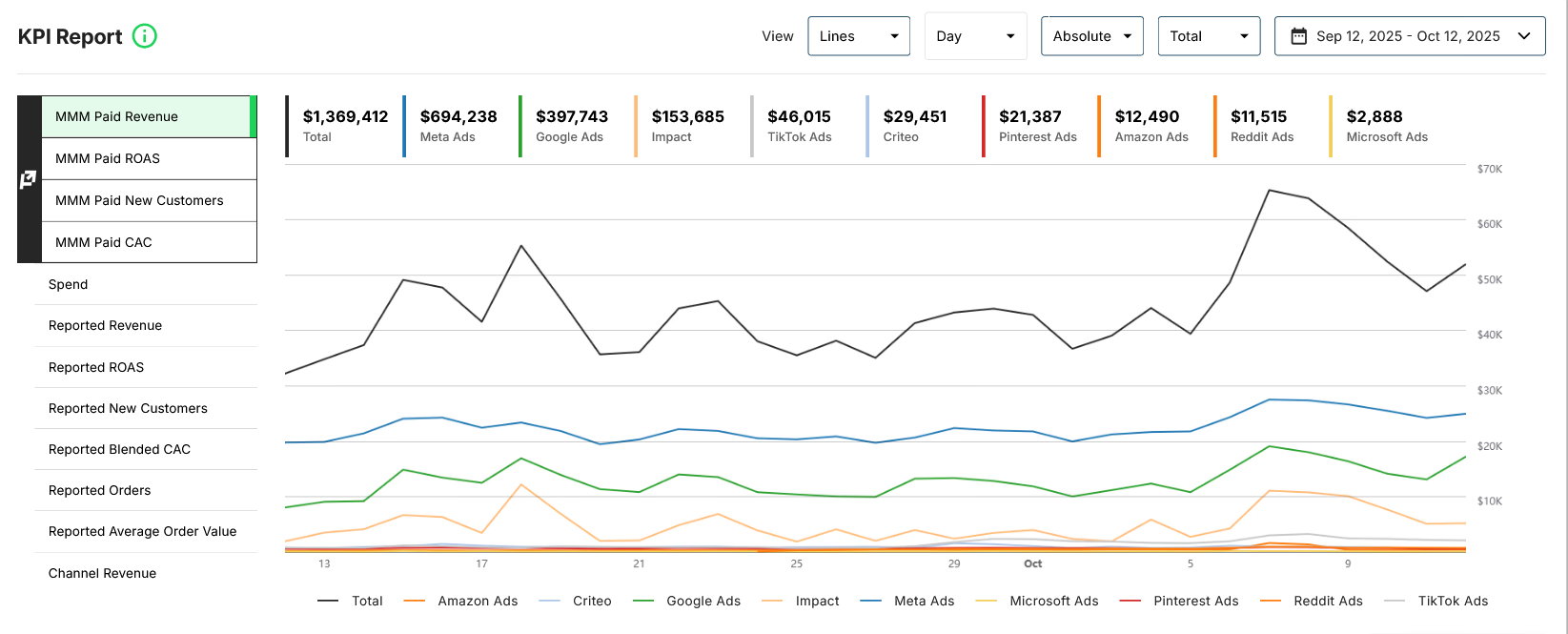
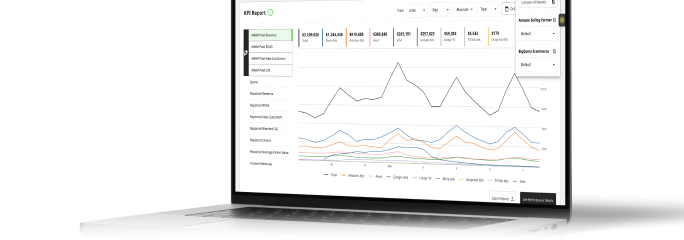
Prescient's KPI Report shows MMM-attributed paid revenue by channel over time, giving marketers an unbiased view of how Instagram/Meta and other channels are contributing to total revenue.
Where Prescient comes in
Prescient is a marketing mix modeling platform built for omnichannel brands. It gives you campaign-level MMM attribution that includes both direct revenue and halo effects across every revenue source, including Shopify, Amazon, and retail partners like Target and Walmart. Unlike platform-reported Instagram analytics, Prescient's models don't have a stake in any channel's performance. The attribution is determined externally, which means you can trust what you're seeing.
If you've been running Instagram campaigns and wondering why the numbers in your Instagram report never quite seem to account for what you're spending, there's a good chance the answer is in the halo. We'd be glad to show you how the Prescient platform can reveal what Instagram is actually worth for your brand when youbook a demo.
The Halo
Exclusive insights, every week.
Subscribe to The Halo for sharper marketing thinking.
You're subscribed to The Halo!
Quick question (optional): How familiar are you with MMM?
Thanks for sharing! Enjoy The Halo.
Keep reading
View all
A marketer’s guide to in-house MMM builds vs vendor tools
Read article
What causes attribution bias in marketing and how to reduce it
Read article
How many channels can an MMM measure?
Read article
Can MMM measure marketing when customers buy through multiple channels?
Read article
What matchback analysis measures, what it misses, and how to fill the gaps
Read article
Can MMM measure influencer marketing?
Read article