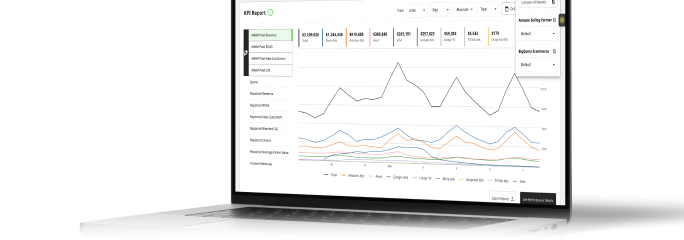
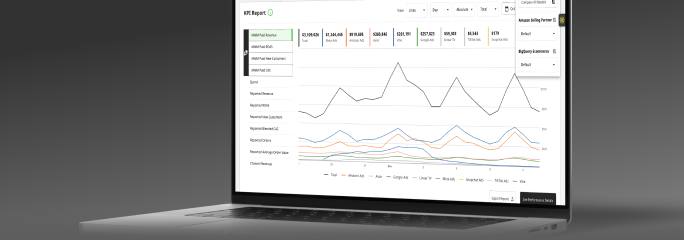



What it actually takes to measure marketing continuously
Always-on marketing measurement means more than checking a dashboard daily. Learn what continuous measurement actually requires and how to build it.
Linnea Zielinski · 8 min read

A smart thermostat doesn't wait until Sunday to check whether your living room's gotten cold. It's reading the temperature all day, adjusting the heat in small increments long before you'd ever notice a swing. Compare that to the older kind, where someone has to walk over, glance at a dial, and crank it up or down once or twice a day. Both are technically measuring the room, but only one of them keeps up with a space that's constantly changing.
Marketing measurement works the same way for any brand. Plenty of marketing teams check their numbers on a regular basis, but regular isn't the same as continuous, and that risks allocating budget based on decisions made from data that's already gone stale. You may have noticed a rising debate in marketing circles as the pace of digital marketing picks up: should marketing teams treat measurement as a weekly habit or as infrastructure that runs all the time across every channel? Always on marketing measurement may be the key for marketers looking to confidently defend their next spending decision.
Key takeaways
- Always-on measurement means a system that updates continuously, not a dashboard you happen to check often.
- Reviewing platform-reported numbers every day isn't the same as always-on measurement if the attribution behind those numbers is still flawed.
- Incrementality tests are useful, but they're built to measure a specific window of time, not a customer's whole journey on an ongoing basis.
- Genuine continuous measurement has to account for decay, saturation, and spillover effects across marketing channels and campaigns, not just clicks and last-touch conversions.
- A planned approach to always-on marketing combines daily model updates with campaign-level detail, not channel-level averages of marketing efforts.
- Marketing effectiveness improves when marketing teams stop reacting to old data and start making decisions off what customers are actually doing right now.
- The key difference between a fast marketing dashboard and a truly always-on strategy comes down to the method behind the numbers rather than the refresh speed.
What always-on marketing measurement actually means
The term gets used loosely, so it's worth pinning down what it should actually describe. At its core, it means a marketing measurement system (you may refer to this as marketing analytics) that updates continuously and reflects what's happening across your channels right now, rather than a snapshot pulled together on a weekly or monthly cycle. That changes how a marketing team, and the wider business behind it, operates day to day. Instead of waiting for a report to catch up with reality, marketers get to work from data that's current, which means they can catch a shift in customer behavior or a campaign's performance while there's still time to act on it.
A customer's path to purchase rarely runs in a straight line, and this is exactly why continuous measurement matters so much for any brand selling to a broad target audience. Continuous measurement is what gives you consistent visibility, making it possible to follow someone across multiple channels throughout their entire customer journey instead of crediting a single conversion event. A customer might see a paid social ad, spend two weeks researching on their own, then convert through a plain organic search further along the same customer journey. An always-on approach should account for that whole path across every channel involved, not just the last click before the sale.
Why checking a dashboard every day isn't automatically always-on measurement
Plenty of marketers already check their ad platforms daily, so it's easy to assume the business has already got an always-on strategy in place. But checking dashboards often is different from having a measurement system that's built to run continuously. If the attribution logic underneath is still last-click or self-reported by the platform running the ad, then refreshing that dashboard hourly doesn't fix the deeper issue. Marketers are just getting a faster read on the same skewed data.
This matters because platforms have an obvious incentive to claim credit for as many conversions as possible, so a channel can look like it's driving results it never actually caused. A daily habit of checking in-platform metrics keeps a marketer close to the numbers, but it doesn't make those numbers any more accurate. True always-on measurement needs a method that stays consistent and unbiased across every marketing channel a brand runs.
The problem with treating incrementality tests as an always-on strategy
Incrementality tests and geo-holdouts answer a specific question over a specific window. They weren't built to run as an ongoing, always-on marketing strategy. A four-week holdout tells you what happened during those four weeks for one set of campaigns. It doesn't tell you what that same channel is doing today, next month, or after a competitor launches a new campaign of their own. Treating a quarterly test as if it delivers continuous, real-time insight stretches the tool well past what it was designed to do.
None of this means incrementality tests aren't worth running. They still provide insights about campaigns if a marketing team is asking the right questions. The better approach is to treat test results as one input that feeds a continuous measurement strategy, rather than as the entire strategy on their own.
What continuous measurement actually needs to track
A marketing measurement system that's truly always-on has to account for more than whether someone clicked an ad this week. Here's what it should be tracking across every channel on an ongoing basis:
- Decay: how long a campaign's effect lingers after it stops running, since older campaigns can keep driving revenue weeks after they've ended
- Saturation: where a channel's point of efficiency sits today, since that point shifts over time instead of staying fixed (by the way, you're probably underspending)
- Spillover into other channels: how a campaign influences branded search, organic search, direct traffic, and even a retail storefront, not just the clicks credited to it directly
- Outside factors: competitor launches, seasonality, and broader economic shifts that can make a channel look like it's underperforming when the real cause has nothing to do with the campaign itself
Missing any one of these creates blind spots that a faster dashboard refresh can't solve. A model that updates hourly but ignores decay or saturation across your campaigns is still working from an incomplete picture.
Building a marketing measurement stack that's actually always-on
Getting to a fully continuous setup takes more than swapping one tool for another. It comes down to a few core pieces working together for the whole business, and each one closes a specific gap in the picture above:
- Daily model updates instead of monthly or quarterly refreshes, so decisions are based on what's happening now
- Campaign-level detail rather than channel-level averages, since two campaigns running on the same channel can perform very differently from each other
- A way to validate test data against the model, so incrementality tests and other one-off studies inform the system instead of getting treated as the final word on their own
- Cross-channel visibility that captures how campaigns influence each other, not just how each one performs in isolation
None of these pieces do much on their own. A model that updates daily but only reports at the channel level still hides which specific campaigns are worth scaling and which ones are dragging down the average, and that gap can chip away at brand loyalty if customers keep seeing the wrong message from the wrong channel. The value comes from having all four working together, which is also what separates a real always-on strategy from a dashboard that's simply checked more often.
Common misconceptions worth clearing up
A few mix-ups show up often enough among marketers to call out directly. Multi-touch attribution and incrementality testing get treated as interchangeable, when they're actually built to answer different questions: one distributes credit across touchpoints, and the other tests what would have happened without a specific channel running at all. Running tests more often gets mistaken for having continuous measurement, when frequency alone doesn't fix a method that's still only accurate for the window it was tested in. Platform-reported ROAS updating in real time gets mistaken for a neutral, always-on source of truth, when a number can refresh constantly across paid media and social media alike and still be measuring the wrong thing.
Where Prescient comes in
Prescient's marketing mix model updates daily and reports at the campaign level, so marketing teams get a steady flow of information about how individual campaigns are performing right now rather than waiting on a channel-level average to catch up. That includes tracking halo effects from your marketing investments as they show up in branded search, organic search, direct traffic, and retail storefronts, so a campaign gets credit for the revenue it's actually driving as customers move across their journey toward a purchase. Our Validation Layer runs your incrementality tests and other test data alongside the model to check whether they're actually improving its accuracy, so those tests inform customer acquisition decisions instead of standing in for the whole measurement strategy.
If your team is still making budget calls for your target audience off a report that's weeks old by the time anyone reads it, it might be worth seeing what a fully continuous view of your marketing looks like. Book a demo to see how quickly you can surface insights in the Prescient platform.
FAQs
How often should marketing measurement actually be updated?
There's no single answer that fits every brand, but the closer your measurement gets to daily, the less lag there is between something changing in your marketing and you actually knowing about it. Monthly or quarterly updates might feel manageable, but they leave weeks where decisions are being made off outdated information. Daily updates give you the shortest gap between what's happening and what you're seeing.
Does always-on measurement replace incrementality testing?
No, and it shouldn't try to. Incrementality tests still provide a useful, controlled check on specific questions, like whether a channel is driving the lift it claims to. Always-on measurement is meant to work alongside those tests, using them to validate and refine an ongoing model rather than replacing them outright.
What's the difference between always-on measurement and real-time reporting?
Real-time reporting usually just means a dashboard refreshes quickly, often pulling straight from platform-reported numbers. Always-on measurement refers to the underlying method itself running continuously and accounting for things like decay, saturation, and cross-channel spillover. You can have fast reporting on flawed data just as easily as you can have it on accurate data, so the two aren't the same thing.
What tools do I need to measure marketing continuously?
At a minimum, you need a model that updates frequently, ideally daily, and reports at the campaign level rather than averaging performance across an entire channel. From there, it helps to have a way to bring in test data, like incrementality results, so you can check whether it's actually improving the model's accuracy rather than treating it as a separate, disconnected data point.
The Halo
Exclusive insights, every week.
Subscribe to The Halo for sharper marketing thinking.
You're subscribed to The Halo!
Quick question (optional): How familiar are you with MMM?
Thanks for sharing! Enjoy The Halo.
Keep reading
View all
A marketer’s guide to in-house MMM builds vs vendor tools
Read article
What causes attribution bias in marketing and how to reduce it
Read article
How many channels can an MMM measure?
Read article
Can MMM measure marketing when customers buy through multiple channels?
Read article
What matchback analysis measures, what it misses, and how to fill the gaps
Read article
Can MMM measure influencer marketing?
Read article