


Why last-click attribution punishes beauty brands' best campaigns
Last-click attribution hides the campaigns actually driving beauty sales. Discover the reason and see why beauty brands need a fuller view of what's working.
Linnea Zielinski · 4 min read
An opening act spends an hour warming up a half-empty room, working the crowd until the energy is right for what comes next. By the time the headliner walks out, the room is packed and primed. When the show sells out and the reviews come in the next day, only the headliner's name gets mentioned.
Last-click attribution treats marketing campaigns the same way. Whichever touchpoint happened right before checkout gets all the credit, and everything that built up to that moment gets none. For beauty brands, that's a distortion big enough that it turns into a business problem because the campaigns doing the real work are the ones most likely to get cut.
Key takeaways
- Last-click attribution credits only the final touchpoint before purchase, ignoring everything that came before it.
- Beauty customer journeys involve more competing brands than most categories, which makes last-click especially misleading.
- A meaningful share of beauty purchases happen at a retailer like Sephora or Ulta rather than on the brand's own site, so last-click often can't even see the true final touch.
- Campaigns that build awareness or drive halo effects look unprofitable under last-click even when they're doing the most work.
- Brands relying on last-click risk cutting exactly the campaigns responsible for their retail and organic growth.
- Marketing mix modeling (MMM) avoids this problem by crediting revenue based on modeled impact across the full journey, not whichever touchpoint happened to be last.
Why last-click became marketing's default scorekeeper
Last-click didn't win out because it's the most accurate way to measure a purchase. It won out because it's the easiest.
It's the number every ad platform reports natively, with no extra modeling or tooling required. A marketer can open Meta or Google and see, right there, which campaign gets the conversion. That simplicity made it the default long before anyone stopped to ask whether it reflected what actually drove the sale. Easy to measure and accurate aren't the same thing, and that gap is exactly what the rest of this comes down to.
The beauty customer journey doesn't move in a straight line
Beauty shoppers rarely walk a clean path from ad to cart. They build routines out of several brands at once, and they often stay undecided between options until the very last moment.
Spotify's Consumer Decision Journey research found that during the "buy" stage, roughly two-thirds of beauty consumers still have multiple brands in mind before they make a final choice. That means a lot of purchases aren't decided by a single, identifiable moment of persuasion. They're decided somewhere in an ongoing back-and-forth between brands, and whichever touchpoint happens to land last gets full credit for a decision that was actually shaped much earlier.
What last-click actually erases
Once you know the decision is rarely made in one moment, it's worth looking at what last-click specifically fails to capture along the way.
\
It misses brand awareness spend that builds consideration long before someone starts actively comparing products. Spotify's research also found that 41% of beauty purchases happen because the product comes from a shopper's preferred brand, more than any other reason they cited. That preference doesn't form at the moment of purchase. It's built over time, through repeated exposure that makes a brand feel familiar and trustworthy long before someone is ready to buy. If a shopper won't convert without already knowing and having some rapport with a brand, the campaigns responsible for building that familiarity are doing essential work, even though last-click will never connect them to the sale they eventually influence.
Last-click also misses halo effects, the way a campaign can show up later as a bump in organic traffic, direct traffic, or branded search. And for omnichannel beauty brands, it misses purchases that happen at a retailer like Sephora or Ulta instead of the brand's own website, both online and in-store. An ad a shopper saw three weeks ago and never clicked can still be the actual reason they bought. Last-click will never give it credit.
The campaigns getting cut aren't underperforming
A marketer looking at last-click data sees a top-of-funnel campaign with a weak ROAS and pulls the spend, assuming it isn't working.
But that campaign may have been feeding conversions everywhere else, like retargeting, organic search, direct traffic, retail, and other online sales channels like Amazon. Cutting it removes a piece of the system that was supporting everything downstream from it. The awareness dollar is often the hardest-working dollar in the budget, and last-click has no way to show that.
Where Prescient comes in
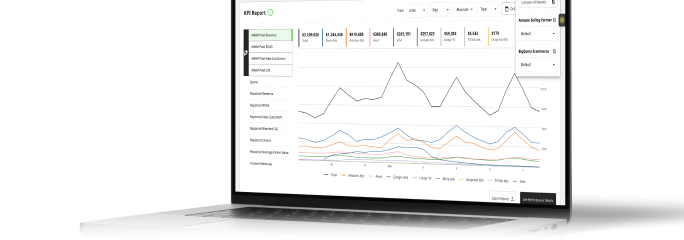
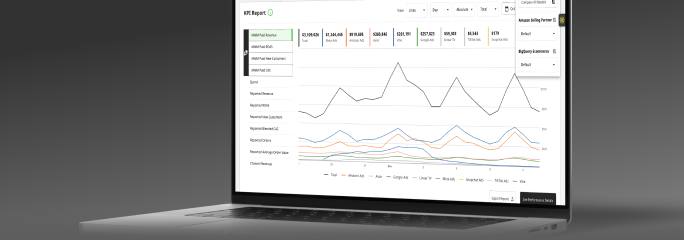
Prescient's marketing mix model assigns credit based on modeled impact across the full customer journey, including halo effects and retail spillover, instead of crediting whichever touchpoint happened to come last. That gives brands a clearer, more accurate read on which campaigns are actually driving revenue, not just which ones happen to close the loop.
Book a demo to see how the Prescient platform reveals all of this with a live screen and a real brand’s anonymized data.
The Halo
Exclusive insights, every week.
Subscribe to The Halo for sharper marketing thinking.
You're subscribed to The Halo!
Quick question (optional): How familiar are you with MMM?
Thanks for sharing! Enjoy The Halo.
Keep reading
View all
Marketing mix modeling vs. multi-touch attribution: Which one answers your question?
Read article
How full path attribution model works and when it's worth using
Read article
How a W-shaped attribution model works and when to use it
Read article
Data-driven attribution vs. MMM: How to measure what's actually working
Read article
How the time decay attribution model works, when to use it, and where it falls short
Read article
MTA vs. holdout tests vs. Prescient: What each one can (and can't) tell you
Read article