



Can MMM be used for day-to-day optimization?
Yes, the right kind of MMM can support day-to-day marketing optimization. Learn why daily updates, campaign-level data, and the right tools make it possible.
Linnea Zielinski · 5 min read

A body composition scan every few weeks can tell you a lot: it shows whether your training plan is working, whether your body fat percentage is trending in the right direction, and whether the bigger strategy is paying off. But that scan alone won't tell you what to do tomorrow morning. For that, you need the daily numbers, like your steps, workouts, sleep, and maybe even calories. Tracking those daily data points is what actually shows you the return on the effort you're putting in, and it's what lets you tailor tomorrow's plan instead of waiting weeks to find out if last month's plan worked.
Marketing budgets deserve the same kind of attention. If your measurement tool only tells you what happened a week or month ago, you're stuck making today's decisions based on old information. And when marketers assume every MMM works this way, they end up either avoiding the tool for daily decisions altogether or making budget calls without any model backing them up.
Key takeaways
- The concern that MMM can't support daily optimization comes from real limitations in traditional, slower-updating models, not from MMM as a methodology.
- Prescient's MMM updates daily, which changes what kind of decisions the model can actually support.
- Campaign-level reporting gives you a more granular view than channel-level reporting alone.
- Prescient’s Saturation curves let you test potential spend changes and see the projected impact before you commit budget, and the Optimizer turns that into a clear next action.
- Confidence scores help you tell the difference between a real signal and daily noise.
- Daily data doesn't mean you should change your budget every single day.
- The right MMM setup lets you build both long-term strategy and short-term tactics off the same connected view of performance.
Why the "MMM is too slow" concern exists
This concern isn't unfounded. Plenty of MMMs, especially the traditional regression-based ones, update on a monthly cadence or slower. Some can take a month or longer to refresh their outputs after new data comes in. If you're working with a model like that, it makes total sense to treat MMM as a strategic, backward-looking tool and to lean on other platforms for anything happening this week.
The problem is that this limitation gets attached to MMM as a category instead of to the specific models that update slowly. That's an easy assumption to make, especially if the only MMM experience you've had involves waiting weeks for a refreshed view of your spend, but it means a lot of marketers write off MMM as a daily decision-making tool before ever seeing what a faster-updating model can do.
What changes with daily updates
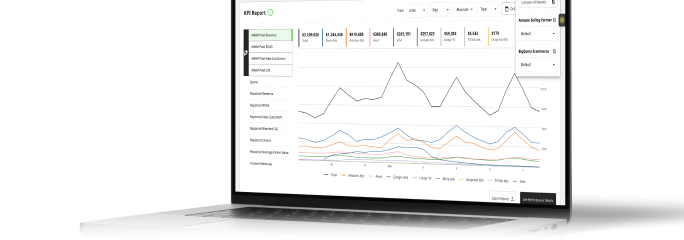
A model that refreshes daily gives you a fundamentally different relationship with your data. Instead of asking about last month’s performance, you can dig into what’s happening with a campaign right now and whether it needs attention today. Prescient's MMM updates daily and reports at the campaign level, not just the channel level, which means you're not stuck guessing which specific campaign inside a channel is driving performance.
Channel-level reporting can tell you paid social is performing well overall, but it can't tell you which of your five active campaigns within paid social is outperforming expectations and which is lagging. Daily, campaign-level updates close that gap, giving you the kind of granular, current view you'd need to make a real-time call.
The tools that make daily action possible
Fresh data is only useful if you have a way to act on it. This is where saturation curves and Prescient’s Optimizer feature come in, turning a daily data refresh into an actual decision you can make with confidence.
\
Saturation curves don't just show you whether a campaign has hit its point of diminishing returns or is sitting in a temporary trough between two peaks of efficiency. You can plug in different potential spend amounts and watch the curve update in real time, showing the projected impact on revenue, ROAS, and new customer acquisition before you commit any budget. That means you're not just reading a static chart and guessing what a change might do, you're testing the change first. The Optimizer builds on this by running full scenario planning against your goals across a set of campaigns, recommending where to shift budget and attaching a confidence score to that recommendation so you know how much weight to put behind it.
Where daily optimization still has guardrails
Having daily data doesn't mean every day calls for a budget change. Marketing performance naturally fluctuates, and reacting to every dip or spike can pull you further from your actual strategy.
This is exactly why confidence scores matter as much as the daily refresh itself. A low confidence score on a given day's recommendation is a signal to wait and watch, not to act. A high confidence score paired with a clear saturation signal is a much stronger case for making a change. Daily optimization works best when it's paired with the judgment to know which signals are worth acting on.
Where Prescient comes in
Prescient's MMM was built to give marketers both the long-term strategic view and the short-term tactical one, without forcing a choice between them. Daily updates, campaign-level reporting, and tools like saturation curves and the Optimizer work together so you can act on what's happening today while still building toward your bigger goals.
If you've written off MMM as too slow for daily decisions, it's worth seeing what a model built to update every day can actually do. Book a demo to see it in action.
FAQs
Can marketing mix modeling really be used for daily decisions?
It depends on the model. Traditional MMMs that update monthly or less often aren't built for daily decisions, since the data is already outdated by the time you see it. Models that update daily, like Prescient's, are built to support both long-term strategy and shorter-term, more tactical calls.
What's the difference between weekly and daily MMM updates?
A weekly or monthly update gives you a retrospective view, useful for understanding overall trends but not for catching what's happening with a specific campaign right now. A daily update keeps your view of performance current, which matters if you want to catch and respond to changes as they happen rather than after the fact.
How does campaign-level reporting help with day-to-day optimization?
Channel-level reporting can tell you how paid social performed overall, but it can't tell you which campaign inside that channel is actually driving results. Campaign-level reporting gives you the specificity needed to make a decision about one campaign without guessing based on the channel's overall performance.
Should I change my budget every day based on MMM data?
Not necessarily. Daily data is meant to keep you informed, not to prompt a reaction every single day. Confidence scores help you tell when a recommendation is backed by a strong signal versus normal day-to-day fluctuation, so you can act when it counts and hold steady when it doesn't.
The Halo
Exclusive insights, every week.
Subscribe to The Halo for sharper marketing thinking.
You're subscribed to The Halo!
Quick question (optional): How familiar are you with MMM?
Thanks for sharing! Enjoy The Halo.
Keep reading
View all
How effective is direct mail marketing? What the numbers show and what they miss
Read article
Top of funnel vs bottom of funnel: How they differ and how to balance your budget
Read article
Modern marketers need to be doing marketing scenario planning
Read article
How to actually optimize your ad spend (not just cut waste)
Read article
How to build an always-on marketing strategy that actually compounds
Read article
Your peak-season ROAS targets are probably wrong for retail too
Read article