


What purchase-based targeting is, and what it can't tell you on its own
Purchase-based targeting builds ad audiences from real transaction data. See how it works, where the data comes from, and how to measure if it's paying off.
Linnea Zielinski · 8 min read
Two personal shoppers walk into the same department store with the same client to dress. The first one glances at the client's age and zip code and starts pulling options based on an educated guess. The second one has actually seen the client's closet, what they wear on repeat, and what got returned last month. Which shopper do you trust to make the sale?
That's the whole premise behind purchase-based targeting, or PBT, an audience strategy built on real transaction data instead of demographics. For CPG brands and marketers running paid campaigns on tight ad spend, shifting from guesswork to purchase data can increase the number of ads that reach people who are actually ready to buy.
Getting the targeting right is only half the equation, though. Brands that adopt purchase-based targeting without a way to prove its impact on sales often end up making the same guesses about performance they were trying to avoid by using better data.
Key takeaways
- Purchase-based audience targeting builds audience segments from real purchase behavior instead of demographic guesses, helping marketers identify a sharper target audience and reach consumers based on what they've actually done.
- Purchase data usually comes from retail media networks, card transaction panels, shopper panels, and loyalty programs, not just a brand's own first-party data.
- PBT tends to cut down on wasted ad spend and lift response rates compared to broad demographic targeting, but precise targeting and profitable targeting aren't automatically the same thing.
- Highly specific, SKU-level audiences can shrink your available ad inventory and reach, which sometimes drives up cost per acquisition instead of lowering it.
- Privacy regulation and tightening data-sharing agreements affect purchase-based targeting the same way they affect other identity-based advertising strategies.
- Good targeting tells you who to reach. It doesn't tell you whether that targeting actually drove incremental sales or just found people who would've bought anyway.
What purchase-based targeting actually is
Purchase-based targeting is an audience strategy that builds segments from verified transaction data instead of assumed characteristics like age, income, or browsing history. Instead of guessing who might want a treadmill based on demographic data, a marketer can build an audience of consumers who bought a treadmill, bought a competitor's treadmill, or bought complementary fitness gear within a defined window of time.
Purchase-based targeting—unlike demographic or interest-based targeting—starts from proof. Search and social platforms can tell you what someone might want based on the content they engage with. Purchase data tells you what they've already proven they'll spend money on, which is a much stronger signal for finding new buyers who look like your best customers.
Marketers use this kind of data to identify new buyers, build audience segments around actual purchase behavior, and shape targeting strategies instead of relying on demographic data alone. For CPG brands especially, this can be the difference between a campaign that reaches a genuine target audience and one that burns budget on the wrong crowd.
How purchase-based targeting works
Building one of these audiences usually comes down to a few steps, and each one affects how precise, and how expensive, the resulting campaign ends up being for the marketers running it.
- Sourcing the purchase data: brands pull from retail transaction records, card panels, or shopper data rather than collecting it themselves.
- Building the audience segment: that raw data gets filtered down to a specific category, brand, or even a specific SKU, based on the campaign's goals for reaching the right customers.
- Matching to ad inventory: the segment gets matched to available ad space across digital channels, which is where match rates and data freshness start to matter for advertisers.
Where the purchase data actually comes from
Purchase data doesn't originate with the platform running your ads. It usually comes from one of a handful of sources, each with its own tradeoffs in accuracy, cost, and how current the data is.
- Retail media networks: ad platforms built inside major retailers, where purchase history from their own shoppers powers the targeting.
- Card transaction panels: aggregated, anonymized purchase data pulled from credit and debit card processors.
- Shopper and loyalty panels: consumers who opt into sharing purchase history, often through loyalty programs or receipt-scanning apps.
- Clean roomsand data co-ops: privacy-safe environments where brands and retailers can match audiences without either side seeing the other's raw data.
Most brands running purchase-based targeting are working with some blend of these sources, not one clean, unified feed. That matters a lot for CPG brands specifically, since retail purchase data is often the richest signal available for consumer packaged goods. It also matters because each source has a different lookback window, refresh rate, and match rate, all of which affect how accurate an audience actually is by the time a campaign goes live.
This is the same underlying purchase data that's reshaping digital advertising more broadly. Digital advertisers across categories are building entire targeting strategies around it now.
Purchase-based targeting vs. other targeting methods
Purchase-based audience targeting is one of several targeting methods marketers can choose from, and it isn't necessarily the only choice for your brand. Here's how it stacks up against other types of audience targeting:
| Targeting method | Signal it uses | Best for | Watch out for |
| Purchase-based | Verified transaction history | Finding new buyers who match existing customers' behavior | Cost, narrower reach at the SKU level |
| Demographic | Age, income, location | Broad awareness campaigns | Weak signal for purchase intent or real buyers |
| Interest and behavioral | Browsing and engagement data | Mid-funnel consideration | Reflects interest, not proven purchase behavior |
| Contextual | Content of the page or app | Privacy-safe, no personal data required | Less precise at the audience level |
| Lookalike | Modeled similarity to a seed audience | Scaling an existing base of customers | Only as good as the seed audience |
What purchase-based targeting does well
The benefits of purchase-based targeting come down to working from evidence.
- Less wasted spend: you're not paying to reach consumers with no history of buying in your category.
- Stronger response rates: targeting based on actual purchase behavior tends to outperform demographic-only targeting, since it starts from a group of buyers who've already shown intent to buy.
- A clearer read on who's converting: tracking real customers, instead of standard browsing metrics, gives marketers a more grounded picture of which consumers are actually driving sales.
Where purchase-based targeting gets more complicated
Purchase-based targeting solves for wasted reach, but it introduces a few tradeoffs that don't always make it into the pitch.
- Narrow audiences can shrink reach. Going all the way down to the SKU level, for example, consumers who bought this exact basketball, can leave you with a pool too small to spend against efficiently, and CPMs tend to climb as the audience narrows.
- "Purchase-based" doesn't mean "your customers." Unless you're targeting your own first-party data, most PBT audiences come from retailers or panels you don't own, so you're renting access to someone else's buyers.
- Match rates aren't perfect. Not every offline purchase—especially ones made in a physical store—resolves cleanly to an ad ID, so any purchase-based audience is an approximation of the real buyer pool, not a complete list.
- Precision has a price. The more specific the audience, the more advertisers typically pay for it, which matters a lot for brands and marketers running lean acquisition budgets.
Why precise targeting alone doesn't prove performance
Between retail media networks and third-party providers, marketers already have plenty of purchase-based targeting solutions to choose from. The harder problem is proving which ones actually work. Purchase-based targeting tells you who to reach, but it doesn't tell you whether reaching that consumer actually worked. Someone who bought a competitor's treadmill last year was already in the market for fitness equipment. Serving that consumer a well-targeted ad and then watching them convert doesn't confirm the ad caused that decision. It might have, but they might have converted anyway even if they never saw the ad.
It's also worth remembering that the data plumbing behind purchase-based targeting isn't guaranteed to stay stable. Retail data-sharing agreements, clean room standards, and state privacy laws are all still evolving, and any targeting strategy built on identity resolution is exposed to the same pressure that's already reshaped cookie-based advertising. That doesn't mean purchase-based targeting is going away, but it does mean brands shouldn't build their entire measurement approach around a data source that platforms and regulators are actively renegotiating.
How to know if it's actually working
Precise targeting and proven performance are two different questions, and answering the second one takes more than campaign-reported numbers. A brand running purchase-based targeting needs a way to check whether that spend is driving sales beyond what would've happened anyway, across every channel it's running, not just the one reporting on itself.
That's a measurement question, and it's where most brands get stuck without the right solutions in place. Platform dashboards will tell you a campaign reached the right audience of consumers and generated conversions. They won't tell you how many of those conversions were incremental, or how that channel's spend interacts with everything else in the marketing mix.
Where Prescient comes in
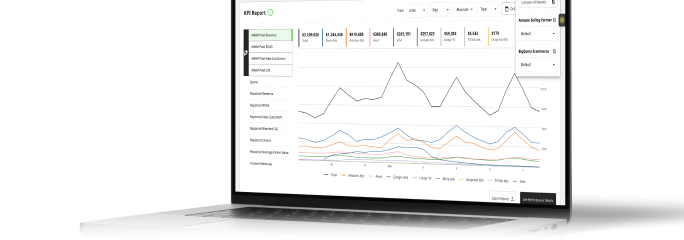
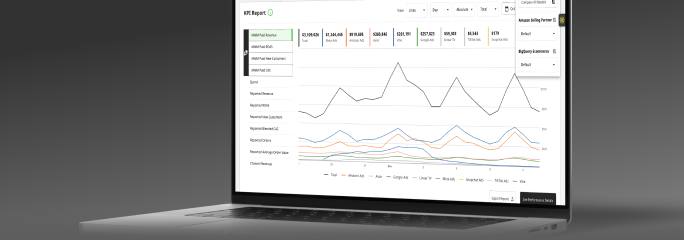
Prescient's marketing mix model gives you that answer. Instead of relying on the same platform-reported numbers that grade their own homework, our model works from observable outcomes, like actual revenue, back to what's really driving them, across every channel, including purchase-based and other identity-driven audience targeting strategies (our platform can filter at the tactic or campaign level, too, so you can dig deeper into what's working). That means you can see whether your best-targeted campaigns are earning their keep or just reaching buyers who were going to buy no matter what.
If you want to know whether your purchase-based targeting spend is actually moving revenue, book a demo with our team.
FAQs
What's the difference between purchase-based targeting and lookalike audiences?
Purchase-based targeting builds an audience directly from verified transaction data, like people who bought a specific product or category. Lookalike audiences work differently: a platform models a new audience based on how closely it resembles an existing seed audience, using a broader mix of signals that may or may not include purchase history. Lookalikes are a good way to scale reach once you have a strong seed audience, while purchase-based targeting is better for finding buyers with a documented purchase history.
How far back can advertisers use someone's purchase history for targeting?
It depends on the data source. Retail media networks and loyalty panels typically offer lookback windows ranging from 30 days to 12 months, and some providers extend further for high-consideration or infrequent purchase categories. A shorter window usually means a more current, more expensive audience, while a longer window trades some recency for scale.
Is purchase-based targeting compliant with privacy laws like the GDPR and the CCPA?
Reputable data providers build purchase-based targeting on aggregated or anonymized data and require consent where applicable, which keeps it compliant with current regulations. That said, privacy law keeps evolving and requirements vary by state and by country, so brands should confirm compliance details directly with their data provider rather than assuming one standard applies everywhere.
Can small businesses realistically use purchase-based targeting on a limited budget?
Yes, but with tradeoffs. Broader purchase-based segments, like anyone who bought in a category recently, are more affordable than SKU-level targeting, which tends to carry a premium because of how narrow the resulting audience is. Small businesses often get better results starting with a broader purchase-based segment, identifying which customers actually convert, and narrowing the audience from there. Digital advertisers with bigger budgets can afford to skip that step, for example, but most smaller teams can't.
Does purchase-based targeting work for B2B companies, or is it mostly a consumer tactic?
It's mostly built for consumer purchase data today, since most of the data sources, like retail media networks, card panels, and loyalty programs, track individual consumer transactions. B2B marketers can sometimes access purchase-based signals through intent data providers that track company-level buying behavior, but the depth and reliability vary a lot more than they do on the consumer side.
How do you measure the ROI of a purchase-based targeting campaign?
Standard campaign metrics, like click-through rate or platform-reported conversions, can tell you that a campaign reached the right people, but they can't tell you whether those conversions were incremental. Getting a real read on ROI means looking at how that spend affects actual revenue relative to what would've happened without it, ideally alongside every other channel in the marketing mix, rather than judging the campaign in isolation.
The Halo
Exclusive insights, every week.
Subscribe to The Halo for sharper marketing thinking.
You're subscribed to The Halo!
Quick question (optional): How familiar are you with MMM?
Thanks for sharing! Enjoy The Halo.
Keep reading
View all
New York Privacy Act: What marketers need to know before it passes
Read article
What is a data clean room? A marketer's guide
Read article
What cookieless marketing means for how you measure performance
Read article
What the ADPPA means for your marketing measurement strategy
Read article
What is EDDM? Every Door Direct Mail explained
Read article
Top of funnel marketing tactics that work and how to prove it
Read article