



How Zenwise Grew Its Shopify DTC Share While Holding Amazon, Using Prescient AI to Scale Omnichannel Ads


Zenwise is a supplement brand known for its digestive enzymes and gut-health blends. Through 2026 it has been one of the most Amazon-concentrated brands in its category: the vast majority of its revenue converts on Amazon, the largest US retailer in the Vitamin, Mineral, and Supplement category (ahead of Walmart, CVS, and Target combined). The rest of its revenue splits across a Shopify DTC store and TikTok Shop. In January 2026 the brand launched a redesign, a new Shopify DTC site, and new products.
The Challenge
A relaunch is a budget question before it is a creative one. Zenwise wanted to grow Shopify DTC with the relaunch. The obvious lever was to invest in upper-funnel social media ads to drive that growth, but what about the Amazon business, which drives the vast majority of sales? Last-click attribution cannot track a shopper who sees an ad and then converts on Amazon, so it is harder to know how to reallocate budget toward DTC without losing traction on Amazon.
That left two questions to answer before committing to the relaunch:
- If Zenwise scales omnichannel ads to grow Shopify DTC, where does the revenue land across Amazon, Shopify, and TikTok Shop?
- How much budget can the team move out of Amazon Sponsored Ads and into upper-funnel channels without losing the Amazon base that funds the business?
The Solution
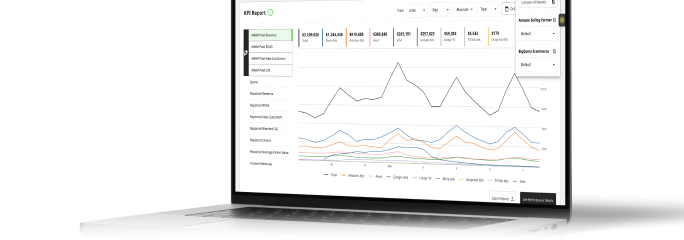
Zenwise adopted Prescient AI's MMM, which decomposes every dollar of ad spend into incremental revenue by destination. It shows how much of each channel's revenue lands on each storefront. The team could see an omnichannel portfolio the way shoppers actually move through it, across surfaces rather than inside any one platform's report.
The cross-destination view reframed the allocation question. Most of what the upper-funnel channels drove was landing off their own surface: halo share ran from 75% to 98% across Meta, Google, Pinterest, and TikTok. These channels were building demand that converted wherever the shopper preferred, often on Amazon, which is exactly the behavior an Amazon-first brand needs its omnichannel ads to produce.
With destination-level visibility, Zenwise reallocated the portfolio deliberately. The revenue from each channel lands with this distribution:
The Results
Shopify DTC's share of revenue grew
Across the two 15-week windows (September 22 to December 29 2025, then January 5 to April 13 2026), Prescient showed that Shopify DTC's share of revenue grew after the relaunch. TikTok Shop's share rose from 1.5% to 2.1% over the same period. The omnichannel portfolio did what the team scaled it to do: it grew revenue on the brand's own DTC surface and across newer destinations without draining the Amazon channel.
Shopify DTC revenue grew roughly 5x year-over-year
Comparing the first quarter of 2025 with the first quarter of 2026, Shopify DTC revenue grew roughly 5x. The year-over-year read in Prescient's platform confirms the share shift was real DTC growth, not an artifact of a softer Amazon quarter: the relaunch and the omnichannel scaling compounded into genuine Shopify volume.
Amazon held its base as budget moved to omnichannel ads
Amazon's revenue base held even as the team reduced Amazon Sponsored Ads spend share by 22 points. The base held because the upper-funnel channels the team scaled drove 31% more revenue to Amazon, offsetting the Sponsored Ads cut: halo share across the full portfolio rose from 55.2% to 59.0%, a structural shift toward a more cross-channel-driven mix. The reallocation followed this distribution:
Key takeaways: What this means for you
- Omnichannel growth on an Amazon-first brand is a measurement problem first. A brand cannot safely move budget out of Amazon Sponsored Ads without knowing which destination each channel's spend produces. Cross-destination measurement is what let Zenwise reallocate 22 points of spend and grow its Shopify DTC share while the Amazon base held.
- Halo is where the return lives. When 75% to 98% of a channel's revenue lands off its own surface, single-channel dashboards, which report only what converts on their own platform, will undercount the omnichannel portfolio. Measuring across destinations is how a brand sees the full contribution of its upper-funnel spend.
- Growing DTC and holding Amazon are not opposing goals. They stop competing once the omnichannel portfolio drives demand that converts wherever the shopper prefers. Zenwise grew Shopify DTC roughly 5x year-over-year while Amazon held its base, because it scaled with visibility instead of guessing.
Prescient has fundamentally changed how we think about marketing investment. Instead of optimizing channels in silos, we're able to understand how every dollar contributes across our entire business. That confidence has allowed us to scale our DTC business while continuing to grow Amazon, something we couldn't accurately measure before.