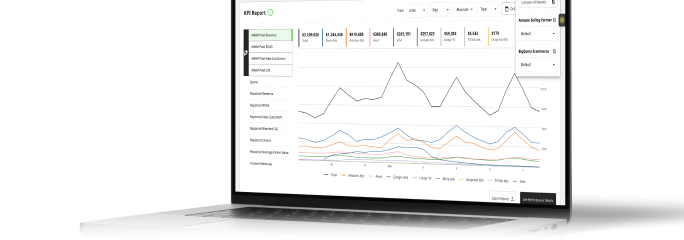




Brand Campaigns: Goals, Types, & Measuring Them Accurately
Brand campaigns build awareness, shape perception, and drive revenue in ways most attribution tools can't see. Here's how to measure them accurately.
Linnea Zielinski · 10 min read
Every few months, a campaign comes along that makes everyone in the marketing world stop and pay attention. Not because it drove a record-breaking click-through rate but because it changed how people felt about a brand. Dove's "Real Beauty" campaign didn't launch a new product. Nike's "Just Do It" didn't announce a sale. Coca-Cola's "Share a Coke" didn't promote a new flavor. What all of these marketing campaigns did was shift perception, build emotional resonance, and create the kind of long-term recognition that no single performance ad could manufacture on its own.
For marketers, brand campaigns are one of the most powerful tools in the strategy toolkit. They're also one of the most misunderstood—and the most undervalued—because their impact rarely shows up where most measurement tools are looking. Getting brand marketing right matters more than ever in a crowded digital landscape where customers have unlimited options and increasingly short attention spans. Understanding what brand campaigns actually do, how to run them well, and how to measure whether they're working is the difference between growing a business and just spending money on advertising.
Key takeaways
- Brand campaigns are long-term marketing efforts designed to build awareness, shape customer perception, and strengthen brand identity, not drive immediate conversions.
- The most effective brand campaigns evoke emotion, tell a compelling story, and create a consistent identity that customers can recognize and relate to across channels and media.
- Brand marketing and performance marketing work best together: brand campaigns warm audiences that performance campaigns then convert.
- Many of the most innovative campaigns in recent history have succeeded not by spending big, but by understanding their audience deeply and committing to a clear, specific point of view.
- Because brand campaigns don't drive immediate clicks, they're systematically undervalued by platform-based attribution tools, which only measure what happens inside their own ecosystem.
- The true revenue impact of a brand campaign often appears in branded search volume, organic and direct traffic, and downstream conversion performance, channels that standard attribution tools don't connect back to the original campaign.
- Marketing mix modeling (MMM) is one of the few measurement approaches capable of capturing these spillover effects, giving brand marketing the credit it actually earns.
What is a brand campaign?
A brand campaign is a coordinated marketing effort designed to shape how customers perceive a company, not to drive an immediate purchase, but to build the kind of presence and familiarity that makes future purchases more likely. Where a performance campaign says "buy this now," a brand campaign says "here's who we are and why we're worth your attention."
The goal isn't clicks or conversions. It's something harder to quantify but equally valuable: awareness, trust, and the emotional association that makes a brand the first one a customer thinks of when they're ready to buy.
Brand campaigns vs. performance campaigns
It helps to think of brand and performance marketing as two ends of a spectrum rather than two separate strategies. Performance campaigns—paid search ads, retargeting, promotional emails—are built to convert customers who are already close to a decision. They're efficient, measurable, and great at closing the loop on demand that already exists.
Brand campaigns create that demand in the first place. They reach customers who aren't yet in the market, plant a recognizable idea in their minds, and make sure your company is the one they think of when they're finally ready to act. Without brand marketing upstream, performance campaigns are working with a shrinking pool of warm prospects.
Why brand marketing matters to your business
Brand campaigns earn attention in a way that direct-response ads simply can't. They can create cultural moments that generate earned media, build loyalty that goes well beyond a single transaction, and establish the kind of story that customers want to share. They also give performance campaigns a real lift; a customer who's already seen a brand campaign is far more likely to click a retargeting ad or search for a brand by name.
Long-term recognition doesn't happen by accident. It's built through consistent, well-crafted brand marketing over time, and the companies that invest in it consistently tend to outperform those that don't.
Types of brand campaigns
Brand campaigns come in many forms, and the best strategy for a given brand depends on its goals, audience, and stage of growth. Here's a look at a few of the most common and effective types.
- Awareness campaigns are the most straightforward: their job is to introduce a brand to new audiences or reinforce its presence with existing ones. They're broad by design, prioritizing reach over immediate conversion. Think video ads, out-of-home placements, Super Bowl spots, and large-scale social campaigns.
- Values-led campaigns build trust by showing customers what a brand stands for beyond its products. These campaigns work best when the values are genuine and consistently reflected across the company, not just in the marketing. Dove's "Real Beauty" and Always's "Like a Girl" are classic examples of campaigns that connected a brand to something customers deeply cared about.
- Cultural or moment-based campaigns tap into what's happening in the world to make a brand feel relevant and alive. Red Bull has built its entire brand identity around this, sponsoring extreme sports events and creating content that feels native to the subcultures it wants to reach. Liquid Death has done something similar, leaning hard into heavy metal aesthetics and irreverent humor to sell canned water in a way that feels genuinely surprising.
- Rebranding campaigns are used when a company needs to shift perception, whether it's recovering from a reputational issue, reaching a new audience, or evolving as a business. Old Spice's transformation from a "your grandfather's aftershave" brand to a cultural touchstone is one of the most studied examples of rebranding done well.
- Collaborative campaigns pair two brands together to expand reach and create something neither could pull off alone. The Apple and Mastercard partnership that launched Apple Pay leaned into both companies' reputations for innovation and security, and the campaign became a landmark moment for contactless payment adoption.
What makes a brand campaign work
Great brand campaigns tend to share a few qualities, regardless of the industry or format. Understanding those qualities makes it easier to create campaigns that actually move the needle.
A clear, specific audience
The brands that run the most effective marketing campaigns aren't trying to speak to everyone. They know exactly who their customer is and they make creative decisions with that person in mind. Two brands in the fragrance and home scent space illustrate this perfectly.
Heretic Parfum has carved out a genuinely singular position in a crowded category. Whether they're releasing a stop-motion film, collaborating with the Edward Gorey House on illustration-driven creative and scents inspired by the late-writer's works, or using high-contrast photography that looks like nothing else in the industry, everything is unmistakably Heretic. The aesthetic is dark, art-forward, and specific, and it speaks directly to the customer who wants a scent that feels like a statement rather than a commodity.
Boy Smells has taken a different but equally deliberate approach. The brand name itself telegraphs the attitude: playful, a little cheeky, and definitively unisex. Their photography, their scent names, their packaging, all of it reinforces the same idea. The result is a brand that feels completely coherent across every touchpoint, which makes it instantly recognizable even in a category full of beautiful imagery.
Both brands succeed not by spending big, but by knowing their audience and committing fully to a point of view.
A compelling story or idea
The most memorable marketing campaigns are built around an idea that's bigger than the product. Coca-Cola's "Share a Coke" campaign replaced the iconic logo on bottles with people's names, a simple idea that turned a commodity product into something personal and shareable. It drove conversation, generated enormous earned media, and became one of the most replicated campaign concepts in history.
Red Bull doesn't just sponsor sports events, it creates them. The brand has built an entire media company around content that reflects its "gives you wings" philosophy, and the result is a campaign strategy that generates ongoing awareness without relying on interruptive advertising.
The story doesn't have to be complex to work. It just has to be true to the brand and relevant to the audience.
Consistency across channels and time
A brand campaign isn't a single ad, it's a sustained effort across media, touchpoints, and time. The brands that build the strongest identity are the ones that tell the same story across every channel, even as the format changes. Nike has been running variations of "Just Do It" for decades. The executions evolve, the athletes change, but the core idea stays intact.
This consistency is what builds long-term recognition. Customers encounter the brand in different contexts, but the feeling they get is always the same.
How to set goals for a brand campaign
Because brand campaigns aren't designed to drive immediate conversions, many marketers struggle with how to define success. The key is to set goals that correspond to what brand campaigns actually do—shift awareness, association, and downstream behavior—rather than holding them to the same metrics as performance campaigns.
Awareness and reach metrics
At the most basic level, a brand campaign should be reaching new people and making an impression. Reach, frequency, and video completion rates are reasonable indicators that the campaign is getting in front of the right audience. Brand lift studies—surveys that measure awareness and favorability before and after a campaign—can give directional signal, though they have real limitations when it comes to connecting that lift to downstream revenue.
Branded search volume
One of the clearest signals that a brand campaign is working is an increase in branded search volume, the number of people searching for the brand by name. When someone sees a campaign, doesn't click, but later types the brand name into Google because it stuck with them, that search is direct evidence of awareness turning into intent. Tracking branded search trends alongside campaign activity is one of the most underrated ways to evaluate brand campaign performance.
Downstream conversion lift
Brand campaigns warm audiences. Performance campaigns convert them. A well-run brand campaign should show up in improved performance across downstream conversion campaigns: better click-through rates on retargeting, lower customer acquisition costs, higher return on ad spend for bottom-funnel activity. If conversion campaigns get more efficient right after a brand campaign launches, that's not a coincidence.
Direct and organic traffic
An uptick in direct traffic—people typing a URL directly into a browser—and organic search traffic often follows strong brand campaign activity for the same reason as branded search: people remember the brand and come back to it on their own terms. These channels deserve a seat at the table when evaluating brand campaign results.
The measurement problem brand campaigns face
Here's the honest reality about brand campaigns: most measurement tools aren't built to capture what they actually do. Platform-based attribution—the ROAS figures that live inside Facebook, Google, Instagram, and other ad platforms—only measures activity that happens within that platform's own ecosystem. A campaign that reaches a customer who later searches for the brand on Google, visits the site directly, or buys on Amazon doesn't show up in the originating platform's reporting. The platform sees the ad spend. It doesn't see the conversion that happened somewhere else, weeks later.
This creates a systematic bias against brand campaigns. Marketers who rely on platform ROAS to make budget decisions will consistently see brand campaigns underperform relative to direct-response campaigns, because the measurement tool can't see most of the value being created. Over time, this leads to the same pattern: brand budgets get cut, performance campaigns receive more money, and customer acquisition costs quietly climb as the pool of warm, brand-aware prospects shrinks.
Last-click attribution and most multi-touch attribution models have the same problem. They're built around tracked user journeys, and a brand campaign's contribution to a sale rarely happens through a single, traceable click.
What actually works for measuring brand campaign impact
Getting an accurate read on brand campaign performance requires measurement that can account for long-window effects, cross-channel dynamics, and the kind of spillover that platform tools can't see.
Watch the signals platform tools miss
Even without a sophisticated measurement setup, marketers can look for the signals that brand campaigns leave behind. Branded search volume trends, week-over-week changes in direct and organic traffic, and shifts in conversion campaign efficiency all tell part of the story. None of these signals is conclusive on its own, but together they build a picture of whether brand spend is moving the needle.
Use MMM to connect the dots
Marketing mix modeling is one of the few approaches capable of capturing the full picture of what a brand campaign does. By modeling the statistical relationships between marketing activity and revenue across channels—including branded search, organic traffic, and direct traffic—an MMM can attribute revenue to campaigns that would look invisible in platform reporting.
This matters especially for brands that are omnichannel. A brand campaign running on Meta or connected TV can drive branded search on Google, lift organic traffic on Shopify, and increase sales on Amazon, all without a single traceable click connecting the campaign to the outcome. An MMM can see these patterns because it's looking at the whole picture, not just one platform's slice of it.
Where Prescient comes in
Prescient's MMM measures halo effects in marketing, the spillover revenue that brand campaigns drive across branded search, organic traffic, direct traffic, and retail channels like Amazon, Target, and Walmart. Unlike platform attribution tools, Prescient attributes this revenue at the campaign level, which means marketers can see exactly which brand campaigns are earning their spend and which ones aren't. No more writing off brand investment as unmeasurable, and no more cutting campaigns that are quietly driving some of your best revenue.
If your brand campaigns deserve more credit than your current tools are giving them, it's worth seeing what Prescient's measurement actually shows. Book a demo to see it in action.
The Halo
Exclusive insights, every week.
Subscribe to The Halo for sharper marketing thinking.
You're subscribed to The Halo!
Quick question (optional): How familiar are you with MMM?
Thanks for sharing! Enjoy The Halo.
Keep reading
View all
Top of Funnel Visibility Loss: New Causes & What to Do
Read article
What the ADPPA means for your marketing measurement strategy
Read article
How effective is direct mail marketing? What the numbers show and what they miss
Read article
How to plan a multi-channel marketing campaign that actually works together
Read article
Best MMM solutions for retail and omnichannel brands
Read article
What is agile marketing? A guide for modern marketing teams
Read article