



What's the difference between brand marketing and direct response marketing?
Brand marketing builds long-term equity. Direct response drives immediate sales. Here's why the gap between them is costing most brands more than they realize.
Linnea Zielinski · 7 min read
A restaurant can fill tables two ways: It can build a reputation (great food, a loyal following, word-of-mouth that brings people in without a coupon in sight) or it can run a Groupon every weekend and keep the seats warm on deals alone. Both approaches work in the short term, but only one builds a business that doesn't have to buy its customers every single time.
That tension is essentially the brand marketing vs. direct response marketing debate, and most brands are navigating it without a real map. Getting the balance wrong hurts short-term sales and quietly shapes how efficiently your entire marketing program runs.
Key takeaways
- Brand marketing focuses on building long-term brand equity, awareness, and emotional connection with a broad audience, while direct response marketing aims for immediate, measurable actions like clicks or purchases.
- The real difference between these two approaches is about when and where value shows up, and most measurement tools are built to see only one side of that equation.
- Direct response marketing is highly trackable through conversion rates and immediate returns, but brand marketing creates the conditions that make direct response work better over time.
- Awareness spend drives branded search, organic traffic, and direct visits, downstream value that standard attribution models consistently miss and often assign credit elsewhere.
- Brands that underinvest in brand marketing often see their direct response advertising efficiency erode over time, even if they can't pinpoint why.
- Most businesses need both: brand marketing builds the demand that direct response harvests, and treating them as separate budget silos usually leads to poor allocation decisions.
- Measuring only what's easy to measure is one of the most expensive mistakes in modern marketing, and it disproportionately punishes brand investment.
What is brand marketing?
Brand marketing is the practice of building your company's reputation, values, and emotional connection with potential customers over time. It targets a broad reach rather than a narrow, specific audience, and it's designed to create familiarity, trust, and preference, not necessarily to trigger a purchase right now.
Think of brand ads, sponsorships, video content, and brand sentiment campaigns. The goal isn't an immediate sale. It's to occupy mental real estate so that when someone does enter the market for what you sell, your brand is already on the shortlist. (We have a guide to mental availability if you want to go into a deeper dive on this and circle back.) Brand marketing operates on the logic of future demand; it's planting seeds for a harvest that may come weeks or months later.
That long timeline is what makes brand marketing notoriously hard to tie to revenue in a clean, tidy way. You can't always draw a straight line from a brand awareness campaign to a purchase, but that doesn't mean the line doesn't exist.
What is direct response marketing?
Direct response marketing is designed to generate an immediate action from a specific audience, like a purchase, a sign-up, or a lead form submission. Every element of a direct response ad has a job: the message is persuasive and offer-driven, the call to action is clear, and the goal is to convert someone who's already close to a decision.
This includes paid search campaigns, direct mail, promotional materials with a clear CTA, and most of what brands think of as their performance spend. Direct response is the natural home of conversion rates, response rates, and immediate returns since it's the side of marketing where ROI is most legible and most immediate.
Because it's so trackable, direct response marketing tends to dominate budget conversations. You can show exactly what it did. It generated leads, drove short-term sales, hit a cost-per-acquisition target, and the numbers are right there.
When value shows up, and who gets credit
The standard breakdown of brand marketing vs. direct response marketing—goal, timeframe, message, target audience—is accurate enough. But it misses the more important question: where does the value actually land, and which of your tools can see it?
The results of direct response marketing show up in the places measurement was built for: conversion rates, immediate sales, and response rates. These are legible because they happen close in time and channel to the ad itself. The effects of brand marketing tend to show up somewhere else entirely. Someone sees a video ad, doesn't click, and later searches your brand name on Google. Or they type your URL directly into their browser because your brand stuck. Or they convert through a retargeting campaign that only worked because awareness warmed them up first.
That downstream value shows up in branded search volume, organic traffic, direct visits, and even traffic to your Amazon storefront. But in most attribution setups, those channels get the credit, not the awareness campaign that created the demand in the first place. This causes a systematic blind spot that leads to brands undervaluing brand marketing, cutting it, and then wondering why their direct response campaigns start getting harder and more expensive.
Why brands underinvest in brand marketing
It's not that marketing leaders don't believe in brand marketing. Most do, intuitively. The problem is that belief doesn't survive a budget meeting when your direct response campaigns are showing clean ROAS numbers and your awareness campaigns are reporting something that looks like 1.5x on a good week.
Standard marketing attribution is built around the last touchpoint or, at best, a multi-touch model that still lives in the click ecosystem. Neither of these can connect a brand awareness impression to the branded search that happened two weeks later. So brand investment looks underperforming, even when it's doing the most work.
The result is a slow drift toward performance-only spending, characterized by the brand chasing short-term gains while the awareness pipeline quietly runs dry. Customer acquisition costs creep up. Conversion campaigns start to struggle. Nobody connects it to the brand investment that was cut two quarters ago. This is the conversion-only death spiral, and it's more common than most brands realize.
How brand and direct response work together
The most useful way to think about brand and direct response marketing isn't as a balance to strike, but a sequence to coordinate. Brand marketing creates the conditions that make direct response work. Without it, you're asking your performance campaigns to do a job they weren't built for: converting people who've never heard of you.
When brand marketing is working, you see it in the lift on everything downstream: your retargeting audiences are warmer, your branded search volume climbs, and your direct traffic grows in ways that don't feel like they have an obvious source. Paid search campaigns get more efficient because people entering the funnel are already familiar with who you are. This is the result of the same dollar working across multiple channels at once, with a delay built in.
Direct response marketing then harvests what brand marketing built. It reaches a specific audience that's already been primed, delivers the right message at the right moment, and closes the gap between interest and purchase. The two approaches reinforce each other, and brands that treat them as competing budget priorities end up getting less out of both.
The measurement gap that gets in the way
The reason most businesses struggle to see these as complementary tactics is a measurement problem. If you can only see the immediate returns from direct response, that's where the budget will flow. Brand marketing's contribution to long-term brand equity, customer lifetime value, and deep customer loyalty stays invisible, which makes it look optional. And, let's face it because we've all been through a budget meeting or ten, things that look optional get cut first.
This dynamic is especially punishing for brands trying to grow. Building a customer base on direct response alone is expensive because you're constantly buying the next customer at full price, without the brand tailwind that makes acquisition more efficient over time. Brands that invest consistently in awareness tend to see their customer acquisition costs come down over time, not just from optimization, but because more people already know who they are when they enter the market.
Most businesses also underestimate how much brand marketing affects what happens on the direct response side of the funnel. When brand investment is strong, your conversion campaigns get warmer audiences. Your retargeting performs better because people recognize you. Your paid search benefits from people actively looking for your brand by name. These are direct consequences of your brand spend, and they show up in channels that have nothing to do with the campaign that drove them.
Most measurement tools aren't built to surface this. They're built to report on what happened after the click, not what happened before it. Unfortunately, that's not a solvable problem within those platforms. Fixing your attribution window or adding more touchpoints to your MTA model doesn't close this gap.
Where Prescient comes in
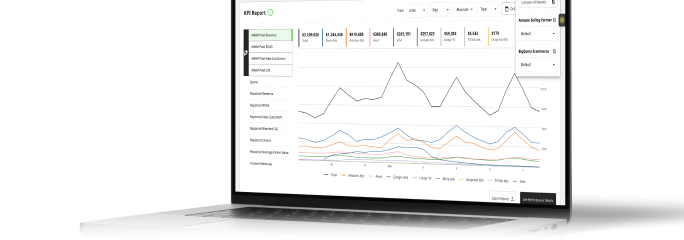
Prescient's marketing mix model is built to measure across both sides of this equation. Rather than relying on click-based attribution, we model the statistical relationship between your actual marketing spend and realized revenue, including the downstream effects that standard tools miss. That means your brand awareness campaigns get credit for the branded search, organic traffic, direct visits, and even Amazon and retail sales they drive, not just the conversions that happen immediately in-channel.
This matters because budget decisions made with incomplete measurement are almost always wrong in the same direction: they undervalue brand investment and over-rotate toward direct response until performance starts to degrade. With Prescient, you can see how your awareness spend is actually performing across your full marketing ecosystem and make allocation decisions with confidence, not just instinct. See it for yourself when you book a demo with our team of experts.
The Halo
Exclusive insights, every week.
Subscribe to The Halo for sharper marketing thinking.
You're subscribed to The Halo!
Quick question (optional): How familiar are you with MMM?
Thanks for sharing! Enjoy The Halo.
Keep reading
View all
What is EDDM? Every Door Direct Mail explained
Read article
Top of funnel marketing tactics that work and how to prove it
Read article
Cross-channel vs omnichannel marketing: The differences that matter for your budget
Read article
How effective is direct mail marketing? What the numbers show and what they miss
Read article
Top of funnel vs bottom of funnel: How they differ and how to balance your budget
Read article
You’re underestimating the value of top of funnel marketing
Read article