


8 Critical omnichannel marketing best practices for modern brands
Steal the essential omnichannel marketing best practices modern brands use to deliver seamless customer experiences and measure the full impact of their spend.
Linnea Zielinski · 13 min read
Think about the last time a shopping experience genuinely surprised you. Maybe you browsed a product on your phone during lunch, added it to your cart, walked into a store that afternoon, and the associate already knew what you'd been looking at. Or the brand followed up with an email that actually reflected where you were in the process, not a generic blast that had nothing to do with you. That frictionless feeling doesn't happen by accident. It's the result of a brand that has deliberately connected every channel it operates so that no matter the customer interaction—online, in store, or in between—the customer experience feels intentional and consistent.
Brands that deliver a seamless customer experience across channels consistently see stronger customer retention, higher customer lifetime value, and more efficient use of their omnichannel marketing campaigns. The ones that don't often lose customers without ever knowing why, which is why the channels omnichannel marketing teams choose to connect, and how they connect them, matters enormously. A well-executed omnichannel strategy is one of the most important investments a modern brand can make, and it pays dividends across every part of the customer journey.
Key takeaways
- Omnichannel marketing integrates all of your digital and physical channels into a single, consistent customer experience, unlike multichannel marketing, where channels operate independently and customer data stays siloed.
- Centralizing customer data is the foundation of any successful omnichannel marketing strategy; without it, personalization and consistency are nearly impossible to deliver at scale.
- Brand consistency across channels doesn't mean identical content; instead, it means your messaging, tone, and visual identity are recognizable whether a customer interacts with you in store, on social media, through email marketing, or in their inbox.
- The customer journey is rarely linear, so building your omnichannel strategy around the full path leads to smarter budget decisions and better outcomes.
- Mobile devices are often the first point of contact in the omnichannel customer journey, making mobile-first design a non-negotiable for any brand operating across multiple channels.
- Measurement is one of the most underdeveloped parts of most omnichannel marketing strategies; understanding not just what converted, but what drove awareness and demand across channels, is where brands unlock their biggest gains.
- Halo effects—the spillover revenue that upper-funnel campaigns drive to branded search, organic traffic, direct traffic, and retail channels—are frequently invisible to standard attribution tools, meaning most brands are undervaluing their best campaigns.
What omnichannel marketing actually means
Before getting into best practices, it's worth being precise about what omnichannel marketing is and what it isn't. The term gets used interchangeably with "multichannel marketing," but the distinction matters for how you build your marketing strategy.
Multichannel marketing means you're present across multiple channels: social media, email, your website, maybe brick and mortar stores. Multichannel marketing focuses on individual channel performance, but each channel largely operates on its own, with its own strategy and its own version of the customer.
Omnichannel marketing means those channels are connected. Customer data flows between them, the customer experience is consistent across every customer touchpoint (including both online and offline interactions), and the customer is at the center rather than the channel. Omnichannel marketing integrates every touchpoint into a cohesive system, so customer interactions build on each other rather than starting from scratch.
| Multichannel marketing | Omnichannel marketing | |
| Channel coordination | Independent | Integrated |
| Customer data | Siloed by channel | Unified across touchpoints |
| Customer experience | Varies by channel | Consistent brand experience |
| Measurement focus | Per-channel metrics | Cross channel and full journey |
| Strategic focus | Channel performance | Customer needs and journey |
With that distinction clear, here's how leading brands are building a successful omnichannel strategy that actually works.
1. Unify your customer data
Every effective omnichannel strategy starts with the same thing: a single, reliable view of your customer. Without it, personalization is guesswork, measurement is incomplete, and your teams are making decisions based on different versions of the truth.
Unifying customer data means pulling together what you know about how customers interact with your brand—purchase history, browsing behavior, in store experiences, email marketing engagement, user preferences, and more—into a single unified view. In practice, this usually involves a customer data platform (CDP) or a well-integrated CRM, and it requires breaking down the internal silos that often keep this data trapped in separate tools or departments.
A few things that tend to stall brands here:
- Siloed teams. When your marketing, sales, and customer service teams are each working from different data, you get inconsistent customer interactions and gaps in customer insights. A customer who complained to support last week shouldn't receive a win-back email until their issue has been resolved.
- Disconnected online and offline channels. If you sell in brick and mortar stores, integrating in store purchase data with your digital data is one of the highest-leverage investments you can make. It's how you start to understand the full customer journey across digital and physical channels, not just the digital slice of it.
- Over-reliance on platform-reported data. Each platform has an incentive to report its own performance favorably. Centralizing your customer data and feeding it into an independent model gives you a more accurate picture of what's actually driving your revenue across channels.
Once unified, everything else in your omnichannel marketing strategy—personalization, retargeting, measurement—becomes significantly more effective. The goal is to track customer behavior across the entire journey so that every decision is grounded in the full picture.
2. Build a consistent brand experience across every channel
Customers don't experience your brand one channel at a time. They see your Instagram ad on social media, visit your website, open your email, and walk past your display in a retail store, often within the same week. Those in store experiences shape how they perceive your brand just as much as any digital channel does. If the brand they encounter feels different at each touchpoint, the experience feels fragmented, and customer satisfaction erodes with it.
A consistent brand experience is one of the defining characteristics of effective omnichannel marketing. Your visual identity, messaging, and tone should be instantly recognizable across all marketing channels. To establish brand guidelines that actually work at scale, make sure every partner, agency, and internal team member working on omnichannel marketing campaigns should be working from the same playbook to deliver a consistent customer experience.
That said, brand consistency doesn't mean identical content. Adapting your voice and format by platform is smart digital marketing strategy. The way you show up on TikTok should feel different from how you show up in an email marketing campaign or in store displays, even if the underlying brand identity and consistent brand message are the same. Consistency is about recognition, not rigidity.
A quick consistency checklist for omnichannel campaigns:
- Visual identity (logo, colors, typography) is consistent across digital channels and physical touchpoints
- Tone of voice is recognizable but platform-appropriate
- Promotions and offers are synchronized (a deal that's live in store is reflected online)
- Product information is accurate and consistent everywhere it appears
- Campaign messaging tells a cohesive story that doesn't contradict itself across channels
3. Build for the full customer journey, not just the last click
The moment a customer clicks "buy" is rarely the moment they made their decision. That final decision was previously shaped by a series of interactions, like an awareness campaign they saw weeks ago, a recommendation from a friend, or a branded search they ran after seeing your ad on CTV. The customer journey is rarely linear, and optimizing only for what happened last means you're making your marketing strategy based on an incomplete picture.
Taking time to create customer journey maps is one of the most practical ways to understand what your customers actually experience from awareness to purchase. Effective omnichannel marketing strategy requires knowing where customers are coming from, what channels are influencing their decisions, and where the gaps are (places where customers are dropping off or where channel sequencing is working against you).
A few principles worth building into your omnichannel strategy at the journey level:
- Don't under-invest in upper-funnel channels just because they're harder to measure. Campaigns on YouTube, CTV, or connected social platforms often drive customers into your branded search or organic traffic; that lift is real, even if it doesn't show up in platform dashboards.
- Think about channel sequencing. Each omnichannel campaign type—awareness, consideration, conversion—engages customers at different points in the omnichannel customer journey. They should be coordinated to tell a story, not repeat the same message.
- Map your digital and physical touchpoints together if you're an omnichannel brand. A customer who sees a social media ad on Monday and then completes a purchase in store on Friday, but then makes another purchase in store the following month after a retargeting email, or sees a display ad and purchases on Amazon, is following a path your marketing strategy needs to account for.
The brands that understand the full picture make better decisions about where to invest their marketing efforts.
4. Personalize the customer experience at scale
One of the clearest signals of a well-executed omnichannel marketing strategy is personalization that feels natural rather than forced. Customers have come to expect brands that remember their customer preferences and history, and they're increasingly impatient with brands that deliver irrelevant experiences.
Personalization at scale means using behavioral signals to deliver personalized experiences and relevant content across every customer touchpoint, triggered by real customer behavior rather than arbitrary schedules. Some of the most effective applications of personalization in omnichannel marketing campaigns:
- Trigger-based communication: A customer abandons their cart; they receive a well-timed email reminder. A loyalty member hits a threshold; they get a relevant offer before they even think to look for one. These moments of relevance drive repeat purchases, strengthen customer loyalty and relationships, and improve overall customer satisfaction, creating the conditions for repeat purchases over time.
- Bridging online and offline: Models like buy online, pick up in store (BOPIS) personalize the handoff between digital and physical channels and give brands richer data about how their customers shop across multiple channels.
- Personalized customer journeys by segment: New buyers, lapsed customers, and loyalists all have different customer needs and different relationships with your brand. Personalized customer journeys by segment engage customers more effectively than one-size-fits-all messaging.
Advanced analytics tools and marketing automation tools make personalization at this level achievable even for mid-sized marketing teams, and it's one of the most impactful digital marketing strategies available to omnichannel brands. The goal is for customers to feel understood, not tracked.
5. Optimize for mobile first
Mobile devices are often the first (and sometimes the only) channel through which customers interact with a brand. They're where people discover products, compare options, read reviews, and increasingly complete purchases both online and in store. Any effective omnichannel marketing strategy that isn't built mobile-first is already a few steps behind.
Optimizing for mobile means more than a responsive website. It means ensuring that every touchpoint is designed for a small screen and a short attention span. It also means treating SMS, push notifications, and in-app messaging as channels for delivering personalized experiences rather than afterthoughts.
A few things to check as part of your mobile marketing strategy:
- Page load times on mobile (slow pages consistently damage customer satisfaction and conversion rates)
- Email marketing rendering across mobile devices before any campaign goes out
- Checkout flows optimized for mobile (minimal fields, easy payment options, no friction)
- SMS and push notification cadence calibrated to add value, not add noise
Mobile is where the omnichannel customer journey most frequently starts, and that makes mobile optimization foundational to any omnichannel strategy that intends to deliver consistent messaging across all touchpoints.
6. Keep your teams aligned
One of the most common ways omnichannel marketing strategies break down has nothing to do with technology. Being out of sync is the root cause, but it shows up in different ways:
- when a customer calls support after seeing an ad and the support agent has no idea what campaign they're talking about.
- when a sale that's live online isn't reflected in a retail partner's system.
- when the marketing team is tracking metrics that the sales team has never heard of.
A successful omnichannel marketing strategy requires that your marketing, sales, and customer service teams are working from the same information. That means shared visibility into the customer journey, consistent messaging across departments, and regular communication about what campaigns are running and what customer feedback is coming in.
Customer feedback is a particularly underused resource here. What customers are telling your support team is often some of the most actionable customer insights you have about where the omnichannel experience is breaking down, and it rarely makes it back to the marketing team. Making that feedback loop part of your marketing strategy is one of the fastest ways to identify and fix gaps that are quietly hurting customer relationships.
7. Retarget intentionally across channels
Most customers need more than one customer interaction with a brand before they make a purchase. Cross channel retargeting—following up with customers across marketing channels based on their behavior—is one of the most effective ways to stay relevant throughout the consideration process and engage customers who are close to converting.
Done well, retargeting delivers personalized experiences that advance the customer journey. Done poorly, it becomes the reason customers tune out. The difference is usually in the logic and frequency.
A few approaches that tend to work across channels:
- Abandoned cart sequences via email marketing or SMS, timed thoughtfully within a short window of the original visit
- Dynamic product ads that reflect what a customer actually browsed—serving personalized experiences rather than generic creative—across social media, display, and other digital channels
- Sequential messaging that advances the story; a customer who has already seen your awareness content is ready for something that speaks to their specific consideration stage, not a repeat of the same message
The goal is to engage customers where they are in the buying journey, not just chase them around with the same ad across every digital channel. Personalized experiences at this stage of the journey are what actually move customers to purchase.
8. Measure the full impact of your omnichannel marketing spend
Tracking key performance indicators like customer retention rate, customer engagement, conversion rates across channels, and customer lifetime value are all valuable. They belong in every omnichannel marketing strategy. But they only tell part of the story.
The harder and more consequential measurement question is this: which campaigns drove demand that eventually converted somewhere else? A customer who saw your CTV campaign on Monday, ran a branded search on Wednesday, and purchased in store on Saturday generated revenue that standard attribution will assign to the last touchpoint or miss entirely. The awareness campaign that started the whole process gets no credit and no budget allocation for next quarter.
This is where halo effects become a critical concept for omnichannel brands. Halo effects in marketing describe the spillover revenue that upper-funnel omnichannel marketing campaigns drive to channels like branded search, organic traffic, direct traffic, and retail, revenue those campaigns genuinely influenced but that doesn't show up in their platform-reported numbers. For brands that sell on Amazon, at Target, through Walmart, or through other retail partners, this gap between platform attribution and actual contribution can be substantial.
Marketing mix modeling (MMM) is one of the most reliable tools for closing this measurement gap. Unlike last-click or multi-touch attribution models, MMM looks at the statistical relationships between spend across all marketing channels and revenue across all channels—including offline channels and retail—to understand what's actually driving results. It operates independently of platform-reported data, which means it doesn't inherit the biases that come from platforms grading their own homework.
What good omnichannel measurement looks like for leading brands:
| Metric | What it tells you |
| Customer retention rate | How well the omnichannel experience is building customer loyalty over time |
| Customer lifetime value | The long-term revenue impact of your omnichannel marketing strategy |
| Cross channel conversion rate | Which touchpoints and sequences are driving the most purchases across channels |
| Halo effects by campaign | The downstream revenue your upper-funnel campaigns generate in other marketing channels |
| Omnichannel revenue contribution | Your total revenue impact across DTC, Amazon, and retail, not just your connected storefront |
| Customer satisfaction scores | Whether the consistent brand experience you're delivering is actually meeting customer expectations |
Brands that invest in understanding the full picture of their omnichannel marketing performance—not just the parts their platforms can see—make smarter budget decisions, invest more confidently in upper-funnel channels, and grow with less waste. Understanding how to exceed customer expectations starts with understanding which marketing efforts are actually delivering against them.
Where Prescient comes in
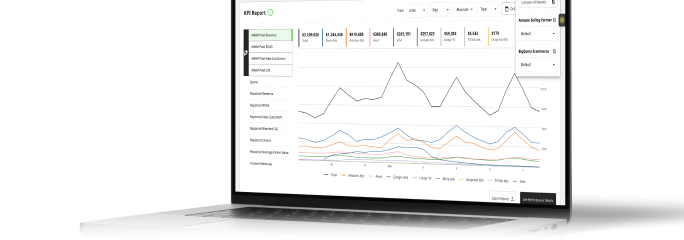
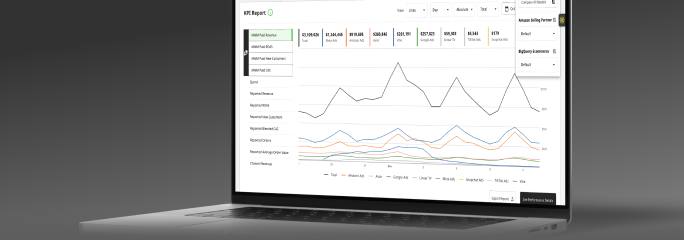
Prescient AI was built for exactly this measurement challenge. Our marketing mix model gives omnichannel brands a unified view of their performance across DTC, Amazon, and retail channels, with daily model updates and campaign-level reporting that goes well beyond what standard attribution tools can offer. Critically, we measure halo effects so that when your Meta campaign drives a lift in branded search or your CTV spend moves the needle on your Target revenue, you can see it, quantify it, and use it to inform your next marketing strategy decision.
That matters because omnichannel brands consistently undervalue their best upper-funnel campaigns because they're only measuring what's easy to measure. Prescient gives you the full picture of your omnichannel marketing performance so your spend decisions reflect reality, not just what the platforms report. Get the inside scoop on how the Prescient platform can reveal the true performance of your campaigns by booking a demo.
FAQs
What is the 3-3-3 rule in marketing?
The 3-3-3 rule is a practical framework for attention in digital marketing, most commonly applied to email marketing and ad creative. The idea is that you have roughly three seconds to capture someone's attention, three lines to communicate your core message, and a single call to action that takes no more than three steps to complete. It's a useful reminder that most marketing content is consumed quickly—often on mobile devices—so brevity and clarity tend to outperform length and complexity, especially for omnichannel marketing campaigns targeting customers across channels.
What are the 4 pillars of omnichannel?
The four pillars most commonly associated with omnichannel marketing are consistency, integration, personalization, and measurement. Consistency means delivering a recognizable brand experience across every channel, online and offline. Integration means your channels are connected so that customer data and context flow between them. Personalization means using what you know about your customers to deliver relevant, timely experiences that meet customer needs at each stage of the journey. And measurement means tracking not just channel-level performance but the full picture of how your omnichannel marketing strategy is driving customer behavior, customer engagement, and long-term relationships across the entire customer journey, including the halo effects that standard attribution tools typically miss.
What are the four C's of omnichannel?
The four C's of omnichannel typically refer to customer, consistency, communication, and convenience. The customer is always the starting point; a successful omnichannel marketing strategy exists to serve their journey, not to optimize individual channels in isolation. Consistency ensures that no matter where a customer interacts with your brand across channels, the experience feels coherent and recognizable. Communication means your messaging is relevant, timely, and calibrated to where the customer is in their journey with your brand. And convenience is about removing friction at every stage: a seamless mobile checkout, a BOPIS option, or a support team that already has context on every prior customer interaction so they can provide relevant, personalized help.
What are the 4 P's of channel strategy?
In the context of channel strategy, the 4 P's refer to product, price, place, and promotion, the classic marketing mix framework. Product addresses whether the right offerings are available through the right marketing channels. Price ensures consistency and competitiveness across channels, particularly as customers increasingly compare prices in real time across multiple channels. Place is about being present where your customers are shopping, whether that's through online and offline channels, your own site, brick and mortar retail partners, or a marketplace like Amazon. And promotion covers how you coordinate your omnichannel marketing campaigns across channels to deliver a consistent and effective message throughout the customer journey.
The Halo
Exclusive insights, every week.
Subscribe to The Halo for sharper marketing thinking.
You're subscribed to The Halo!
Quick question (optional): How familiar are you with MMM?
Thanks for sharing! Enjoy The Halo.
Keep reading
View all
How effective is direct mail marketing? What the numbers show and what they miss
Read article
How to actually optimize your ad spend (not just cut waste)
Read article
How to allocate marketing budget across channels
Read article
How to run a successful marketing campaign
Read article
How to allocate budget for digital marketing
Read article
A guide to digital media planning for modern marketers
Read article