


What is promotion analysis? A marketer’s guide to measuring what’s actually working
Every marketer has run a promotion and watched sales spike, felt a surge of relief, and moved on.
Linnea Zielinski · 8 min read

Every marketer has run a promotion and watched sales spike, felt a surge of relief, and moved on. But there’s a quieter, more uncomfortable question that often goes unasked: would those customers have bought anyway? A well-timed discount can feel like a success story while quietly eroding your margins, because the sales you’re celebrating were coming regardless of the deal you offered.
Knowing the difference between a marketing promotion that genuinely grows your business and one that just reshuffles revenue you already had is one of the most valuable things a marketing team can do. Getting that analysis right is what separates brands that scale efficiently from ones that find themselves dependent on discounts just to hit their numbers.
Key takeaways
Promotion analysis is the process of evaluating whether a promotion drove incremental sales or simply moved demand that already existed.
Looking at a sales spike alone doesn’t tell you much. You need to understand what your baseline sales volume would have been without the promotion to draw any real conclusions.
Marketing mix modeling (MMM) separates the effects of a promotion from other factors like seasonality, ad spend, and organic demand, giving you a much cleaner read on promotion performance and effectiveness.
Holiday promotions are especially tricky to analyze because consumer demand is already elevated during those periods, which makes it easy to overcount your promotion’s contribution to revenue.
Demand pull-forward is a real risk with promotions; customers who would have bought next month may buy today, creating a short-term sales boost followed by a dip.
Halo effects matter too: a product promotion on one item can lift sales across your catalog or even affect performance on other channels, and good analysis accounts for that.
Campaign-level analysis gives you more useful data than channel-level analysis, because it shows you exactly which promotional activities drove results rather than crediting an entire platform.
What is promotion analysis?
Promotion analysis is the process of measuring how much a sales promotion actually contributed to your bottom line. That sounds straightforward, but it’s genuinely harder than it looks. A promotion is any marketing tactic designed to boost sales volume over a specific window, whether that’s a percentage discount, a bundle deal, a buy-one-get-one offer, or a limited-time free shipping threshold.
When you run one of these promotions, you want to know if it worked. But “it worked” needs a real definition. Did the promotion result in additional sales generated (bring in new customers who wouldn’t have found you otherwise)? Did it convince existing customers to buy sooner or spend more? Or did it just give a discount to people who were already planning to purchase? Each of those outcomes has a very different implication for your profit and your strategy going forward.
Why sales data alone won’t give you the answer
The most common mistake in measuring promotion effectiveness is looking at total sales during the promotional period and comparing it to a slow week. Revenue went up, so the promotion worked, right? Not necessarily. Sales fluctuate all the time based on factors that have nothing to do with your promotion: the day of the week, what competitors are doing, whether you posted something that went viral, or just the natural rhythm of your category.
What you actually need is a baseline, an estimate of what your sales would have looked like without the promotion running at all. That’s the only way to measure whether the promotion generated additional sales or just discounted revenue that was already on its way to you. The gap between your actual sales during a promotional period and that baseline is your true incremental lift, and it’s the number that actually matters for understanding promotion effectiveness and protecting your margin.
How marketing mix modeling is used for promotion analysis
Marketing mix modeling is a method that looks at your marketing and sales data holistically over time rather than in a single isolated window. Instead of just asking “what happened during this promotion,” an MMM asks “what role did this promotion play alongside everything else that was happening—paid media, seasonality, organic demand, and external factors—and how much of the outcome can actually be attributed to it?”
This approach is especially useful for promotion analysis because it builds that baseline for you. The model accounts for the other variables at play, isolates the promotional impact, and gives you a cleaner read on what the promotion actually contributed to sales. It can also surface halo effects: situations where a promotion on one product lifted sales across other products or categories, or where a promotional push on one channel drove branded search and direct traffic that platform reporting never would have caught.
Traditional MMMs have historically updated monthly or quarterly, which makes them slow for analyzing short promotional windows. More modern approaches update daily, which means you can actually get timely data on a weekend sale or a flash promotion rather than waiting weeks to understand what happened.
What goes into a promotion analysis with MMM
To accurately measure a promotion’s impact, a marketing mix model draws on several types of data simultaneously. On the promotional data side, that includes the timing and duration of the promotion, and which channels carried the promotional messaging. The model also incorporates your paid media spend across channels, organic and direct traffic, and any available pricing data.
External factors matter too. Seasonality, major shopping events, and even macroeconomic conditions can all influence sales volume in ways that have nothing to do with your promotion. A good model accounts for these so they don’t get misattributed to your promotional activities or left out of the analysis entirely, which would make your promotion look either better or worse than it actually was.
Promotions, holidays, and the baseline problem
One of the trickiest scenarios in promotion analysis is the holiday promotion. Running a discounted price during Black Friday, Cyber Monday, or Valentine’s Day almost always looks like a successful promotion, and it’s tempting to credit the specific promotion for your higher sales. But holiday periods come with something built in: customers are already primed to shop. They’re actively searching for gifts and deals, and many of them would have purchased from you regardless of whether you offered a discount.
This is where a concept called baseline leakage becomes relevant. When demand is already elevated heading into a holiday, some of the revenue a promotion appears to generate was actually going to happen anyway. Without a robust model separating baseline demand from promotional lift, brands consistently overcount the effectiveness of their holiday promotions and end up running deeper discounts than they need to. For a more detailed look at how this works and what to do about it,our piece on baseline leakage goes deeper on the mechanics.
The risk of demand pull-forward
A closely related issue is pull-forward, which is what happens when a promotion convinces customers to buy sooner than they otherwise would have. Your promotional period shows strong sales, but the following weeks are unusually slow, not because something went wrong, but because those customers already bought. You effectively borrowed sales from the future rather than generating more sales.
Pull-forward is particularly common with promotions on replenishable products, where customers stock up during a sale. When you’re looking at promotional data, it’s worth examining the post-promotion period just as carefully as the promotion window itself. A legitimate sales lift should hold or normalize naturally; a pull-forward effect will often show a clear dip right after the promotion ends.
Channel-level vs. campaign-level promotion analysis
Most traditional MMMs can tell you that your paid social channel had a strong week during a promotion. That’s useful, but it’s not enough to act on. Knowing that Meta performed well during your sale doesn’t tell you whether it was your retargeting campaigns, your prospecting ads, or the promotional creative that drove the results.
Campaign-level analysis gives you a much more specific read. Instead of crediting an entire channel, you can see which individual promotional activities drove incremental sales, which ones were just along for the ride, and which ones may have cannibalized each other. That granularity is what makes it possible to actually improve your promotion design over time rather than just running the same playbook and hoping it works again. Prescient operates at the campaign level, which means every promotion analysis surfaces the kind of specific, actionable data your team can put to work immediately.
How to put promotion analysis to work
The goal of promotion analysis isn’t just to grade your last sale, it’s to level up your promotion strategy so you can make better decisions about the next one. Once you have a reliable read on your promotion effectiveness, a few things become a lot clearer.
You can evaluate whether a particular discount depth is actually necessary to move the needle, or whether a smaller offer would produce similar lift at better margins. You can time future promotions more strategically relative to your other marketing activity, avoiding overlap that inflates your costs without improving your results. And you can identify which customer segments respond best to promotional offers, so you’re not giving discounts to people who would have paid full price.
Over time, this kind of analysis also helps brands break the cycle of discount dependency. Many brands find that promotions become a bigger and bigger part of their revenue mix because they’ve never had clear data showing whether the promotions were worth it. Rigorous, model-driven promotion analysis is what gives you the confidence to run fewer, better promotions, and to defend that strategy internally with data rather than intuition.
Common mistakes in promotion analysis
Even with the right intentions, promotion analysis goes wrong in predictable ways. The most common is attributing all sales during a promotional window to the promotion itself, without accounting for baseline demand or seasonality. Closely related is ignoring the post-promotion dip, which can mask the true cost of a pull-forward effect.
Another frequent issue is relying solely on platform-reported data during a promotional period. Platforms have structural incentives to report strong numbers, and attribution models that rely on user tracking will over-credit certain channels during high-traffic events when multiple touchpoints overlap. An MMM sidesteps this by looking at aggregate patterns rather than individual click paths. Finally, brands often skip the halo effect analysis entirely, missing the downstream impact that a promotion on one SKU or channel can have across the rest of the business.
Where Prescient comes in
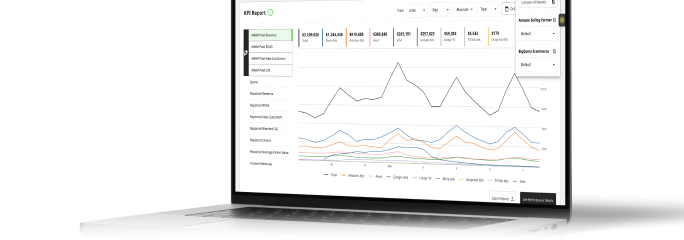
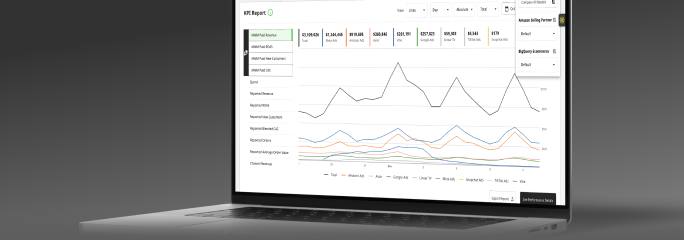
Most MMM platforms give you channel-level data that updates monthly, which means by the time you’re looking at your promotion analysis, the window to act on it has long passed. Prescient was built to solve exactly that problem. Our models update daily, so you can see how a promotion is performing in near real-time rather than waiting weeks for a read. And because we operate at the campaign level, you’re not just learning that paid social had a good week, you’re seeing which specific campaigns drove incremental sales, which ones were redundant, and where you left money on the table.Prescient also captures the full picture of what a promotion does to your business, not just what it does to one channel. That includes halo effects across your catalog, spillover into organic and branded search, and—critically for omnichannel brands—the impact your online marketing has on your retail performance. Our retail models bring your retail data into the same view as your online media, so you’re not analyzing your promotions in a silo while a significant portion of the revenue they drive stays invisible. If you want to see what that looks like in the platform,book a demo and we’ll walk you through it.
The Halo
Exclusive insights, every week.
Subscribe to The Halo for sharper marketing thinking.
You're subscribed to The Halo!
Quick question (optional): How familiar are you with MMM?
Thanks for sharing! Enjoy The Halo.
Keep reading
View all
How effective is direct mail marketing? What the numbers show and what they miss
Read article
How to actually optimize your ad spend (not just cut waste)
Read article
How to allocate marketing budget across channels
Read article
How to run a successful marketing campaign
Read article
How to allocate budget for digital marketing
Read article
A guide to digital media planning for modern marketers
Read article