


What are TV upfronts? A marketer's guide to buying TV advertising
TV upfronts are when brands commit billions in ad spend before broadcast season starts. Learn how upfronts work and how to make smarter TV advertising decisions
Linnea Zielinski · 6 min read
Every fall, fashion week gives designers a runway to debut next season's collections months before they hit stores. Buyers who show up early get first pick of the best pieces at the best prices while everyone else shops the leftovers. The TV advertising industry runs on the same logic and has for decades.
Each spring, major broadcast and cable networks—NBC, ABC, Fox, and streaming companies including Netflix, Disney, and YouTube—host high-profile upfront presentations in New York City to showcase their upcoming programming lineups. These events kick off upfront season: the window when advertisers and agencies commit billions in ad dollars before a single episode airs.
Understanding how upfronts work and what that means for your media budget matters more than ever as the line between traditional television and streaming continues to blur.
Key takeaways
- TV upfronts are annual presentations where major networks and media companies pitch their programming to marketers and lock in ad deals for the coming broadcast season.
- Advertisers that commit in the upfront market typically secure premium ad spots at better rates than what's available closer to air dates.
- The scatter market is where unsold inventory gets sold later in the year, usually at a higher price but with more scheduling flexibility.
- NewFronts are the digital equivalent of upfronts, hosted by streaming platforms, YouTube, and digital publishers.
- Linear TV and CTV (connected TV) now coexist in upfront conversations, and many advertisers split their television budgets between both.
- TV advertising is notoriously difficult to measure with standard attribution tools, which makes it hard to know where your ad dollars are actually going.
- Marketing mix modeling gives advertisers an independent way to measure the true revenue impact of their TV campaigns so they can make smarter upfront commitments.
How the TV upfronts work
The upfronts follow a consistent structure each year: a showcase to generate excitement, followed by the actual ad sales. Here's how each stage plays out.
The upfront presentation
During upfront week, media companies roll out their talent, tease new programming, and make the case for why their audiences are worth the commitment. Networks like Fox, NBC, and ABC—and streaming companies like Netflix and Disney—pull out all the stops with celebrity appearances, exclusive trailers, and live performances. It's the industry's biggest pitch, condensed into a few days in New York City.
The ad sales
After the upfront presentations, agencies and advertisers negotiate deals. Committing to upfronts means locking in ad spots at rates generally lower than what they'd pay in the scatter market. These deals typically come with audience guarantees; if a show underdelivers on viewership, the network provides make-goods like free or discounted additional air time to compensate.
The scatter market
Not all TV advertising gets sold through the upfronts. Networks hold back some inventory and sell it in the scatter market closer to when shows actually air. Scatter buys offer flexibility—useful when your planning cycle doesn't align with the spring deadline—but that flexibility usually comes at a higher price.
| Upfront market | Scatter market | |
| Timing | Spring, months before air | Closer to air date |
| Price | Lower, negotiated in advance | Higher, based on demand |
| Flexibility | Lower (commitments made early) | Higher (shorter lead time) |
| Best inventory access | Yes | Remaining slots |
| Audience guarantees | Yes, with make-goods | Generally no |
Upfronts vs. NewFronts
As streaming grew, a parallel buying season emerged to cover digital video advertising. The NewFronts, hosted by streaming platforms, YouTube, and digital publishers, give advertisers a chance to preview upcoming content and commit to ad inventory in advance (same structure as the upfronts, different channels). For advertisers with budgets that span both linear television and connected TV, upfront season now often means attending both.
Should Linear TV or CTV get your ad dollars?
The television advertising landscape has split significantly over the past decade. Here's how the two sides differ:
Linear TV is traditional broadcast and cable, scheduled programming audiences watch in real time. It still commands massive audiences, especially for live sports, major live events, and news. It's also the original home of the upfronts.
CTV (connected TV) is streaming content watched on a TV screen through smart TVs, Roku, Fire Stick, and similar devices. As streaming TV platforms have grown their ad-supported tiers, CTV has become a major part of upfront and NewFront conversations.
Most advertisers are splitting their budget between both instead of choosing one over the other. The harder question is: how much should go where, and how do you know if it's working?
Why TV measurement is so hard to get right
TV advertising, whether linear or streaming, is notoriously difficult to measure. A few reasons why:
- No click-through path. TV ads don't come with a URL. Revenue that follows a TV impression often shows up in branded search, direct traffic, or organic visits, channels that look unrelated to your television spend on the surface.
- Delayed effects. Someone who sees your ads during primetime might not search for your brand until days later. Standard attribution tools aren't built to connect those dots.
- Platform data has limits. Streaming platforms can report on impressions and completion rates, but they can't tell you what happened to revenue after your ads ran.
The result: many advertisers either underestimate what their TV campaigns are delivering and pull back too soon or they keep spending without knowing if it's actually working. (We have a guide on how to measure CTV effectively if you think you're leaving some stones un-turned.)
Where Prescient comes in
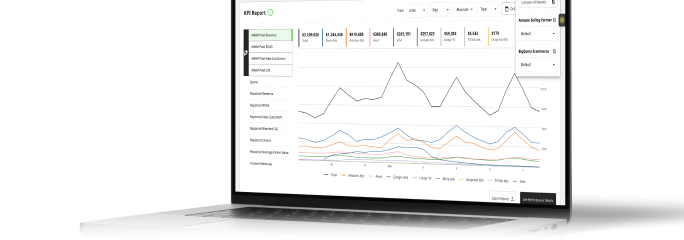
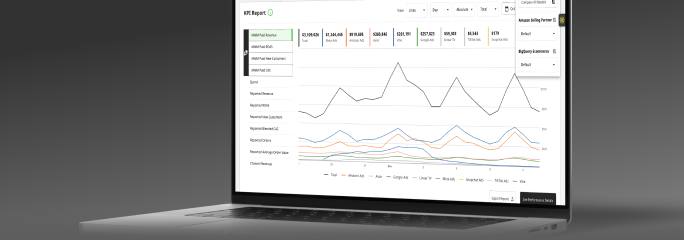
Prescient measures the true revenue impact of your television campaigns—both linear TV and CTV—at the campaign level, updated daily. That includes the marketing halo effects that show up after someone sees your ads: the branded search lift, the uptick in direct traffic, the downstream revenue that doesn't trace back to a click. Instead of relying on platform-reported numbers, you get an independent, model-driven read on which campaigns are working, which are approaching saturation, and where there's room to scale.
That's the kind of visibility that makes upfront commitments a lot more confident. When you know what your TV campaigns are actually delivering, including what they influence beyond direct conversions, you can put your upfront ad dollars behind evidence instead of estimates. Book a demo with our team of experts to see how Prescient measures your television performance.
FAQs
What is the difference between the upfront market and the scatter market?
The upfront market is the spring buying season where advertisers commit to TV ad inventory months before it airs, typically at negotiated rates lower than what's available later. Upfront deals usually include audience guarantees, with make-goods available if a show underdelivers. The scatter market is where remaining inventory gets sold closer to air dates, generally at a higher price, but with more flexibility for advertisers that can't plan that far in advance.
What are NewFronts?
NewFronts are the digital equivalent of TV upfronts. Hosted each spring by streaming platforms, digital publishers, and social networks, they give advertisers a chance to preview upcoming content and commit to digital video ad inventory in advance. As streaming TV has grown, NewFronts have become an important part of upfront season for advertisers spending across both linear television and connected TV.
Is it better to buy TV ads in the upfronts or the scatter market?
It depends on your planning cycle and your confidence in your TV performance data. Upfront deals typically offer better pricing and access to premium programming—including live sports and major live events—but they require committing ad dollars months in advance. Scatter buying offers more flexibility at a higher cost. Marketers who have a clear picture of which campaigns are driving revenue are better positioned to commit early and get the most out of upfront pricing.
How can you tell if your TV advertising is actually working?
Standard attribution tools struggle with TV because there's no click to trace. Marketing mix modeling is one of the most reliable approaches: it uses statistical relationships between your ad spend, impressions, and revenue to estimate what your television campaigns are contributing without relying on pixels or platform data. This is especially useful for capturing the delayed effects of TV, like the branded search and direct traffic that spike after someone sees your ads but before they convert.
The Halo
Exclusive insights, every week.
Subscribe to The Halo for sharper marketing thinking.
You're subscribed to The Halo!
Quick question (optional): How familiar are you with MMM?
Thanks for sharing! Enjoy The Halo.
Keep reading
View all
What is direct response TV (DRTV) marketing?
Read article
What is EDDM? Every Door Direct Mail explained
Read article
Top of funnel marketing tactics that work and how to prove it
Read article
Cross-channel vs omnichannel marketing: The differences that matter for your budget
Read article
How effective is direct mail marketing? What the numbers show and what they miss
Read article
Top of funnel vs bottom of funnel: How they differ and how to balance your budget
Read article