



What marketers need to understand about walled gardens
A walled garden is a closed ecosystem where one company controls access to its hardware, software, or data. Learn what it means for your marketing measurement.
Linnea Zielinski · 9 min read

When you stay at an all-inclusive resort, everything you need is right there behind the gates: restaurants, pools, entertainment, even a little shop for sunscreen you forgot to pack. It's comfortable—a lot easier than planning every meal and activity yourself—but you never get an itemized receipt. You don't know exactly what that second cocktail cost, or whether the food would've been cheaper (or better) somewhere down the road. You just get a single bill at checkout and a vague sense that you probably got your money's worth.
That's what it's like to run marketing campaigns inside a walled garden.
For brands spending money across Google, Meta, Amazon, and a dozen other platforms, understanding how walled gardens work shapes how confidently you can report on performance, defend your budget, and figure out where your next dollar should actually go. But most people only run into the term when they're trying to make sense of why one platform's numbers never quite line up with another's.
Key takeaways
- A walled garden is a closed ecosystem where a single company controls access to its hardware, software, services, or data, keeping users and businesses inside a system it fully owns.
- In tech, walled gardens like Apple's iOS restrict how devices and apps interact with anything outside that company's ecosystem.
- In advertising, walled gardens are platforms like Google, Meta, and Amazon that let you run campaigns and see basic results, but won't let you export the detailed user data behind those results.
- Not all walled gardens are equally restrictive. Some, like Apple's, have very high walls, while others, like Android, are far more open by comparison.
- The biggest misconception is that "walled garden" only describes hardware lock-in. In marketing, it's just as often about who controls your campaign performance data.
- Walled gardens create a measurement problem for advertisers: every platform reports on its own performance, with a pretty clear incentive to make themselves look as good as possible.
- Getting a full, unbiased view of your marketing performance means looking beyond what any single walled garden is willing to show you.
What is a walled garden, exactly?
At its core, a walled garden is a closed ecosystem where one company or provider keeps strict control over who gets in and what they can do once they're there. Instead of an open environment where any hardware, app, or data source can plug into any other, a walled garden creates a self-contained world with a single gatekeeper.
You'll run into this concept in two different contexts.
Walled gardens in tech and hardware
In consumer technology, a walled garden usually means a company builds its hardware, software, and services to work best (or only) with each other. Apple is the prime example, and a lot of people's first exposure to the term comes from hearing it used to describe Apple's ecosystem specifically. Your iPhone, MacBook, and Apple Watch sync smoothly because Apple built its whole technology stack to talk to itself. Try pairing that same iPhone with a non-Apple smartwatch or transferring files to a Windows PC without extra software, and you'll feel the walls.
This kind of control comes with benefits for the user: tighter security, more consistent privacy protection, and a smoother user experience overall. The tradeoff is that it limits your choices and makes it harder to mix and match products, apps, or devices from other brands. Some people even bring their own devices closer to the wall on purpose, favoring one company's products specifically because the experience feels more polished inside the garden than out on the open internet.
Walled gardens in digital advertising
In marketing, the term takes on a different but related meaning. Here, a walled garden is a closed platform where the provider, whether that's Google, Meta, or Amazon, manages ad buying, serving, and tracking while keeping the underlying data to itself.
As an advertiser, you can absolutely run campaigns on these platforms and see results. What you can't do is pull the granular, user-level data behind those results or easily compare performance across platforms using the same methodology. Each platform hands you a summary and asks you to trust it, which is where a lot of businesses start to feel the limits of what a single walled garden can tell them.
Common misconceptions about walled gardens
A quick scroll through any forum discussing this topic shows a few misunderstandings come up again and again.
"Walled garden" only applies to Apple and hardware
This is probably the most common mix-up. People hear the phrase in the context of iPhones and assume it's strictly a tech story. In reality, the same logic applies just as heavily to advertising platforms. Google Ads, Meta, and Amazon Ads all operate as walled gardens, even though no one's talking about jailbreaking them.
Being inside a walled garden means you have zero access or control
It's not that you get nothing. You get dashboards, reports, and campaign-level metrics, usually as aggregated data rather than a record of what any single user did. What you don't get is the raw, exportable detail that would let you independently verify those numbers or line them up against a different platform's data using a shared standard.
All walled gardens are equally restrictive
They're not. Apple's ecosystem has notoriously high walls and tight control over what happens on its devices. Android, by comparison, allows users to install apps from outside its official store and switch devices with a lot less friction. The same variation shows up in advertising: some platforms share more audience insights and campaign performance data than others, even though none of them fully open up their data to outside advertisers.
Weighing the pros and cons
Walled gardens aren't inherently good or bad. They're a tradeoff, and which side of that tradeoff matters most depends on whether you're the platform, the user, or the business trying to advertise on it. A benefit for one group can create a real challenge for another, which is easiest to see side by side:
| Pros | Cons | |
| For users and customers | Tighter security, consistent experience, less clutter from unvetted apps or sources | Limited choice, harder to switch to a competing product or service |
| For platforms and tech giants | Strong control over quality and brand experience, valuable first-party data, less exposure to outside risks | Can appear restrictive or anti-competitive to regulators and users |
| For advertisers and brands | Access to massive, engaged audiences in one place | Limited transparency into user data, little ability to independently verify performance |
That last row is where things get complicated for marketers.
Why walled gardens make marketing measurement harder
When you advertise inside a walled garden, you're relying on that platform to grade its own homework.
Each platform reports on its own campaigns using its own methodology, and none of them have much incentive to say a competing channel deserves more credit for a sale (if they can even see the influence of other platforms). That's just how a closed system with a built-in business incentive to look good tends to behave. The practical result is that if you're running ads across Google, Meta, Amazon, and a handful of other platforms, you end up with a stack of reports that don't speak the same language and, more often than you'd expect, don't even add up to your actual total revenue.
This gets even trickier with the ongoing loss of third-party cookies and tighter data protection rules. As tracking gets harder across the internet, platforms increasingly point you toward their own walled garden's data as the source of truth, since it's the one place they still have a clear view. That's convenient for the platform. It's a lot less convenient for you when you're trying to figure out whether your Amazon ads service spend or your social media platforms spend actually drove more revenue.
It's not that any single platform is impossible to work with on its own. The real challenges show up when you try to line several platforms up side by side and expect the numbers to reconcile like they came from one shared system. Businesses that pay close attention to this eventually notice the same pattern across their environment of channels: platform-reported totals, added together, almost always claim more revenue creation than the business actually saw.
How to see past the walls
You can't tear down a walled garden, and you probably don't need to. What you need is a way to measure performance that doesn't depend on any single platform telling you how well it did.
A few practical approaches:
- Lean on first-party data. Whatever information you can collect directly, whether that's email signups, purchase history, or post-purchase surveys, gives you a data source no platform controls.
- Compare platform-reported numbers against your actual revenue. If your platforms' reported revenue adds up to more than what you actually brought in, that's a sign of overlapping credit, not extra growth.
- Use a measurement approach built outside the walls. Marketing mix modeling (MMM) looks at your spend and results across every channel using one consistent methodology, so you're not stuck comparing a Google Ads report to a Meta report and hoping the difference makes sense.
None of this requires more control over the platforms themselves or special access most businesses don't have. It just means creating your own vantage point so you're not depending on Google, Meta, Amazon, or any other technology provider's version of events to make your budget decisions for you.
Where Prescient comes in
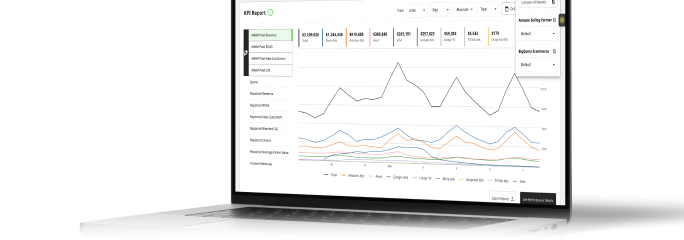
This is exactly the gap Prescient AI's marketing mix modeling was built to close. Instead of asking you to trust what each walled garden says about itself, Prescient models your entire marketing ecosystem together—using your own historical data instead of pixels or platform-reported claims—so no single platform gets the final word. You get Platform-Reported and Modeled Revenue, Platform-Reported and Modeled ROAS, and a clear view of the halo effects your ads create across channels, including the impact your paid media has on retail partners like Target, Walmart, Ulta, and Amazon.
That means you can finally compare your Google, Meta, and Amazon performance on equal footing, without any one platform's walls shaping the story. Your customers move across apps, websites, and stores without thinking twice about which walled garden they're in at any given moment, and your measurement should be able to follow them just as easily. If you're ready to see what your marketing performance looks like from outside the garden, book a demo with Prescient AI.
FAQs
What is the point of a walled garden?
The point of a walled garden is control. By keeping hardware, software, or data within a single, self-contained ecosystem, a company can protect its users, maintain a consistent experience, and hold onto valuable data instead of sharing it with competitors or outside developers. For advertisers, that same control lets platforms offer easy access to huge audiences without having to open up their underlying data.
What are the cons of a walled garden?
The biggest downside is limited choice and visibility. Users find it harder to switch to competing products once they're invested in one ecosystem, and businesses that advertise inside a walled garden can't easily verify performance data or compare it against other channels. For platforms themselves, being too closed off can also invite criticism from regulators and users who want more openness.
What is an example of a walled garden?
Apple's iOS ecosystem is one of the most cited examples in tech, since it tightly controls how its hardware, apps, and services work together. In advertising, Google, Meta, and Amazon all function as walled gardens, since each one manages its own ad buying, serving, and reporting while keeping detailed user data inside its own platform.
What does the expression "walled garden" mean?
The expression describes a closed environment that offers plenty to do inside its boundaries but restricts what can come in or go out. It's meant to evoke exactly what it sounds like: a garden that's pleasant to be in, but surrounded by a wall you can't easily see over or get past.
Is Amazon a walled garden?
Yes. Amazon controls access to its advertising data and keeps detailed customer behavior within its own platform, much like Google and Meta. Advertisers can run campaigns and see performance metrics, but pulling the underlying user-level data out of Amazon's ecosystem for independent analysis is extremely difficult.
How do walled gardens affect marketing attribution?
Walled gardens make attribution harder because each platform only reports on activity it can see within its own ecosystem, using its own rules for what counts as a conversion. That makes it tough to compare performance across channels or trust that the credit for a sale is going to the right place, which is part of why more brands lean on independent measurement approaches like marketing mix modeling.
The Halo
Exclusive insights, every week.
Subscribe to The Halo for sharper marketing thinking.
You're subscribed to The Halo!
Quick question (optional): How familiar are you with MMM?
Thanks for sharing! Enjoy The Halo.
Keep reading
View all
A marketer’s guide to in-house MMM builds vs vendor tools
Read article
What causes attribution bias in marketing and how to reduce it
Read article
How many channels can an MMM measure?
Read article
Can MMM measure marketing when customers buy through multiple channels?
Read article
What matchback analysis measures, what it misses, and how to fill the gaps
Read article
Can MMM measure influencer marketing?
Read article