



The real advantages of market segmentation, and how to prove they're working
Market segmentation only pays off if you can prove it has real ROI for your brand. Here's what the real advantages look like and how to measure them.
Linnea Zielinski · 8 min read

A good tailor doesn't measure every single customer who walks through the door or offer just one size to everyone. Instead, they stock a handful of cuts built around common body shapes, so far more people leave with something that actually fits without a custom order. That's the same logic behind market segmentation. You're not trying to build a marketing plan for each individual customer. You're grouping people by shared characteristics, then building marketing efforts around each group instead of forcing everyone into the same pitch.
That distinction matters for a business reason: the advantages of market segmentation only show up when the groups are meaningful and the marketing campaigns built around them actually behave differently. Good market research is what separates a real target market from a guess, and it's what makes the effort worth it in the first place. Get that right, and a segmentation strategy can change how efficiently a budget gets spent. Get it wrong, and it just adds complexity without adding results.
Key takeaways
- Market segmentation helps a business spend its marketing budget on the target customers most likely to respond, instead of spreading it across a broader target market.
- The strongest benefits of market segmentation show up in marketing messages, product decisions, competitive advantage, and retention, not just in ad targeting.
- Common segmentation strategy mistakes include treating market segments as permanent, over-segmentation into groups too small to act on, and defining segments by demographic data alone.
- Behavioral data and customer feedback tend to build more useful market segments than demographic segmentation by itself.
- Personalized marketing works because it treats people like the distinct groups they actually are, and once market segmentation is live in marketing campaigns, most platforms only show part of what that target audience actually did.
- Measuring the full effect of a segmented campaign, including effects beyond the direct click, is what turns segmentation into an actual strategic lever.
What market segmentation actually changes about a campaign
It's easy to list the benefits of market segmentation in the abstract. What matters more is what changes inside an actual campaign once segmentation is in place. Here's what shifts when a business moves from broad marketing strategies aimed at a broader target market to marketing strategies built around distinct groups.
- Budget efficiency: Instead of paying to reach everyone in a category, spend concentrates on the target audience most likely to convert, which cuts down on wasted impressions and can improve operational efficiency by narrowing which creative and offers a team has to manage.
- Message relevance: Marketers can create personalized marketing plans for each of their customer segments, speaking directly to what a specific group cares about, rather than using one generic pitch for a mixed audience of new prospects and existing customers.
- Product and pricing decisions: Feedback from customers and behavioral data collected from each segment can shape what gets built, priced, or discounted going forward, which supports product differentiation.
- Competitive advantage: A business that owns a specific customer base tends to build more brand loyalty and market share than one competing broadly for the same larger market everyone else is chasing, which creates a competitive edge.
- Retention: Customers who see marketing built around their preferences, not a generic funnel, are more likely to come back, which supports customer retention, customer satisfaction, and a stronger customer experience over time. It's essentially customer relationship management applied at scale.
None of these advantages require a massive martech stack. They come from having a segmentation model detailed enough to act on, and marketing strategies that actually treat each customer segment differently. Done well, segmentation helps a team spend smarter, not just differently.
How segments actually get identified
Before a business can market differently to different groups, it has to know what those groups are. This is the groundwork of customer segmentation, and it's often skipped over in favor of jumping straight to campaign targeting. Some teams call the output buyer personas, others just call them customer segments or market segments, but the underlying idea is the same. Implementing market segmentation well depends less on fancy tools and more on how consistently a team acts on what the data shows.
Identifying segments usually starts with data collection: pulling together customer data from purchase history, browsing history, and how people have responded to past marketing campaigns, whether that spend was on online advertising, retail media, or organic content. From there, most segmentation models fall into a few common categories:
- Demographic segmentation: Grouping by traits like age group, income, or location. It's the easiest place to start, but rarely enough on its own
- Behavioral segmentation: Grouping by what people actually do, like purchase frequency, product usage, or how customer behavior shifts in response to specific offers
- Psychographic segmentation: Grouping by personal preferences, values, and interests that shape why someone buys, not just what they buy
Customer feedback and focus groups can round out what raw data shows, especially for smaller groups where behavioral patterns aren't obvious yet from purchase history alone. The goal isn't to collect data that can be turned into actionable insights, at a high enough data quality, to identify segments a marketing team can realistically build campaigns around. Once a business starts to integrate segmentation into regular reporting instead of treating it as a one-off project, it stops competing with the rest of the marketing plan and starts informing it. That consistency, more than any single tool, is what implementing market segmentation successfully comes down to for reaching potential customers before a competitor does.
Where segmentation strategies commonly break down
Segmentation sounds simple on paper: identify segments, market to them differently, done. In practice, a few habits undercut the benefits of market segmentation before they show up in results.
Treating segments as permanent. Consumer behavior shifts with market dynamics, seasonality, and competition. A segmentation strategy built on old customer data may no longer reflect who's actually buying today. Effective market segmentation means revisiting segments periodically, not setting them once and moving on to the next business strategy.
Over-segmentation. More segments can feel like precision, but splitting a customer base into too many smaller groups spreads a budget thin and makes each of these specific customer groups too small to build a real campaign around. Budget only stretches far enough to properly serve a handful of profitable segments, not a dozen micro-segments no one has the resources to serve well. Marketing strategies built for a dozen tiny groups tend to buckle under their own complexity, and this is one of the fastest ways a segmentation model collapses.
Defining a segment by demographics alone. An age group or a broad demographic label can be a starting point, but it rarely tells the full story on its own. Two potential customers in the same demographic groups can have completely different browsing history, personal preferences, and purchase behavior. Layering in behavioral segmentation and psychographic segmentation, built from actual customer data rather than profile fields, tends to produce distinct groups based on shared characteristics that respond more predictably to targeted strategies, rather than specific segments defined by a single data point.
Avoiding these three habits is most of what separates effective segmentation from an approach that just adds another layer of complexity to already-stretched marketing efforts.
Proving it worked is the part that's easy to miss
How do you actually know a segment is performing well, versus just looking efficient in a platform dashboard?
Platform-reported campaign performance usually only gives credit for the customers who clicked and converted right away. But a well-targeted campaign built around a specific segment can influence more than that. Someone in that audience might see the ad, do nothing for a few days, then come back through a search, a direct visit, or another sales channel entirely, like an Amazon storefront. If a business is only measuring the immediate click, it's missing a real part of what that segment-targeted campaign actually drove, and it risks writing off a profitable segment as underperforming.
This is where segmentation and measurement need to work together. A campaign can be built around a strong, well-researched market segment and still look mediocre in a platform report, simply because the report can't see where the rest of the impact landed. Without a way to measure that fuller picture, a business is left guessing at whether its segmentation strategy is actually driving results, or just running a more complicated version of the same campaigns against a slightly narrower target audience.
Where Prescient comes in
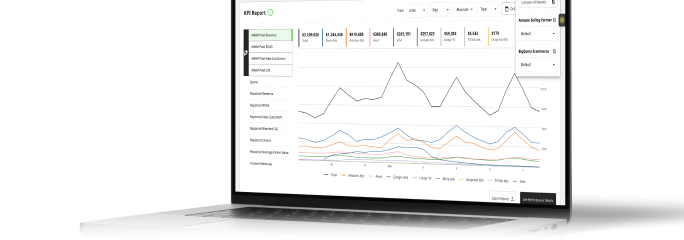
Prescient doesn't build market segments or run the segmentation work itself. What Prescient does is measure what happens after a segment-targeted campaign goes live. Our marketing mix model reports on marketing halo effects at the campaign level, meaning the revenue that shows up beyond the direct click, across channels like organic search, direct traffic, and retail storefronts. If a segment-targeted campaign is driving people to convert later or somewhere else, that shows up in the numbers instead of getting written off as underperformance.
Prescient also forecasts how a campaign is likely to perform going forward, so a business can plan its marketing budget around a segment with confidence rooted in data. That combination, halo effects plus forecasting, gives marketers a clearer read on which segments of potential customers are genuinely profitable audiences worth the investment, and which marketing strategies are actually earning a stronger customer experience over time. Book a demo to see what these reports look like in the Prescient platform with anonymized data from a real brand.
FAQs
What are the advantages and disadvantages of segmentation?
The advantages of market segmentation include more efficient budget spending, more relevant messaging, better product decisions, and stronger customer retention, since campaigns are built around groups that actually share needs instead of one broad audience. The tradeoffs show up when segmentation is done poorly: splitting a customer base into too many small groups can spread a marketing budget thin, and segments built on stale data can lead a team to target the wrong people entirely. The advantages generally outweigh the drawbacks, but only when segments are kept current and sized large enough to act on.
What is a major advantage of segmentation?
The advantage that tends to matter most is budget efficiency. Once a business understands which specific groups are most likely to respond to a given offer, it can concentrate spend there instead of paying to reach an entire market indiscriminately. That efficiency tends to compound, since better-targeted messaging also improves conversion rates and customer experience, which reinforces the value of the original segmentation work.
Why is it important to have market segmentation?
Market segmentation matters because customers don't all want the same thing, and treating them as if they do wastes both budget and attention. Segmenting a market lets a business match its messaging, pricing, and product decisions to what a specific group actually values, which tends to produce better campaign performance and stronger long-term relationships than a one-size-fits-all approach.
The Halo
Exclusive insights, every week.
Subscribe to The Halo for sharper marketing thinking.
You're subscribed to The Halo!
Quick question (optional): How familiar are you with MMM?
Thanks for sharing! Enjoy The Halo.
Keep reading
View all
How effective is direct mail marketing? What the numbers show and what they miss
Read article
How to actually optimize your ad spend (not just cut waste)
Read article
How to plan a multi-channel marketing campaign that actually works together
Read article
A marketer's practical guide to integrated marketing campaigns
Read article
How to allocate marketing budget across channels
Read article
How to run a successful marketing campaign
Read article