




How to get more out of every marketing channel you use
Channel optimization means more than picking the right platforms. Learn how measurement, saturation, and cross-channel effects shape smarter budget decisions.
Linnea Zielinski · 6 min read

If you invested in five stocks ten years ago and never once rebalanced your portfolio, you'd probably be sitting on a mess. Some of those stocks would have grown into a bigger share than they deserve, others would have shrunk to almost nothing, and your original strategy would barely resemble what you're actually holding today. Smart investors check in on their portfolio and shift money around based on how each piece is actually performing, not on how they assumed it would perform when they bought in.
Marketing channels require the same regular assessment. The mix that made sense for reaching customers last year, or even last quarter, might not be the one driving your best results today. Brands that treat their channel mix as something to set up once and leave alone tend to leave revenue on the table.
Key takeaways
- Channel optimization means continuously adjusting how, when, and where you reach customers across channels, rather than deciding on a mix once and calling it done.
- Good channel optimization depends on accurate measurement. If you can't measure how a channel is actually performing, you can't make sound decisions about it.
- Each channel saturates differently, so applying one universal diminishing-returns rule across your whole marketing mix will lead you astray.
- Channels influence each other, and spend in one can drive engagement, and even purchases, in another, so judging channels in isolation will never show you their real value.
- For brands with an in-store or retail presence, channel optimization needs to account for how online spend affects in-store and marketplace performance, not just D2C website conversions.
- Common mistakes include leaning too heavily on last-click data, reacting to short-term dips, and ignoring how connected your channels really are.
- A repeatable process is what turns channel optimization into a long-term advantage.
What is channel optimization?
Channel optimization is the ongoing process of adjusting your marketing channels, based on real performance data, to get better results from the same or a smaller budget. It covers everything from how much you spend on paid social to which delivery method you use for a message, whether that's email, SMS, or a specific ad platform. The goal is to understand how each channel actually helps you reach customers and contributes to your business goals, rather than picking a favorite channel and leaving your budget there indefinitely.
For most brands, this touches paid channels like Google Ads and paid social, owned channels like your website and app, and, increasingly, retail channels for brands that sell in store.
Why channel optimization depends on accurate measurement
You can't optimize what you can't measure accurately, and a lot of channel decisions get made using data that's flawed from the start. Platform reporting tends to take credit generously for conversions, so if you're relying on last-click data alone, you're probably working from an inflated picture of how each channel is driving purchases.
The stronger your measurement approach, the more confidently you can adjust spend without second-guessing every decision. This is also where teams tend to get stuck: without a reliable way to measure channel performance, optimization can feel like really high-stakes gambling.
Each channel saturates differently
There's a common assumption that every channel eventually hits a point of diminishing returns, which is true, but where that point falls is different for every channel. Some campaigns actually have several points where efficiency picks back up, even after they looked maxed out. A few factors that affect when and how a channel saturates:
- Audience size: A niche channel with a small addressable audience saturates faster than a broad channel like paid social.
- Creative fatigue: The same message, shown too often to the same audience, can lose effectiveness even if spend hasn't changed.
- Seasonality: A channel that looks saturated in a slow month might have plenty of room to grow during a high-demand period.
Channels influence each other more than they get credit for
A campaign's impact doesn't stop at its own conversion numbers. When customers see an ad but don't click, they might still search your brand name later, visit your site directly, or walk into a store to make a purchase. This cross-channel effect is one of the more overlooked pieces of channel optimization, and it's a big reason cross-channel measurement matters as much as picking the right channels in the first place.
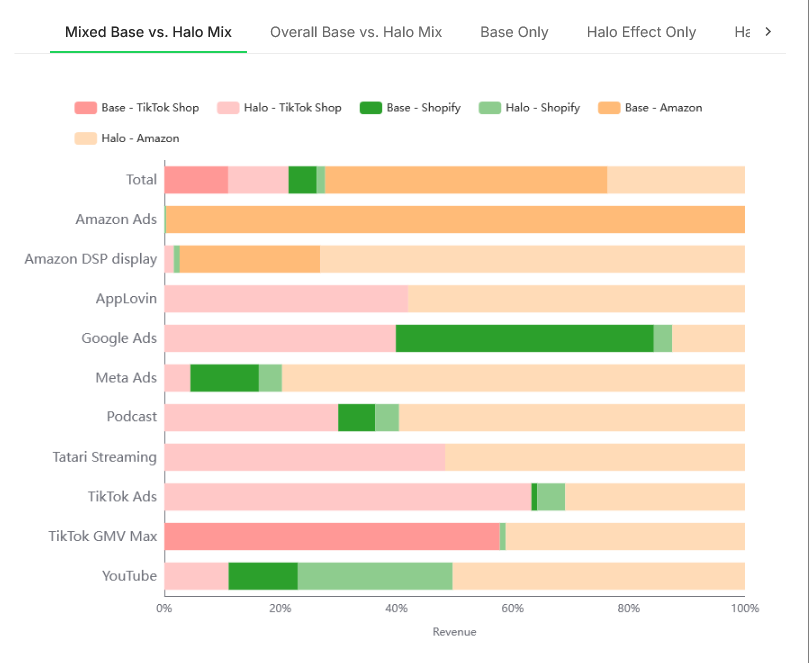
If you judge a channel only by its own last-click conversions, you're missing the engagement (and the purchases) it helped create elsewhere among your customers. Top-of-funnel channels and campaigns tend to get shortchanged the most here, since their job is building awareness rather than driving immediate conversions. You can see in the Prescient platform image below, for example, that some channels earn their keep with halo revenue.
Where retail and omnichannel fit into channel optimization
If your brand sells online and in store, whether through retail partners or marketplaces, your channel optimization strategy needs to reach beyond your website. Online spend has a real, measurable effect on in-store and marketplace purchases, even when customers never click through to your site at all.
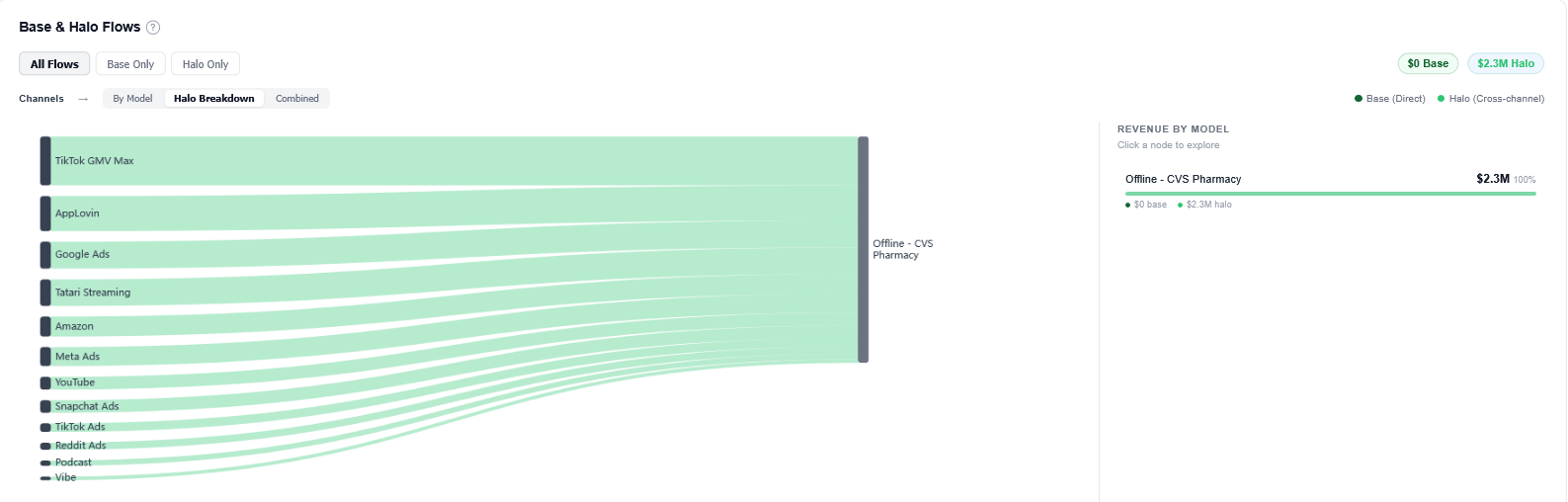
A few things worth tracking here:
- How online campaigns affect in-store purchases and average order value at retail partners.
- Whether certain channels build brand awareness that shows up in store rather than as online conversions.
- How consistent your messaging stays across online and in-store touchpoints, since a disconnected experience can hurt customer satisfaction.
Common channel optimization mistakes
A few habits tend to hold brands back from getting real value out of their channel optimization efforts:
- Relying only on last-click or platform-reported data to judge channel performance.
- Assuming every channel saturates at the same point, or in the same way.
- Reacting to short-term dips or spikes instead of looking at trends over time.
- Optimizing one channel, or one campaign, without considering its effect on others.
- Letting messaging drift out of sync across channels, which can confuse customers rather than convert them.
- Making big spend decisions without a clear sense of how much to trust the data behind them.
How to approach channel optimization step by step
A useful process for channel optimization tends to follow the same basic shape, no matter your industry or team size:
- Audit your current spend and performance across every channel you use, not just the ones you assume are working.
- Identify where each channel is actually saturating, rather than assuming a single point applies across the board.
- Look at how your channels interact, especially top-of-funnel spend that might be driving purchases elsewhere.
- Set a realistic, specific goal for what you want to shift over the next few weeks, not months.
- Make the change, then track results before deciding whether to go further.
Where Prescient comes in
Getting channel optimization right requires two things most brands struggle to combine: accurate measurement and a clear way to act on it. Prescient's marketing mix modeling gives you campaign-level insights updated daily, so you can see how each channel, and each campaign within it, is actually performing, rather than relying on platform-reported data alone. That includes halo effects, so you can see how a channel's influence shows up in organic traffic, branded search, direct visits, and even retail partners like Target, Walmart, and Amazon.
Once you know what's actually happening across your channels, Prescient's Optimizer gives you specific recommendations for adjusting spend, along with confidence scores so you know how much to trust each one. Book a demo to see how this could work for your brand's channel mix.
FAQs
What is channel optimization?
Channel optimization is the ongoing process of adjusting how much you spend, and how you show up, across your marketing channels based on real performance data. Rather than settling on a channel mix once, it means regularly reviewing what's working, what's saturating, and where you should shift spend to get better results from the same budget.
How do I optimize my channel?
Start by measuring how each channel is actually performing for your customers, not just what the platform reports. From there, look for saturation points, pay attention to how your channels influence each other, and make incremental changes you can track over a few weeks before deciding whether to go further.
What does channel optimization mean?
It means treating your channel mix as something you actively manage rather than something you set up once. In practice, that means using performance data to decide where to increase spend, where to pull back, and how to keep your messaging consistent across every channel you use.
What are the 6 C's of channel strategy?
One commonly cited framework breaks channel strategy into six areas: customer, cost, convenience, control, collaboration, and competitive advantage. It's a useful starting point for thinking through channel decisions, though it isn't the only framework marketers use, and most brands find that measurement and ongoing optimization matter more than which framework they start from.
The Halo
Exclusive insights, every week.
Subscribe to The Halo for sharper marketing thinking.
You're subscribed to The Halo!
Quick question (optional): How familiar are you with MMM?
Thanks for sharing! Enjoy The Halo.
Keep reading
View all
Funnel strategy for digital marketing: How to build one where every stage earns its budget
Read article
How to improve direct mail response rates (& count the responses you're missing)
Read article
How effective is direct mail marketing? What the numbers show and what they miss
Read article
Top of funnel vs bottom of funnel: How they differ and how to balance your budget
Read article
Modern marketers need to be doing marketing scenario planning
Read article
How to actually optimize your ad spend (not just cut waste)
Read article