


What is a marketing mix strategy, and how do you get the most out of it?
Learn what a marketing mix strategy is, how the 4 Ps and 7 Ps work in practice, and how to measure whether your mix is actually driving results for your brand.
Linnea Zielinski · 12 min read

A great recipe and a mediocre dish can share every single ingredient. The difference isn't necessarily what's in the bowl, it's understanding how everything works together, in what proportions, and at what point in the process. Marketing works the same way. Most brands have access to the same channels, the same creative formats, and the same general playbook. What separates a successful marketing mix strategy from one that consistently underdelivers is how deliberately those elements are combined and how closely marketers pay attention to what the combination is producing.
A well-aligned marketing mix is a strategic tool that builds the kind of brand visibility and customer loyalty that compound over time. And a weak or poorly coordinated marketing strategy, no matter how much budget backs it, tends to produce inconsistent results and a lot of expensive guesswork.
Key takeaways
- A marketing mix strategy is a deliberate plan for how your product, price, place, and promotional efforts work together to meet your business objectives and reach your target market effectively.
- The classic 4 Ps framework (Product, Price, Place, Promotion) gives marketers a structured way to think about every variable they control in bringing an offering to market.
- Service-oriented and omnichannel brands often expand to the 7 Ps, adding People, Process, and Physical Evidence to account for the full customer experience.
- Building a strong strategy requires clearly defined goals, honest market research, a well-articulated unique selling proposition, and alignment across all mix elements.
- Even a well-designed marketing mix strategy will drift without solid measurement in place, and most standard measurement tools aren't built to show how all the moving parts interact.
- Platform-reported data and last-click attribution both fall short when it comes to understanding cross-channel impact, particularly how promotional campaigns influence organic traffic, branded search, and retail performance.
- Marketing mix modeling (MMM) gives brands a fuller picture of how their marketing mix elements are working together and where their budget is generating the most return.
What is a marketing mix strategy?
A marketing mix strategy is the framework a brand uses to make decisions about how it brings a product or service to market. At its core, it's about making sure that what you're selling, what you're charging for it, where customers can find it, and how you're communicating about it all work together in service of the same goal. You can think of it as the operating system underneath your overall marketing strategy, the set of decisions that determine whether your campaigns, pricing, and distribution channels are all pushing in the same direction.
The concept has been a cornerstone of basic marketing thinking for decades, and while the channels and tools have changed dramatically, the underlying logic holds up: when your marketing mix elements are aligned, your marketing efforts reinforce each other. When they're misaligned, even strong individual campaigns can fall flat. A brand that sets a premium price but sells through discount retail stores, for example, will struggle to reach its target market effectively because the mix is sending contradictory signals about what the product is worth.
The 4 Ps: The foundation of every marketing mix
The 4 Ps are the original building blocks of marketing mix strategy, and they're still the most useful shorthand for thinking through the key decisions a marketing team owns. The four key components—product, price, place, and promotion—are sometimes summarized as "price, place, and promotion" anchored by the product at the center, but what matters in practice is understanding how each one shapes the others. Here's a closer look at what each element really involves:
Product
Your product is what you're bringing to market and what makes it worth buying. This goes beyond the physical object or service itself to include design, quality, branding, packaging, and the customer experience of using it. Decisions made here ripple through every other element of the mix. A premium product, for example, sets expectations about price, distribution, and promotional tone that you can't easily contradict without creating confusion for potential customers.
Price
Price is how you signal value and position your brand relative to the competition. Your pricing strategy covers:
- list price
- discount structure
- competitive pricing relative to alternatives in the market
- payment terms
Decisions here shape who your target audience is and where your product can realistically be sold (think again of our high-priced item sold in a discount retailer). Pricing strategy also interacts with sales promotion: frequent discounting can train customers to wait for a deal rather than paying full price, which affects how customers pay and what they expect in the future.
Place
Place, or distribution strategy, covers where and how customers can access your product or service. This includes:
- physical stores and retail stores
- e-commerce platforms
- wholesale partnerships
- any other distribution channels you use
For omnichannel brands selling through a mix of their own site, retail partners like Target or Walmart, and online platforms like Amazon, place decisions are especially consequential; each distribution channel has its own dynamics around customer expectations, margin, and marketing requirements. Where your product is available shapes your target audience almost as much as your positioning does: different distribution channels put you in front of meaningfully different groups of buyers.
Promotion
Promotion covers how you communicate your offering to your target audience and persuade customers that your product or service is worth their attention and money. This is the broadest of the four, spanning:
- paid digital advertising
- content marketing
- social media marketing
- digital marketing campaigns
- public relations
- personal selling
- sales promotion
- print ads
The familiar shorthand of "price, place, and promotion" captures the core triad of the marketing mix, but what makes any of those elements work is how they carry a consistent signal all the way to the buyer. After-sales service is also part of this picture: how a brand communicates and supports customers after the purchase influences brand loyalty and word-of-mouth that no paid spend can fully replace. Marketing communications across all of these marketing channels don't operate in isolation. A well-designed promotional internet mix of paid, earned, and direct channels creates a consistent customer experience at every touchpoint. The key is making sure your promotional strategy reflects the same value proposition your product, pricing, and distribution decisions communicate.
When the 4 Ps become 7: The extended marketing mix
The 4 Ps framework was developed with product companies in mind, and for many brands it's still the right starting point. But for service-based businesses or brands where the customer experience is itself part of what's being sold, three additional elements are often worth building into the strategy. This expanded model adds People, Process, and Physical Evidence as key elements of the mix:
People
People refers to everyone whose work touches the customer. This means not just customer-facing staff, but the culture, training, and values of the organization they represent. In a service context, people often are the product, which is why customer-facing teams can have such a direct impact on customer satisfaction and brand perception.
Process
Process covers the operational steps that shape how a product or service is delivered. This includes everything from how orders are fulfilled to how customer issues are resolved. Clunky, inconsistent processes create friction that marketing dollars can't overcome; a seamless customer experience is both a competitive advantage and a reason customers come back.
Physical evidence
Physical evidence is the tangible environment, or digital interface, where the service or transaction takes place. For a retailer, physical evidence includes store layout, signage, and packaging. For a software brand, it shows up in the platform's design, UX, and any physical materials associated with the product or service. Physical evidence shapes first impressions and reinforces the perceived value of what a brand sells. Like our high-price product being sold in discount stores, it's hard to charge a premium price when the physical evidence of your brand signals the opposite. Paying attention to physical evidence is also about consistency: a brand whose physical evidence aligns with its messaging builds trust with potential customers faster than one where those signals are out of sync.
Whether a brand needs all seven Ps or can work effectively with four depends on the business model. But for omnichannel brands managing both physical retail and digital channels, this expanded framework can surface gaps that a four-element model misses and produce a marketing plan that accounts for the full scope of how the brand interacts with its target audience.
How to build your marketing mix strategy
With the framework in place, the practical work of developing a marketing mix strategy comes down to five steps. But this needs to create a shared framework for teams making decisions and a baseline to measure against, not just a document that gathers dust in a drive.
1. Define your overall business objectives
A marketing mix strategy without clear goals is just a description of what you're doing. Your overall business objectives should be specific enough to guide tradeoffs, whether you're focused on growing market share, improving customer satisfaction, increasing customer loyalty, or launching in a new distribution channel will shape every decision that follows. The clearer the goals, the easier it is to evaluate whether your marketing strategy is actually working.
2. Conduct market research
Understanding your target market—who they are, what they value, how they make purchasing decisions, and what alternatives they're considering—is the foundation of every element in your mix. Thorough market research covers competitor pricing, understanding where your target customers shop and what they're willing to have customers pay at various price points, and identifying the promotional channels they actually respond to. It also means understanding what customers expect after the sale: after-sales service and post-purchase experience shape whether a customer comes back, which directly affects the long-term efficiency of your marketing plan. Advertising research and ongoing customer feedback should inform how you revisit these assumptions over time.
3. Establish your unique selling proposition (USP)
Your USP is the clearest statement of why a customer should choose your product or service over the competition. It has to be grounded in something real about what your business offers, and it should connect directly to decisions across the mix: the features you build, the price point you defend, the distribution channels you prioritize, and the marketing campaigns you run to reach your target audience. A marketing mix example that illustrates this well: a brand that leads with sustainability as its USP should be sourcing sustainably, pricing accordingly, choosing distribution channels that align with that positioning, and running promotional campaigns that speak to the target market segment that values it. A weak or generic USP makes the rest of the strategy harder to align.
4. Align the mix elements
Each of the Ps should reinforce the others. A premium pricing strategy needs distribution channels that match that positioning and marketing campaigns that communicate quality. A value-oriented brand selling through mass retailers needs service delivery processes, service offerings, and after-sales service that meet the expectations of a price-conscious buyer. Your price, place, and promotion decisions collectively shape market demand: when they're aligned, they create a consistent signal that helps buyers understand what your brand offers and why it's worth choosing. Customer relationship management practices signal to buyers what kind of company they're dealing with and whether it's worth returning. When mix elements contradict each other, customer demand suffers because the brand sends mixed signals.
5. Document and revisit your strategy
A comprehensive marketing plan is a reference point for evaluating whether your mix is still working as market trends shift. Marketing success is rarely a one-time event; it requires ongoing review and adjustment as your target market evolves, competitors change their approach, and new marketing channels emerge. A successful marketing mix strategy is one that your marketing teams can test against, update when new data comes in, and return to whenever a major decision needs to be made about pricing, distribution, or promotional spend.
Don't skip measuring your marketing mix
Even the best-constructed marketing mix strategy—one where price, place, and promotion are all carefully aligned—can start to drift if teams aren't measuring how the elements are interacting. A marketing mix is only as useful as the feedback loop that tells you whether it's working. And most standard approaches to measurement aren't built to give you that loop.
Most brands look at channel-level ROAS, monitor market trends, review individual campaign performance, and use standard marketing tools to track traffic and conversions, but they never get a clean view of how all the pieces interact. Dynamics like:
- Public relations drives brand recognition that shows up in branded search.
- Content marketing warms up audiences that convert through paid channels later.
- Awareness spend on one platform influences what happens on another, and on retail channels that never appeared in a campaign click path.
When brands measure each of those in a silo, they're not measuring their marketing mix. If you can't measure the interaction, you're measuring isolated outputs.
That's especially true for paid media. A prospecting campaign on Meta or YouTube might look like it's barely breaking even on platform, but be directly responsible for a spike in branded search and a lift in direct traffic that feeds your entire conversion funnel. Those awareness-building efforts—the ones that make every downstream conversion more likely—are consistently undervalued when you measure only what's directly attributable. If you're not measuring for cross-channel effects, you'll make decisions based on an incomplete picture.
Platform-reported data makes this harder, not easier. Platforms have a built-in incentive to take credit for conversions, and most rely on user-level tracking that gets less reliable every year as privacy standards tighten. Last-click attribution, meanwhile, flattens the customer journey into a single touchpoint, which means the promotional campaigns that build awareness and intent—the ones that make every downstream conversion more likely—are consistently undervalued.
Key performance indicators like ROAS and revenue by channel are useful, but they only tell part of the story. To really understand whether your marketing mix is working, you need to see:
- how your promotional efforts interact with your distribution strategy
- how your awareness campaigns affect customer demand across both digital channels and physical stores
- how public relations and earned media contribute to brand recognition
- whether the mix you're running is actually optimized for your current market conditions
An effective marketing strategy treats measurement as a core component, not an afterthought.
This is where marketing mix modeling comes in. An MMM tool is one of the most powerful marketing tools available for understanding how your marketing mix is performing as a system, not just channel by channel. It looks at the statistical relationships between your actual marketing spend, impressions, and revenue across all channels—including the digital marketing mix of paid, organic, and direct—and produces a view of marketing strategy effectiveness that platform dashboards and click-based attribution simply can't replicate.
It also surfaces the compounding effects of your marketing mix over time, which is essential for understanding how the full range of your promotional investment is performing and where the mix should shift.
Where Prescient comes in
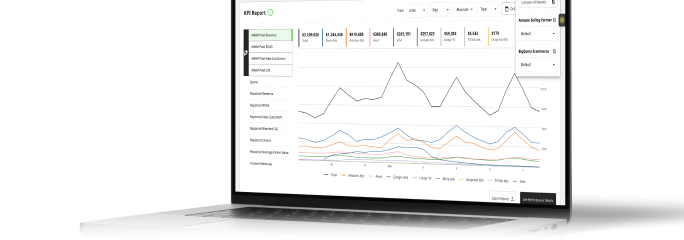
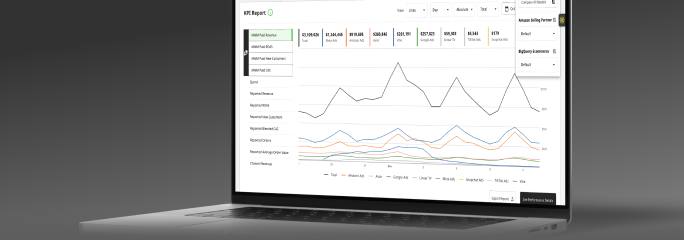
Prescient's marketing mix model is built for the reality of modern omnichannel marketing where your campaigns are running across a dozen platforms, your customers are buying through multiple channels, and the relationships between your marketing efforts and your revenue are anything but linear. Our platform measures what we call halo effects: the downstream impact of your awareness and prospecting campaigns on organic traffic, direct traffic, branded search, and retail channels like Amazon. That means you're seeing the full picture of what your promotional investment is actually doing for your brand.
Beyond measurement, Prescient's Optimizer gives you campaign-level budget allocation recommendations so you can act on what the model is telling you. Whether you're trying to maximize revenue with your current budget or stress-test your mix heading into a high-stakes season, you can make those decisions with a level of confidence that platform data alone can't support. Book a demo to see all of our features in actionsee how it works in action, with all of your questions answered by our expert team.
FAQs
What are the 4 marketing mix strategies?
The term "4 marketing mix strategies" usually refers to four classic competitive approaches brands can take when positioning their marketing mix: undifferentiated marketing (treating the whole market as one), differentiated marketing (targeting multiple segments with distinct offers), concentrated marketing (focusing on one specific segment), and micromarketing (tailoring efforts to very specific local or individual needs). These strategies describe the targeting philosophy behind a marketing mix, while the 4 Ps describe the tactical elements within it.
What is a marketing mix strategy?
A marketing mix strategy is the deliberate plan a brand uses to combine its product, pricing, distribution, and promotional decisions in a way that meets business objectives and resonates with its target market. It's the connective tissue between what you're selling and how you bring it to market, making sure those decisions are aligned rather than working at cross purposes.
What are the 5 marketing mix strategies?
The "5 marketing mix strategies" framing most commonly refers to an expansion of the 4 Ps that adds a fifth P: People. This version recognizes that the teams and individuals behind a product—from customer service to sales to the culture of the organization—are themselves part of what shapes the customer experience and influences brand perception. Some frameworks also position the fifth P as "Packaging" or "Process," depending on the business context.
Are the 4 Ps still relevant?
Yes, the 4 Ps are still a useful and widely used framework, particularly as a starting point for structuring marketing mix decisions. They hold up well because they cover the four fundamental variables every marketing team controls: what you're selling, what you're charging, where customers can get it, and how you communicate about it. The channels within each P have changed dramatically, but the underlying logic hasn't. For brands that need to account for service quality or the full customer experience, the extended 7 Ps framework builds on the original rather than replacing it.
The Halo
Exclusive insights, every week.
Subscribe to The Halo for sharper marketing thinking.
You're subscribed to The Halo!
Quick question (optional): How familiar are you with MMM?
Thanks for sharing! Enjoy The Halo.
Keep reading
View all
How effective is direct mail marketing? What the numbers show and what they miss
Read article
How to actually optimize your ad spend (not just cut waste)
Read article
How to plan a multi-channel marketing campaign that actually works together
Read article
A marketer's practical guide to integrated marketing campaigns
Read article
The real advantages of market segmentation, and how to prove they're working
Read article
How to allocate marketing budget across channels
Read article