



The 31 best marketing intelligence tools, organized by use case
A complete guide to marketing intelligence tools, organized by how you use them, from MMM platforms and attribution software to competitive intelligence.
Linnea Zielinski · 20 min read

A weather forecaster and a navigator both look at the same sky. The forecaster tells you there's a 70% chance of rain, and the navigator tells you which way to turn the ship. Both are working from data, but only one of them is helping you decide what to do next and which key metrics actually matter. The difference is the intelligence built around the data.
That's a useful way to think about marketing intelligence tools. Most marketing teams today have access to more data than they've ever had. The gap separating moderns brands is knowing which intelligence tool actually converts that market data into data-driven decisions that protect and grow revenue. Pick the wrong stack, or the wrong category of tools entirely, and you end up with dashboards full of numbers but no clear path to actionable insights.
Marketing budgets are under more scrutiny than ever, and the teams that can move from raw data to confident, data-driven decisions faster than their competitors have a durable competitive advantage. Marketing intelligence—real intelligence, not just reporting—is what creates that competitive edge.
Key takeaways
- Marketing intelligence tools span several distinct categories—measurement, competitive intelligence, audience analytics, and foundational monitoring—and the best stacks typically draw from more than one.
- Marketing measurement and optimization tools are the highest-stakes category because they directly inform budget decisions; this bucket is also the most crowded right now, which is itself a signal.
- Within measurement, there's an important distinction between marketing mix modeling platforms, which work independently of platform-reported data, and attribution platforms, which typically rely on pixel or platform data.
- Competitive intelligence software ranges from simple monitoring tools to enterprise platforms with analyst support; many require meaningful human interpretation to turn raw intelligence into actionable insights.
- SEO and audience analytics tools are valuable for understanding where your market is and how you compare in digital visibility, but they don't close the loop on whether your marketing spend is working.
- The free and foundational tier of marketing intelligence software is more capable than most teams realize and, for some use cases, a well-built free stack is a legitimate alternative to expensive platforms.
- No single intelligence tool covers the full picture; the goal is building a marketing intelligence stack where the tools you've chosen reinforce rather than duplicate each other.
What are marketing intelligence tools?
Marketing intelligence tools are software platforms that help teams collect, analyze, and act on market data about their marketing environment, including their own campaign performance, competitor activities, market trends, customer behavior, and audience dynamics. Market intelligence covers a wide range of use cases, which is exactly why it can be confusing to shop for.
The most important thing to understand before evaluating any marketing intelligence platform is that the category isn't monolithic. Data collection is just the entry point; what matters is what the platform does with that data after collection. A tool that's excellent for tracking competitor messaging changes does almost nothing to help you understand whether your Meta spend is driving revenue. A tool that maps your organic search traffic doesn't tell you how your TV campaign is affecting branded search volume. Each intelligence tool answers a different set of questions, and the value of any given platform depends entirely on which questions your team most needs answered.
Think of it like this: market intelligence solutions exist on a spectrum from descriptive (what happened) to prescriptive (what to do next). Knowing where on that spectrum you need the most support is the starting point for building a stack that actually works. This guide organizes tools by use case so you can evaluate them based on the decisions you need to make, not just the features listed on a pricing page.
How to choose the right marketing intelligence software for your team
The market research required to evaluate any marketing intelligence platform properly takes real effort; this guide is designed to do a meaningful portion of that work for you. Before evaluating any specific market intelligence platform, getting clear on a few questions will save you a significant amount of time and marketing investment:
- What decisions do we most need to make with confidence? Budget allocation, channel mix, messaging strategy, and competitive positioning all require different types of market intelligence. An intelligence tool that excels at one may be nearly useless for another.
- Where are our current blind spots? If you don't know whether your upper-funnel marketing campaigns are driving lower-funnel conversions, that's a measurement problem. If you're losing deals because your sales team doesn't know how competitors are positioning, that's a competitive intelligence problem.
- Are we analyzing data to understand what happened, or to decide what to do next? Descriptive intelligence tools tell you what occurred. Prescriptive tools—particularly in the measurement and optimization category—help you identify growth opportunities and decide where to put the next dollar.
- What does our team have the capacity to actually use? Some platforms require significant human interpretation and have a steep learning curve before they produce actionable insights. Others surface recommendations more directly with a much lower learning curve for non-technical users. Honest capacity assessment prevents a lot of wasted spend on platforms that never get fully adopted.
The other thing worth flagging: many marketing teams use software directories like G2—as well as marketing analytics platforms like Salesforce Marketing Cloud—to compare user reviews and pricing models before making a final decision. That's a reasonable step, but reviews skew toward ease of use and customer support, not necessarily toward whether the underlying intelligence the tool provides is accurate. Keep that in mind as you evaluate.
With those questions in mind, here's a look at the 31 best marketing intelligence tools across the major categories and how they compare to other tools you might already have in your stack.
Marketing measurement and optimization tools
This is the highest-stakes category in the marketing intelligence landscape and, not coincidentally, the most crowded. The explosion of platforms in this space reflects just how acutely brands feel the gap between the market data they have and the budget confidence they need. Real-time insights into what's actually driving revenue—at the campaign level, across channels, including the downstream effects that most tools miss entirely—are what this category promises.
This bucket naturally splits into two sub-categories: marketing mix modeling platforms and attribution and analytics platforms. Both are trying to answer questions about what's driving revenue, but they go about it differently, and those differences have significant implications for how much you can trust the outputs. Worth noting: these are distinct sub-categories, but they're part of the same broader challenge. Many sophisticated marketing teams use elements of both in their measurement stack.
Marketing mix modeling platforms
Marketing mix modeling (MMM) is a statistical approach to understanding how your marketing spend—across all channels—contributes to revenue. The key feature of a well-built MMM intelligence platform is that it works from your actual business outcomes, not from platform-reported clicks or pixel-based data, which means it can capture things that attribution tools structurally cannot. Think: the effect of a TV campaign on branded search volume, or the revenue driven by a prospecting ad that a customer saw and acted on days later. For a deeper look at how MMM stacks up against other approaches to understanding consumer behavior and campaign impact, our guide to marketing mix modeling is a good starting point.
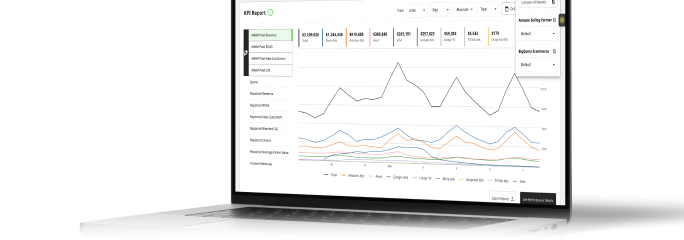
1. Prescient AI
Prescient AI is a marketing mix modeling intelligence platform built for omnichannel brands, including those with significant presence at major retail partners like Target, Walmart, Ulta, and Sephora. What sets Prescient apart in a crowded MMM market comes down to a few things that matter a lot in practice:
- The model operates at the campaign level with daily updates; most competing platforms work at the channel level and update far less frequently, which means teams are often making budget decisions based on market data that's weeks old.
- Prescient measures halo effects: the spillover revenue that awareness campaigns generate through organic search, branded search, direct traffic, Amazon, and retail channels. Standard attribution tools miss this entirely, which means brands relying on them are systematically undervaluing their upper-funnel marketing efforts.
- The model's attribution outputs are determined by the model itself—not by the platforms whose ad spend it's evaluating—which removes the conflict of interest built into most platform-native reporting.
Prescient also includes a Validation Layer that runs parallel model versions with and without incrementality test data to determine whether a given test is improving or degrading model accuracy. This matters because calibrating your MMM with an inaccurate incrementality test can quietly corrupt your model's outputs without any obvious signal that something is wrong. For brands looking specifically at e-commerce measurement, Prescient's guide to the best MMM tools for e-commerce goes deeper on what to evaluate in that context.
2. Recast
Recast is a Bayesian MMM intelligence tool focused on making marketing mix modeling accessible to growth-stage brands that also offers a self-serve interface. Like most MMM platforms, it works at the channel level rather than the campaign level, so teams that need campaign-level market analysis will want to evaluate that constraint carefully.
3. Measured
Measured takes an incrementality-first approach, using geo testing and holdout experiments to quantify channel-level contribution. It's a credible option for teams that want incrementality baked into their measurement workflow, though it's worth understanding how incrementality testing interacts with your MMM before deciding how much weight to give point-in-time test results, since incrementality data that hasn't been validated can degrade rather than improve model accuracy.
4. Sellforte
Sellforte is a commercial MMM platform with deep roots in retail and CPG. It's built for omnichannel brands with significant offline sales and appeals to teams that need to reconcile marketing spend with sales data across both digital and physical channels.
5. Workmagic
Workmagic is an AI-powered intelligence tool that offers automated marketing mix modeling aimed at growth brands. It's positioned on ease of setup and a faster path to budget recommendations, making it an option for marketing teams that want MMM-level insights without heavy data science involvement.
6. Haus
Haus is primarily a geo-based incrementality testing intelligence platform rather than a full MMM. It's a rigorous option for teams that want to run designed experiments to measure the true lift of specific campaigns or channels. The key distinction: incrementality tests produce point-in-time snapshots under specific conditions. They're valuable, but they don't substitute for a model that captures the full marketing system and accounts for cross-channel effects.
7. Cassandra
Cassandra is an MMM intelligence tool focused on making modeling outputs accessible to non-technical users and marketing teams that don't have a resident data scientist. Its reporting is designed to translate statistical outputs into clear budget recommendations without requiring deep model literacy.
8. Lifesight
Lifesight is an AI-powered intelligence tool that combines identity resolution with marketing measurement, positioning itself as a solution for brands navigating the shift away from third-party cookies. It offers both MMM and multi-touch attribution capabilities under one platform, which can simplify the vendor landscape for teams that want a unified measurement approach. Lifesight also surfaces customer preferences and segment-level consumer behavior patterns to help contextualize what the measurement data is showing.
Attribution and analytics platforms
Attribution platforms offer a more granular, touchpoint-level view of performance. The key distinction from MMM: these tools typically rely on platform-reported data, pixel tracking, or user-level identity resolution to assign credit, which means the measurement is downstream of the platforms rather than independent of them. That's a meaningful constraint when you're trying to benchmark performance across channels fairly.
That said, attribution and analytics platforms serve real needs, particularly for teams that need granular campaign performance data to inform day-to-day optimization decisions, not just strategic budget allocation. The best-run marketing teams use both categories and understand what each is actually measuring.
9. Triple Whale
Triple Whale is a popular attribution intelligence tool with strong adoption among DTC brands. It aggregates customer data and consumer preferences from across your channels into a single dashboard and offers a first-party pixel for tracking customer behavior and consumer behavior patterns. It's strong for marketing teams that want a consolidated reporting layer and fast access to campaign-level performance data without a heavy analytics infrastructure.
10. Funnel
Funnel is a data aggregation and harmonization intelligence tool that centralizes marketing data from dozens of data sources and models cross-channel ROI without requiring engineering resources. It's a strong choice for marketing teams whose bigger challenge is getting clean, consistent customer data and campaign data into one place before evaluating marketing campaigns, the prerequisite for any meaningful market analysis and data-driven decisions downstream.
11. SegmentStream
SegmentStream combines attribution with AI-powered budget optimization. It uses a modeled approach to attribution designed to work in a cookieless environment, which makes it more durable than pixel-dependent alternatives as data privacy restrictions continue to tighten. It's one of the more forward-looking options in this sub-category.
12. Rockerbox
Rockerbox is a multi-touch attribution intelligence tool that helps brands understand cross-channel contribution across both digital and offline marketing campaigns, with a particular focus on making campaign performance data accessible across the whole marketing team. It's particularly useful for teams running a mix of channels who want a single attribution view without maintaining separate tracking implementations for each.
13. Northbeam
Northbeam is a cross-channel attribution intelligence tool with some media mix modeling capabilities layered in. It's positioned toward growth brands that want more sophisticated measurement than native platform reporting provides, without the full complexity of a standalone MMM implementation. Its marketing analytics dashboard surfaces valuable insights across paid channels in a format designed for non-technical users, including custom reports that can be configured around the key metrics each team tracks most closely.
| MMM platforms | Attribution platforms | |
| Data source | Business outcomes (revenue, sales) | Platform data, pixels, identity |
| Independence from ad platforms | Yes | Typically no |
| Halo effects measurement | Yes (with some platforms) | No |
| Granularity | Channel or campaign level | Touchpoint level |
| Best for | Budget allocation, channel mix strategy | Campaign optimization, customer journey analytics |
Competitive intelligence and market positioning tools
Competitive intelligence software helps marketing teams track what competitors are doing—messaging changes, product updates, pricing shifts, new campaigns—and turn that monitoring into a competitive advantage. Identifying competitor activities early is one of the clearest ways market intelligence software translates to better marketing strategies.
A note worth making here, drawn from honest practitioner experience: most competitive intelligence platforms are aggregators and organizers. They surface information more efficiently than manual research, but the interpretation—turning a competitor's new landing page into an actionable messaging response—still requires human judgment. Several practitioners have made the point that Klue and similar tools are strong aggregators, but you still need to do the strategic thinking yourself. The best platforms reduce the research burden significantly; they don't eliminate the need for deep understanding of your market landscape.
14. Crayon
Crayon is one of the most recognized market intelligence tools in this space. It specializes in real-time tracking of competitor activities—website changes, messaging updates, pricing adjustments—and automates battlecard generation for sales teams. It's a strong choice for enterprise organizations and product marketing teams that need to maintain a current, structured view of a competitive landscape that changes frequently. The platform excels at analyzing data from across the web and organizing it into key features sales teams can actually use, a genuinely useful layer of market intelligence for enterprise brands.
15. Klue
Klue is a centralized market intelligence platform designed to help strategy and product marketing teams collaborate on competitor insights. It ingests signals from multiple data sources and organizes them into a format useful for sales enablement and messaging development. It's a capable aggregator, but teams get the most from it when they invest time in interpreting and activating the intelligence it surfaces, which means the platform delivers the most valuable insights when there's a clear process for acting on market intelligence, including market trends, downstream.
16. Kompyte
Kompyte is a market intelligence tool that monitors competitor digital activity with particular depth in SEO metrics, tracking keyword movements, organic rankings, and paid search activity alongside more traditional competitive signals. It's a strong option for teams where SEO and paid search are central to competitive strategy and where benchmarking performance against competitors is a regular need.
17. Contify
Contify is a market intelligence platform that curates intelligence from over a million sources, combining software with analyst-curated insights. It's designed for marketing teams that need broad coverage of market trends and competitor activities across industry verticals, including industry trends and regulatory signals, not just digital channels. The combination of automated market data aggregation and human curation is its primary differentiator.
18. Playwise HQ
Playwise HQ focuses specifically on battlecard creation and competitive enablement for sales teams. Its key features include automated battlecard generation and a structured format for organizing competitive intelligence, and it's notable for offering a free tier, making it accessible for leaner marketing teams that need to build a competitive intelligence practice without a large upfront marketing investment. For teams just getting started with competitive monitoring, it's a strong first step.
19. CI Radar
CI Radar is an enterprise competitive intelligence solution that includes human analyst input alongside automated monitoring. For organizations in complex competitive environments—regulated industries, B2B markets with long sales cycles, categories where nuance matters—the analyst layer adds significant value over fully automated alternatives. It's one of the few intelligence platforms that explicitly combines software with ongoing human intelligence work.
20. AlphaSense
AlphaSense is an AI-powered market intelligence platform built on top of financial filings, expert interviews, earnings calls, focus groups, and industry research. It skews toward B2B and financial intelligence use cases, making it particularly relevant for brands or agencies that need to understand competitors' business performance and strategic direction alongside their marketing activity. Its library of market research reports and expert interviews is one of the most comprehensive available in any intelligence platform, and it functions as a genuine business intelligence layer for teams that need to understand the market at a strategic level. It's a different kind of market research tool than most in this list, less about monitoring competitor ads, more about developing deep understanding of competitive business dynamics, market share movements, and primary research including focus groups and expert network insights.
21. Seismic
Seismic is primarily a sales enablement platform, but it includes competitive intelligence features worth mentioning here. For teams already using Seismic for content management and sales enablement, the competitive intel layer is a practical addition rather than a standalone purchase—and it connects customer intelligence and business intelligence from the field directly to marketing strategies upstream—keeping marketing grounded in the customer relationships sales is actually building, helping marketing teams stay aligned with what sales is hearing in the market.
Traffic, SEO, and audience analytics tools
Understanding where your audience is, what they're searching for, and how you compare to competitors in organic and paid digital visibility is its own distinct category of market intelligence. These market intelligence tools don't measure the performance of your marketing campaigns—that's the measurement bucket—but they're essential for content strategy, keyword targeting, monitoring market trends, predictive analytics on search trends, and identifying growth opportunities before competitors do. Analyzing data from these tools regularly is one of the most reliable ways to stay ahead of market dynamics.
22. SEMrush
SEMrush is one of the most comprehensive marketing analytics platforms in this category. It covers keyword tracking, domain benchmarking, advertising analysis, and side-by-side competitive comparisons across organic and paid search. It's an essential market intelligence tool for marketing teams that need deep SEO intelligence alongside competitor analysis and visibility into competitor search strategies. Real-time data on keyword movements and real-time insights into competitor activity make it one of the most actively used web analytics tools across the industry, with key features spanning everything from keyword research to full marketing analytics reporting.
23. Similarweb
Similarweb specializes in market landscape mapping, giving teams a view of where audience traffic is going across the web, including to competitors. It's particularly strong for competitor analysis, market share analysis, monthly active users tracking by site and category, audience demographic intelligence, and identifying shifts in traffic patterns that signal competitive moves or emerging market trends. Many teams use it alongside SEMrush for a more complete picture of the competitive landscape.
24. SpyFu
SpyFu is one of the more focused analysis tools in this category, built around competitor analysis—specifically competitor keyword research and ad history—helping teams understand which keywords competitors have been targeting over time and what their paid search strategy looks like. That information can directly inform both SEO planning and paid media strategy, giving teams a competitive edge in search.
25. Ahrefs
Ahrefs is best known for backlink analysis, but its content gap identification and organic traffic intelligence features make it a strong broader SEO intelligence tool. Marketing teams use it to identify growth opportunities in topics where competitors rank and they don't, and to benchmark performance in organic search against market leaders.
26. Google Analytics
Google Analytics remains a foundational piece of the audience analytics and data analysis stack and, for most teams, it's the first analysis tool they should ensure is properly configured before investing in anything else for most digital marketing teams. Its value here isn't competitive intelligence, but rather a deep understanding of your own customer behavior, customer journey analytics, and conversion patterns. The depth of market data and customer data available, particularly for teams that have set up custom reports, data visualization dashboards, and event tracking thoughtfully, is hard to replicate with any other free tool. Analyzing data on consumer behavior and consumer preferences over time develops customer understanding that surfaces valuable insights and informs more effective marketing strategies. This level of customer understanding is what separates teams making reactive decisions from those making proactive ones. For teams that want real-time insights into how their audience is moving through their site, it's a non-negotiable part of the stack.
Foundational and free marketing intelligence tools
Not every intelligence need requires enterprise marketing intelligence software. A thoughtful combination of free market intelligence tools can cover a meaningful portion of the monitoring and tracking work that paid platforms charge significantly for, and for smaller teams or those building out an intelligence practice for the first time, starting here is completely reasonable.
This is especially true for competitive monitoring. Practitioners who've gone deep on this note that a free stack built around the right tools can be tens of thousands of dollars cheaper per year than enterprise alternatives, particularly for teams whose core need is monitoring market trends and staying informed, rather than generating sophisticated predictive analytics or AI-powered recommendations.
27. Google Alerts
Google Alerts is the simplest form of brand and keyword monitoring available. Setting up alerts for competitor names, industry trends, and your own brand takes minutes and provides a continuous stream of relevant mentions from across the web, including coverage from news sites, blogs, and social media platforms. As a free baseline for social media monitoring and brand tracking, it's hard to argue with as a starting point.
28. Visualping
Visualping monitors specific web pages for changes—competitor landing pages, pricing pages, product pages—and alerts you when something updates. For teams that want to know when a competitor changes their messaging or launches a new offer, this is a surprisingly effective solution for tracking competitor activities without a large tool budget.
29. Google Search Console
Google Search Console provides direct data on how your site is performing in organic search: which queries are driving impressions and clicks, where you rank, and where there are technical issues affecting visibility. It's one of the most underutilized free web analytics tools in the marketing intelligence stack, and it surfaces real-time data directly from Google's index.
30. Google Trends
Google Trends surfaces real-time and historical search interest data across topics, keywords, and regions. It's useful for monitoring market trends, understanding seasonality, analyzing market dynamics, and benchmarking your brand's search interest against competitors over time. It's also one of the few free tools that can help you identify emerging trends before they fully surface in keyword volume data.
31. Notion + newsletter aggregators
Worth mentioning as a category: some of the most cost-effective competitive intelligence setups combine a documentation tool like Notion for hosting battlecards and competitive summaries with automated newsletter aggregators or podcast scrapers that deliver a curated weekly summary of competitor and industry news. This approach requires more setup and ongoing curation than a dedicated platform, but for teams with the right processes in place, it's a genuinely viable and low-cost alternative to enterprise competitive intelligence software.
How to build a marketing intelligence stack that works together
The most common mistake in assembling a marketing intelligence stack is over-investing in one category while leaving significant blind spots in others. A team with best-in-class competitive intelligence software but no reliable measurement of their own marketing campaigns is flying with one eye open.
The highest-leverage category, for most brands making active budget decisions, is measurement and optimization. Knowing whether your marketing efforts are working—by how much, at the campaign level, across both digital and retail channels—is the market intelligence that most directly protects the budget and informs marketing strategies downstream. Competitive intelligence tools, SEO analytics platforms, and foundational monitoring all contribute valuable insights, but they don't close the loop on whether the marketing spend is worth it. For brands that are serious about making data-driven decisions from their marketing analytics, measurement is where the stack has to be solid, and it's the foundation on which all other marketing strategies ultimately rest.
A few principles worth keeping in mind as you build:
- Match tools to decisions, not categories. Every intelligence tool in your stack should map to a specific decision your team needs to make more confidently, whether that's budget allocation, campaign optimization, or identifying growth opportunities.
- Avoid duplicate coverage. If two analytics tools are answering the same question, one of them is probably wasted spend. Evaluate for complementarity, not comprehensiveness. Some of the most effective stacks are built on three or four tools that each do one thing well, rather than a sprawling set of other tools with overlapping capabilities.
- Think about what feeds what. A competitive intelligence platform that surfaces a shift in competitor messaging is most valuable when it connects to a measurement capability that can tell you whether that shift is affecting your market share or revenue.
- Get serious about data collection and data governance. The quality of the intelligence any market intelligence platform delivers is only as good as the underlying data. Teams that invest in clean data pipelines and clear data governance policies get dramatically more valuable insights from the same tools.
- Consider intent data where relevant. Intent data—signals that indicate a prospect or segment is actively researching a solution like yours—is a powerful layer of market intelligence that several platforms in the competitive intelligence and audience analytics categories can surface.
- Plan for how insights will be activated. The best marketing intelligence platform in the world doesn't help if outputs aren't reaching the people making budget and strategy decisions regularly.
Where Prescient comes in
For most omnichannel brands, the gap that costs the most money is not knowing whether their own marketing is working, at the campaign level, across every channel including retail. That's the gap Prescient is built to close. With daily model updates, campaign-level attribution that operates independently of platform-reported data, halo effects measurement that captures spillover revenue to organic search, branded search, and retail channels, and retail connectors that unify DTC and retail measurement in a single view, Prescient gives marketing teams the market intelligence they need to move budgets with confidence rather than gut instinct.
If you're evaluating your measurement stack—or wondering whether what you're currently using as a marketing intelligence platform is giving you an accurate picture of your marketing investment—seeing Prescient in action with a demo is the fastest way to find out.
FAQ
What are some market intelligence tools?
Market intelligence tools span several categories, each designed to answer different questions. For marketing measurement and budget optimization, platforms like Prescient AI, Recast, and Measured use statistical modeling to understand what's driving revenue. For competitive intelligence, Crayon, Klue, and Contify help teams track competitor activities and market positioning. For traffic and audience analytics, SEMrush, Similarweb, and Ahrefs provide visibility into search performance and customer behavior. And for foundational monitoring, free intelligence tools like Google Alerts, Visualping, and Google Trends cover a meaningful amount of ground at no cost.
What are the 4 P's of intelligence?
The 4 P's of intelligence—planning, processing, production, and presentation—describe the core stages of turning raw data into usable intelligence. Planning involves defining what market intelligence you need and why. Processing involves collecting and organizing raw data from relevant sources. Production involves data analysis: working through that data to develop conclusions and insights. Presentation involves communicating those insights to the people who need to act on them. In a marketing context, this framework is a useful reminder that data collection is only the first step; the value is in what you do with it downstream, and most marketing teams underinvest in the production and presentation stages.
What is an example of marketing intelligence?
A practical example: a brand notices that organic search traffic to their site drops in the two weeks following a period when their paid social spend was reduced. A marketing intelligence platform with halo effects measurement can confirm whether the paid social investment was generating spillover revenue through branded search and direct traffic, insights that would be invisible to standard attribution tools, and that have real implications for how those marketing campaigns get budgeted going forward. Another example: a competitive intelligence tool flags that a major competitor has changed the hero messaging on their product page. A product marketing team uses that signal to evaluate whether their own positioning needs updating before the next campaign cycle. Both are market intelligence in action: market data and marketing efforts converted into a concrete decision.
What are the 7 P's of competitive intelligence?
The 7 P's of competitive intelligence—planning, perception, process, people, production, publication, and performance—expand on the basic intelligence cycle to account for the organizational elements that determine whether competitive intelligence actually reaches the people who can act on it and feeds back into marketing strategies. Planning and perception cover what you're trying to learn and how you're framing the competitive landscape. Process and people address how market data is gathered and who's responsible for it. Production and publication cover how findings are synthesized and shared across the organization. Performance addresses whether the intelligence effort is actually influencing decisions and outcomes. Teams that invest in competitive intelligence software without thinking through the people and process layers often find that the tool is only as valuable as the workflow built around it, and that's true of any marketing intelligence platform.
The Halo
Exclusive insights, every week.
Subscribe to The Halo for sharper marketing thinking.
You're subscribed to The Halo!
Quick question (optional): How familiar are you with MMM?
Thanks for sharing! Enjoy The Halo.
Keep reading
View all
What do marketing mix models show advertisers?
Read article
Marginal ROAS: Calculation, Purpose & Potential Pitfalls
Read article
How to measure the impact of marketing without guessing
Read article
How to make purpose driven marketing campaigns that actually drive revenue
Read article
What is campaign management software (and what can't it do alone)?
Read article
A complete guide to media measurement tools available in 2026
Read article