


A practical guide to omnichannel measurement for multi-channel brands
Omnichannel measurement means tracking marketing's impact across every channel and storefront, not just where clicks convert. Here's what to look for.
Linnea Zielinski · 10 min read
Think about turning on an old car radio and landing on one station out of dozens broadcasting at the same time. You can hear that one signal just fine, but every other station playing music, news, and traffic updates right alongside it is just static to you unless you go looking for it. That's roughly what happens when a brand measures marketing performance through a single channel's dashboard. The signal you're picking up is real, but it's one station in a much bigger broadcast.
Most omnichannel brands selling across e-commerce, Amazon, and retail partners are dealing with exactly this problem, whether they realize it or not. This is the reality of omnichannel marketing today: consumers move across online and offline touchpoints constantly, and the brands that can actually track what's driving their customers to buy end up making smarter calls than the ones using a single dashboard. Every one of your marketing channels is sending signal about what's driving sales—paid social, CTV, branded search, retail media—but most measurement tools are only built to tune into one station at a time. Getting a full picture of your marketing effectiveness means understanding what's happening across all of them. If your budget decisions are only informed by what each platform reports in isolation, you're making calls with a fraction of the information available, and that gets expensive fast at the volume most omnichannel brands are spending.
Key takeaways
- Omnichannel measurement means tracking marketing's impact across every channel and storefront a brand sells through.
- Platform-reported numbers, last-touch attribution, and multi-touch attribution models all miss real chunks of what's actually driving sales.
- Retail media networks report on their own platforms only, so cross-channel lift from other marketing rarely gets credit.
- Halo effects, the way a campaign on one channel lifts sales somewhere else entirely, are one of the biggest blind spots in most measurement setups.
- Brand-building effects show up weeks or months after a campaign runs, so short attribution windows miss them completely.
- iROAS and incrementality testing can offer useful data points, but they come with real limitations worth understanding before you lean on them too heavily.
- A strong omnichannel measurement approach unifies data across every channel and models both immediate and delayed effects.
What is omnichannel measurement?
Before getting into where measurement typically falls short, it helps to define the term and why it matters for your broader marketing strategy. Omnichannel measurement is the practice of tracking marketing's impact across every channel and storefront a brand sells through, whether that's owned e-commerce, Amazon, retail partners, or physical stores, within one connected, full-funnel view instead of one channel at a time. The goal is a holistic view that lets you measure performance the way customers actually experience your brand: as one connected omnichannel experience, not a series of disconnected clicks.
Most brands are used to something very different than this ideal reporting. A comprehensive view accounts for how various touchpoints across the customer journey interact with each other instead of treating each channel like it operates in a vacuum. Without a single unified model tying customer data together, brands end up with a patchwork of dashboards that each tell a partial story.
Why most measurement setups only see part of the picture
There's a reason so many marketers feel like they're missing something even when they're staring at more dashboards than ever: most attribution models simply weren't built to handle this kind of complexity. Here's a quick look at the four biggest ones, with more detail below if you want to dig in.
| Gap | What it means for your data |
| Retail media networks report on themselves | Cross-channel lift never gets credited outside that one platform |
| Last-touch attribution rewards the wrong touchpoint | Bottom-funnel channels get credit for demand created elsewhere |
| Offline and in-store sales rarely make it into the model | Purchases influenced by ads but completed in person go untracked |
| Brand effects take time to show up | Short attribution windows miss impact that unfolds over months |
Retail media networks report on themselves. If you're running Amazon ads or spending through other retail media networks, you're likely getting solid reporting on what happens inside that one platform, whether that's Amazon, paid search, or another walled garden. What you're probably not getting is any sense of how that same spend might be lifting sales on your own e-commerce store, at physical stores, or through other online marketplaces. Retail media is only ever going to tell you about retail media.
Last-touch attribution rewards the wrong touchpoint. Last touch attribution hands full credit to whatever channel happened right before a purchase—usually a bottom-funnel channel like branded search—even when that demand was created somewhere else earlier in the consumer journey. Multi touch attribution improves on this by spreading credit across several customer interactions and other media channels, but it still relies on tracking that's gotten harder to trust as pixels and cookies become less reliable.
Offline and in-store sales rarely make it into the model. If a customer sees an ad, thinks about it for a few days, and then buys in store, most attribution models never see that sale at all. For any brand selling through retail partners and physical stores, that's a real gap in the data, and it directly affects how well you can impact sales going forward.
Brand effects take time to show up. A campaign that builds brand awareness might not show its full advertising impact for six to fifty-two weeks, as it gradually lifts branded search, organic traffic, and future conversion rates. Attribution windows built around fast, direct-response advertising almost always miss this kind of compounding value.
What a strong omnichannel measurement approach includes
Building, or choosing, a measurement approach that actually closes these gaps usually comes down to a few core pieces working together. There are plenty of omnichannel measurement solutions out there, but not all of them handle this the same way.
- Unified customer data across every retail channel. Your e-commerce data, retail partner data, and Amazon data should all live in one place instead of getting siloed by team or vendor, so you can compare performance across retail channels consistently.
- Halo effectsacross every relevant channel. A strong model should show how a campaign on one channel spills into branded search, organic traffic, direct visits, Amazon, and retail partners, not just where the original click happened.
- Modeling for delayed and compounding effects. Marketing performance isn't only what happened this week; it's also what a campaign is building toward over the following months, sometimes without showing results right away.
- Measurement that doesn't rely on pixels or cookies. Since offline and retail sales usually can't be tracked that way, a model built around your actual business data holds up better as tracking gets harder across the board.
None of this requires advanced analytics for their own sake, just the right data foundation and a model built to use it.
Key metrics for measuring omnichannel performance
Once the right data and model are in place, the next question is what to actually look at. A few omnichannel metrics tend to matter most for tracking marketing performance over time, quantifying advertising impact, and building a measurement strategy you can actually trust.
- Modeled revenue and ROAS versus platform-reported numbers. Comparing what a platform claims against what an independent model attributes to that same media spend usually reveals just how much bottom-funnel channels are overcredited.
- Halo and cross-channel lift. This shows how much of a campaign's ad impact shows up somewhere other than where it originally ran, which is often a bigger number than marketers expect.
- New customer acquisition by campaign. Total conversions don't tell you much about growth on their own; new customer volume by campaign does.
Some brands also look at customer lifetime value alongside these metrics to understand whether the customers a campaign brings in are actually valuable ones over time. That's a useful lens, though it's a separate calculation from anything a marketing mix model produces on its own. Together, these numbers give you a clearer, full-funnel read on omnichannel performance instead of a channel-by-channel guess.
What about iROAS?
iROAS, or incremental ROAS, usually comes from an incrementality test that compares a test group against a control group to isolate a channel's "true" impact on sales. It's a metric worth understanding, since it shows up constantly in measurement conversations, but it's also one worth treating carefully.
Geo-based incrementality tests, the most common setup, run into a few structural problems. Test and control regions are never truly identical, so baseline differences between them can get read as marketing impact. External factors like a competitor's promotion or a local economic shift can throw off one group without anyone noticing. And because these tests only run for a few weeks, they capture a single snapshot of performance rather than the fuller timeline over which marketing effects tend to play out.
None of that makes iROAS useless, just something worth understanding the limits of before leaning on it too heavily for big budget allocation calls. We've written a deeper breakdown of where incrementality testing tends to fall short if you want to dig into the mechanics further.
How to evaluate your own measurement setup
A few honest questions can tell you a lot about whether your current stack is giving you a comprehensive view of your marketing performance, and whether it's actually supporting informed decisions and better decision making.
- Does your data include every sales channel (e-commerce, retail partners, Amazon, and physical stores) in the same model, or are they modeled separately?
- Can you see halo effects, or does credit only ever show up where the original click happened?
- Does your budget allocation strategy account for delayed brand effects, or only the last few weeks of direct response?
- If two channels disagree on who drove a sale, does your setup have a way to resolve that, or does everyone just trust their own dashboard?
- Can you optimize spend based on that full picture, or only report on what already happened?
If most of those questions are hard to answer with confidence, that's usually a sign the underlying architecture needs work.
Common mistakes brands make
A few patterns show up again and again among marketers building out an omnichannel strategy, and they're worth flagging so you can watch for them in your own reporting on channels and measurement alike.
- Treating platform-reported ROAS as the full story. It's real data, but it's only ever going to reflect what that one platform can see.
- Letting channels get evaluated in isolation. A channel that looks inefficient on its own, say, an upper-funnel CTV campaign, might be driving real results everywhere else; judging it alone misses that.
- Ignoring offline channels and retail halo effects. For any brand selling through retail partners, this is often where a meaningful share of true impact hides, and it's a common blind spot in offline marketing measurement generally.
- Optimizing marketing investment for last quarter's numbers only. Marketing that builds brand equity needs a longer runway to show its actual return, and coordinating marketing efforts around a single short window undercuts that.
None of this requires buying more tools. It comes down to turning your data into insights across every one of your sales channels and media channels.
Where Prescient comes in
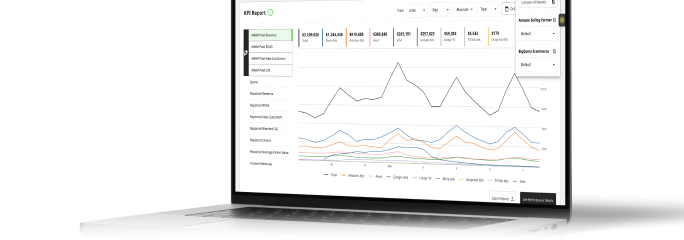
Prescient AI's marketing mix modeling platform is built around exactly this kind of omnichannel measurement. Instead of relying on pixels or platform-reported numbers, it models your actual business data to show Modeled Revenue and Modeled ROAS alongside platform-reported figures, broken out at the campaign level rather than just by channel. That includes halo effects across branded search, organic traffic, direct visits, Amazon, and confirmed retail partners like Target, Walmart, Ulta, Sephora, Macy's, and DICK'S Sporting Goods, so brands selling across multiple channels can finally see how their brand and marketing actually move revenue everywhere it shows up, not just where the click happened.
From there, Prescient's Media Forecaster helps you turn that visibility into action, modeling how different budget scenarios are likely to perform before you commit spend. If you're ready to see what your own omnichannel measurement picture actually looks like, you can book a demo using anonymized data modeled the same way we'd model yours.
FAQs
What's the difference between omnichannel measurement and multi-touch attribution?
Multi-touch attribution spreads credit for a sale across the touchpoints a customer interacted with before converting, but it still depends on tracking that customer's journey, which gets harder as pixels and cookies become less reliable. Omnichannel measurement is a broader approach that includes attribution as one input but also accounts for halo effects, offline and retail sales, and delayed brand impact that touchpoint-based tracking can't see at all.
How do you measure halo effects across retail and online channels?
Halo effects are typically measured through a marketing mix model that looks at the statistical relationship between spend on one channel and changes in performance on others, like branded search, organic traffic, or sales at a retail partner. Since these effects don't leave a trackable digital footprint the way a click does, they require a modeling approach rather than pixel-based tracking.
Why doesn't platform-reported ROAS match omnichannel performance?
Platform-reported ROAS only reflects what that specific platform can track, which usually means it's crediting itself for demand that other marketing helped create, while missing entirely any sales that happen on other channels or offline. A brand's true omnichannel performance almost always looks different once halo effects and offline sales are factored in.
Is iROAS a reliable metric for omnichannel measurement?
iROAS can offer a useful data point, but it comes from incrementality testing methods that have real structural limitations, particularly around control group accuracy and the short time window most tests run in. It's worth using alongside other measurement approaches rather than as the sole source of truth for budget decisions.
What channels should an omnichannel measurement model include?
A complete model should include every channel and storefront a brand actually sells through: owned e-commerce, Amazon, retail partners like Target or Walmart, and physical stores where applicable, all measured within the same model instead of separately.
How long does it take for brand marketing effects to show up in the data?
Brand-building effects typically show up over six to fifty-two weeks, gradually lifting branded search, organic traffic, and future conversion rates. That's a big part of why short attribution windows tend to undervalue brand investment relative to its actual return.
The Halo
Exclusive insights, every week.
Subscribe to The Halo for sharper marketing thinking.
You're subscribed to The Halo!
Quick question (optional): How familiar are you with MMM?
Thanks for sharing! Enjoy The Halo.
Keep reading
View all
What retail media attribution measures and what it misses
Read article
Commerce media is promising, but its measurement lags behind
Read article
Your digital campaigns are driving retail sales. Here's how you measure them.
Read article
This measurement blind spot is costing beauty brands credit for their media spend
Read article
A marketer’s guide to in-house MMM builds vs vendor tools
Read article
What causes attribution bias in marketing and how to reduce it
Read article