


What retail media attribution measures and what it misses
Retail media attribution links ad exposure to purchases within a retailer's own data, but in-store sales and halo effects remain huge blind spots.
Linnea Zielinski · 7 min read
When three real estate agents show a family the same house before they finally buy it, who gets the commission? Whoever files the final paperwork usually gets full credit, even though the first agent's tour is what got the family interested and the second agent's follow-up answered the financing questions that actually closed the deal. Retail media attribution runs into a similar problem: retail media networks are built to hand credit to whichever touchpoint sits closest to checkout, which means a lot of the exposure that led a shopper to buy never shows up in the data.
That skew in the data changes where a brand puts actual ad spend next quarter. For brands running campaigns across Amazon, Target, Walmart, Ulta, Sephora, and other retailers, misreading who deserves credit can mean cutting a channel that's driving purchases somewhere else entirely.
Key takeaways
- Retail media attribution links ad exposure on a retailer's network to a purchase, but it can only see what happens inside that retailer's own data.
- Attribution models like last-touch, first-touch, multi-touch, and view-through each assign credit differently, and the model a retailer defaults to shapes what looks like it's working.
- In-store purchases are the biggest blind spot, since most physical retail sales don't connect back to the digital exposure that influenced them.
- Every retail media network defines its own attribution windows and credit rules, so comparing performance across retailers rarely means comparing apples to apples.
- The halo effect moves in both directions: retail media can drive sales on other channels, and other channels can drive sales back to a retailer, so single-retailer attribution only ever tells part of the story.
- Incrementality testing and marketing mix modeling can fill in the gaps that closed-loop attribution leaves behind, especially for brands selling across several retailers at once.
What is retail media attribution?
Retail media attribution, sometimes called commerce media attribution, is how a retailer connects an ad a shopper saw or clicked on its site or app to a purchase they made, using the retailer's own first-party data. Because the retailer owns both the ad exposure and the purchase, this gets described as closed-loop attribution or closed-loop measurement: the retailer can trace a path from digital exposure to sale without needing a third-party cookie to stitch the journey together.
That's a genuine advantage over a lot of other digital advertising, where privacy regulations and cookie loss have made it harder to know what led to a conversion. But closed-loop measurement only covers what happens on that retailer's own turf. Commerce media has grown fast precisely because it sidesteps the cookie problem, yet once a purchase happens outside the retailer's tracked environment, the data behind it runs out.
How retail media attribution works
The core attribution models
Retailers use a handful of models to decide which touchpoint gets credit when a shopper interacts with more than one ad before buying. Here's how the main ones break down:
- Last-touch or last-click: Assigns all the credit to the final ad interaction before purchase, which tends to overvalue whatever sits closest to checkout, like on-site search ads or sponsored products.
- First-touch or first-click: Credits the very first exposure, which favors upper-funnel awareness efforts but ignores everything that happened afterward.
- Multi-touch (linear or time-decay): Spreads credit across every touchpoint in the path, either evenly or weighted toward interactions closer to the sale.
- View-through vs. click-through: Decides whether an ad a shopper saw but didn't click on still earns credit alongside the ads they actually engaged with.
None of these models is wrong, exactly. They're just different lenses on the same customer journey, and a retailer's choice of model can make one campaign look far more effective than another that's actually driving similar results.
The measurement mechanics behind it
Underneath these models sit a few mechanics worth understanding, since they're what makes retail media measurement different from measurement everywhere else in digital advertising. Attribution windows set the time limit, often somewhere between one and thirty days, during which a purchase can still count toward an ad. Identity resolution is what lets a retailer match an ad exposure to a purchase in the first place, usually through a logged-in account or loyalty card rather than a third-party cookie. And tools like Amazon Marketing Cloud let advertisers dig into conversion paths in more detail, tracing how sponsored products, on-site search, and other formats worked together for high-intent shoppers.
Where retail media attribution runs into trouble
The mechanics above work well within a retailer's own four walls, digital or physical. The trouble starts at the edges, where a lot of real shopping activity actually happens.
In-store purchases stay mostly invisible
Most retail data is clean for online sales, but the majority of purchases at a physical store still don't connect back to the digital ad exposure that may have influenced them. A shopper can see an ad, then walk into a store days later to buy, and that purchase often never gets tied back to the media investment that helped drive it. For any brand selling across both online and physical environments, that's a significant gap in the full picture of performance, and it only grows as more of the industry leans on retail media budgets.
Every retailer measures it differently
There's no shared standard across the retail media market for how attribution gets defined or measured. One retailer might use a seven-day window and default to last-touch; another might use thirty days and multi-touch. That makes it nearly impossible to compare performance across retailers using their own reported numbers, since a campaign that looks strong on one network's terms might look average on another's, even when actual performance is similar. Brands managing budgets across several retailers end up needing a strategy that accounts for those mismatched rules rather than taking each retailer's dashboard at face value.
The halo effect blurs who gets credit
Ads don't only drive sales for the exact product or SKU they promote. A campaign can lift sales across an entire category the ad never directly targeted, a phenomenon known as the halo effect. This cuts both ways: media investments on a retailer's own network can drive purchases elsewhere, and campaigns running on channels like Meta, CTV, or Google Ads can drive shoppers back to buy at a retailer, even when the click-through path doesn't point there. A single retailer's attribution can only ever capture its half of that exchange, which means brands relying on one platform's numbers are almost certainly underselling their actual growth.
How incrementality testing and marketing mix modeling fill the gaps
Retail media attribution answers a narrower question than most brands realize: what happened inside this one retailer's tracked environment. Incrementality testing and marketing mix modeling exist to answer the broader one, and they work alongside retail media attribution rather than replacing it.
Incrementality testing uses holdout groups to try to isolate whether an ad drove sales that wouldn't have happened anyway. In practice, that's harder than it sounds. Test and control regions are rarely as comparable as they look on paper, shoppers move between them, and outside factors like a competitor's promotion or a local economic shift can skew results without anyone noticing. That doesn't make the method useless, but it does mean the results deserve a check rather than blind trust before they inform a budget decision.
Marketing mix modeling takes a wider view still, pulling in ad spend, sales, and external factors across every channel and retailer a brand sells through, so brands can compare performance on consistent terms instead of each retailer's own definitions, and can validate whether an incrementality test's results actually hold up. Neither replaces retail media attribution's ability to trace a specific path; they extend it to cover what closed-loop measurement remains unable to see on its own.
Where Prescient comes in
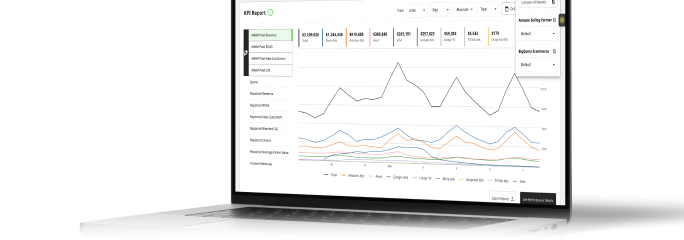
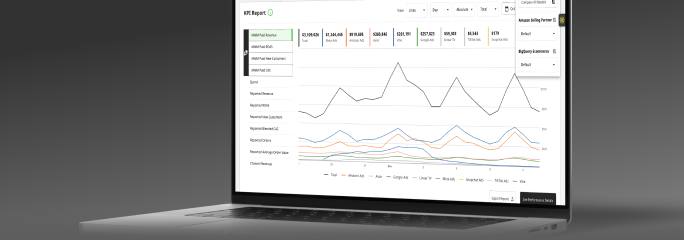
Prescient AI gives omnichannel brands a consistent way to evaluate ad spend across every retailer and channel they sell through, instead of stitching together each retail media network's own attribution rules. Modeled ROAS accounts for Halo Effects in both directions, including the lift that non-Amazon spend drives on Amazon and the lift retail media drives elsewhere, so brands get a fuller signal than any single retailer's closed-loop data can provide on its own.
Because Prescient's models refresh daily and work at the campaign level, brands can see how spend across Target, Walmart, Ulta, Sephora, and other retailers is actually performing, not just what each platform reports. If you're ready to see what your retail media spend is really driving, book a demo.
FAQs
What's the difference between retail media attribution and marketing attribution?
Retail media attribution is specific to a single retailer's network and relies on that retailer's own first-party data to connect ad exposure to purchase. Marketing attribution is the broader category, covering how credit gets assigned across all of a brand's channels, not just the ones running on a retailer's site or app.
Can retail media attribution track in-store sales?
Some retailers can match loyalty card or account data to in-store purchases, but coverage varies a lot by retailer and category. For most brands, a significant share of physical store sales still doesn't connect back to the digital ad exposure that may have influenced them.
Why do attribution numbers differ across retail media networks?
Each retail media network sets its own attribution window and defaults to its own model, whether that's last-touch, multi-touch, or something else. Two retailers can report very different numbers for similar campaigns simply because they're measuring on different terms, not because performance actually differs that much.
What is the halo effect in retail media?
The halo effect describes how an ad can drive sales beyond the exact product or SKU it promoted, including sales in an entire category or on a different platform altogether. In retail media, this shows up when campaigns on other channels drive purchases back to a retailer, and when retail media drives purchases elsewhere.
Is retail media attribution the same as incrementality testing?
No. Retail media attribution traces a path from ad exposure to purchase within a retailer's own data. Incrementality testing tries to isolate whether that purchase would have happened anyway using holdout groups, though real-world test conditions rarely stay as clean as the setup implies, so it's worth treating as one input to validate rather than a final answer on its own.
How long is a typical retail media attribution window?
Attribution windows vary by retailer and ad format, but they commonly range from about one to thirty days. A shorter window tends to favor lower-funnel tactics like sponsored products, while a longer window gives more credit to upper-funnel awareness efforts.
The Halo
Exclusive insights, every week.
Subscribe to The Halo for sharper marketing thinking.
You're subscribed to The Halo!
Quick question (optional): How familiar are you with MMM?
Thanks for sharing! Enjoy The Halo.
Keep reading
View all
Commerce media is promising, but its measurement lags behind
Read article
A practical guide to omnichannel measurement for multi-channel brands
Read article
Your digital campaigns are driving retail sales. Here's how you measure them.
Read article
This measurement blind spot is costing beauty brands credit for their media spend
Read article
A marketer’s guide to in-house MMM builds vs vendor tools
Read article
What causes attribution bias in marketing and how to reduce it
Read article